 Add to Chrome
 Add to Firefox
 Add to Edge
xApp Empowered Resource Management for Non-Terrestrial Users in 5G O-RAN Networks
May 11, 2026
This paper introduces a proactive Unmanned Aerial Vehicle (UAV) mobility management xApp for Open Radio Access Network (O-RAN) Near Real-Time Radio Intelligent Controller (Near-RT RIC) environments, employing Double Deep Q-Network (DDQN) reinforcement learning (RL) enhanced with transfer learning to optimise handover decisions for UAVs operating along predetermined flight trajectories. Unlike reactive approaches that respond to signal degradation, the proposed framework anticipates network conditions and minimises both outage probability and handover frequency through predictive optimisation. The system leverages centralised weight averaging to consolidate knowledge from multiple flight scenarios into a global model capable of generalising to previously unseen operational environments without extensive retraining. A comprehensive evaluation demonstrates that the proposed framework achieves a favourable trade-off between handover frequency and connectivity reliability, reducing handover events by up to 54.6% compared to greedy approaches while maintaining outage probability at practically negligible levels. The results validate the effectiveness of intelligent learning-based approaches for UAV mobility management in next-generation O-RAN architectures, thereby contributing to seamless integration of aerial user equipment into cellular networks.

Optimizing Search and Rescue UAV Connectivity in Challenging Terrain through Multi Q-Learning
May 16, 2024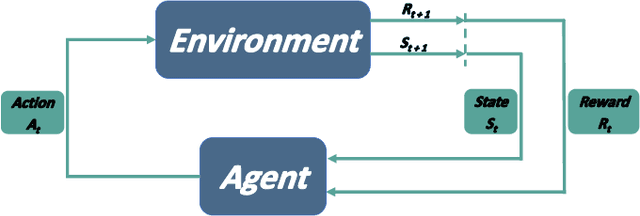
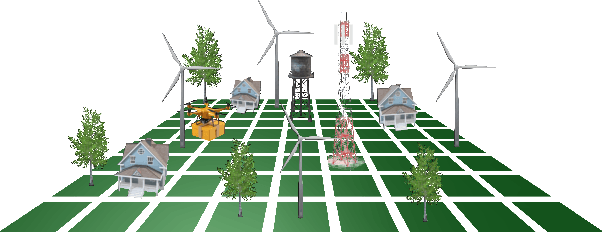
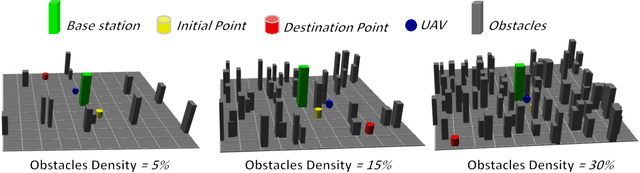
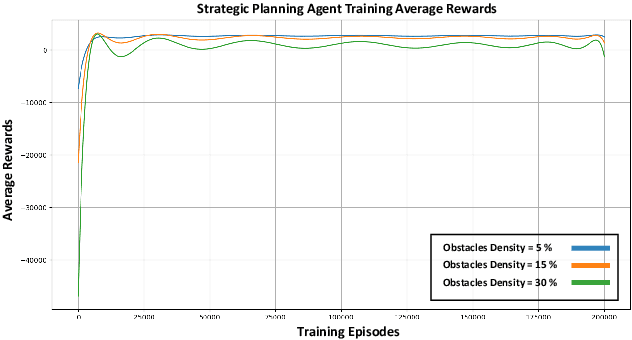
Using Unmanned Aerial Vehicles (UAVs) in Search and rescue operations (SAR) to navigate challenging terrain while maintaining reliable communication with the cellular network is a promising approach. This paper suggests a novel technique employing a reinforcement learning multi Q-learning algorithm to optimize UAV connectivity in such scenarios. We introduce a Strategic Planning Agent for efficient path planning and collision awareness and a Real-time Adaptive Agent to maintain optimal connection with the cellular base station. The agents trained in a simulated environment using multi Q-learning, encouraging them to learn from experience and adjust their decision-making to diverse terrain complexities and communication scenarios. Evaluation results reveal the significance of the approach, highlighting successful navigation in environments with varying obstacle densities and the ability to perform optimal connectivity using different frequency bands. This work paves the way for enhanced UAV autonomy and enhanced communication reliability in search and rescue operations.