 Add to Chrome
 Add to Firefox
 Add to Edge
Constraint-Aware Counterfactual Editing for Aspect-Based Sentiment Analysis
Jul 15, 2026
Aspect-Based Sentiment Analysis (ABSA) requires models to identify sentiment toward specific aspects rather than relying on the global polarity of a sentence. This makes counterfactual evaluation especially challenging: a valid counterfactual should flip the sentiment of one target aspect while preserving the sentiment of all non-target aspects, semantic meaning, fluency, and factual consistency. Existing counterfactual generation methods often focus on sentence-level label flipping and may produce edits that are fluent but aspect-invalid, semantically drifting, or contradictory. To address this limitation, we propose CAVE-ABSA, a Constraint-Aware Validated Editing framework for generating and validating aspect-level counterfactuals. CAVE-ABSA localizes the opinion span associated with the target aspect, performs controlled counterfactual rewriting, refines candidates through a repair module, and filters them using aspect-level verification, semantic similarity, AMR-guided structural preservation, edit minimality, fluency, and contradiction detection. The framework is designed to construct validated counterfactual ABSA datasets for robustness evaluation and data augmentation. By explicitly separating generation from validation, CAVE-ABSA provides a principled approach for producing meaningful aspect-local counterfactuals and for testing whether ABSA models truly rely on aspect-grounded sentiment reasoning.

Prompt Robustness Is Task-Dependent: Comparing Objective and Belief-Style Questions in LLM Evaluation
Jul 06, 2026Survey-style evaluations of large language models often treat a prompted response as a measure of a model's values or beliefs. This assumption is particularly fragile when responses are read as evidence of political values, social attitudes, or beliefs. We ask whether prompt robustness differs between objective questions with fixed answers and subjective questions that ask for opinions or values. We evaluate four instruction-tuned model families on three objective datasets (MMLU, ARC, and CulturalBench) and three subjective datasets (Political Compass Test, ValueBench, and World Values Survey). For each question/statement, we apply multiple types of prompt changes, such as variations in wording, framing, and format, and measure whether the model gives the same answer across variants. Using a binomial generalized estimating equation, we find significant effects of model, dataset, prompt category, and their interactions. The dataset type effect is also significant, and the interaction between dataset type and prompt category is large. These results show that prompt robustness depends on the question type, the prompt change, and the model.
PhyGHT: Physics-Guided HyperGraph Transformer for Signal Purification at the HL-LHC
Feb 24, 2026The High-Luminosity Large Hadron Collider (HL-LHC) at CERN will produce unprecedented datasets capable of revealing fundamental properties of the universe. However, realizing its discovery potential faces a significant challenge: extracting small signal fractions from overwhelming backgrounds dominated by approximately 200 simultaneous pileup collisions. This extreme noise severely distorts the physical observables required for accurate reconstruction. To address this, we introduce the Physics-Guided Hypergraph Transformer (PhyGHT), a hybrid architecture that combines distance-aware local graph attention with global self-attention to mirror the physical topology of particle showers formed in proton-proton collisions. Crucially, we integrate a Pileup Suppression Gate (PSG), an interpretable, physics-constrained mechanism that explicitly learns to filter soft noise prior to hypergraph aggregation. To validate our approach, we release a novel simulated dataset of top-quark pair production to model extreme pileup conditions. PhyGHT outperforms state-of-the-art baselines from the ATLAS and CMS experiments in predicting the signal's energy and mass correction factors. By accurately reconstructing the top quark's invariant mass, we demonstrate how machine learning innovation and interdisciplinary collaboration can directly advance scientific discovery at the frontiers of experimental physics and enhance the HL-LHC's discovery potential. The dataset and code are available at https://github.com/rAIson-Lab/PhyGHT
A Novel Dataset Towards Extracting Virus-Host Interactions
May 11, 2023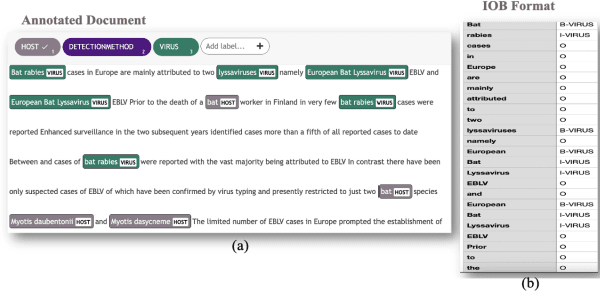
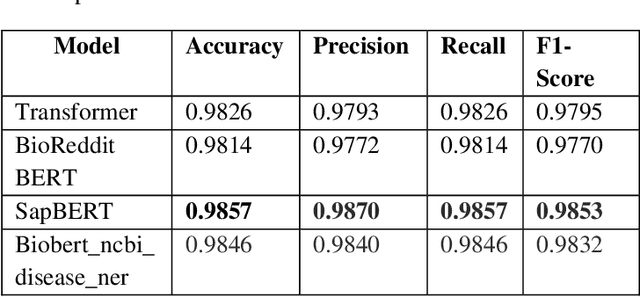
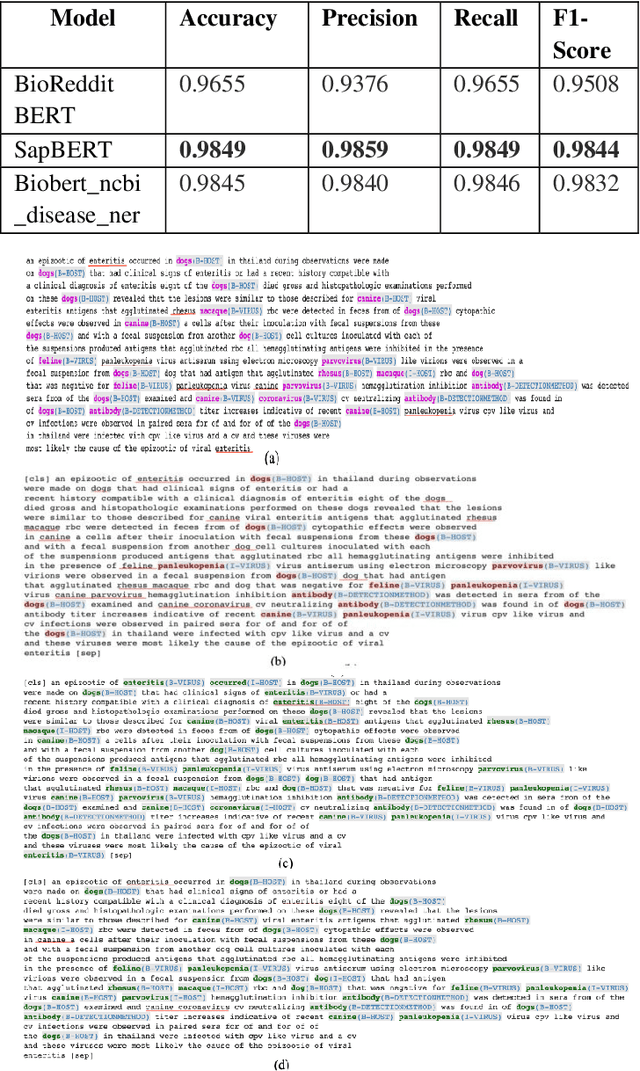
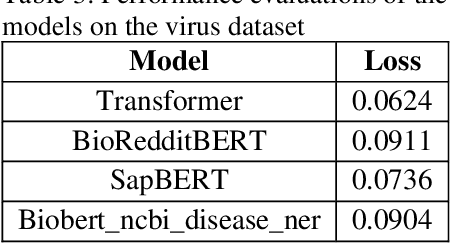
We describe a novel dataset for the automated recognition of named taxonomic and other entities relevant to the association of viruses with their hosts. We further describe some initial results using pre-trained models on the named-entity recognition (NER) task on this novel dataset. We propose that our dataset of manually annotated abstracts now offers a Gold Standard Corpus for training future NER models in the automated extraction of host-pathogen detection methods from scientific publications, and further explain how our work makes first steps towards predicting the important human health-related concept of viral spillover risk automatically from the scientific literature.
Tentacular Artificial Intelligence, and the Architecture Thereof, Introduced
Oct 14, 2018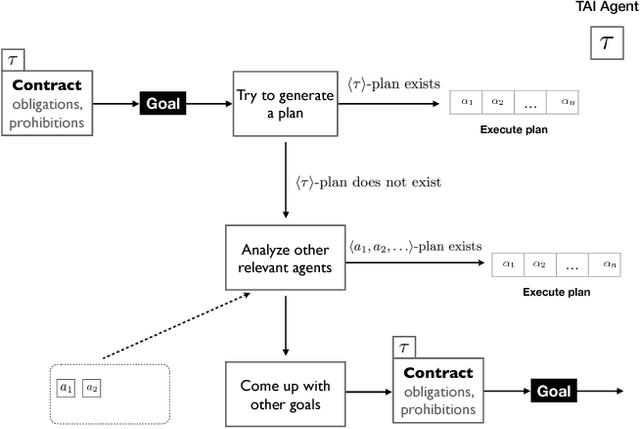
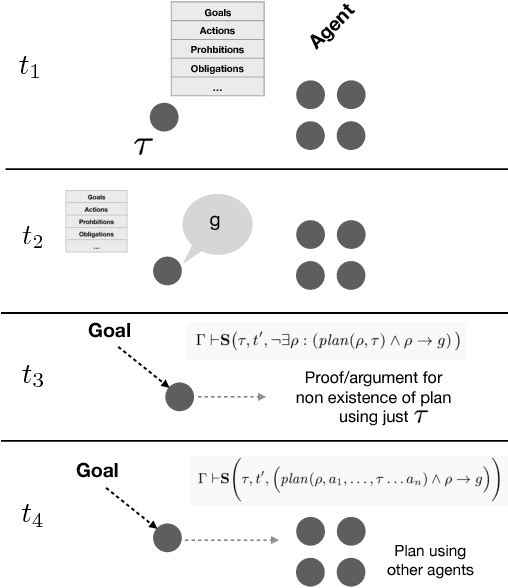
We briefly introduce herein a new form of distributed, multi-agent artificial intelligence, which we refer to as "tentacular." Tentacular AI is distinguished by six attributes, which among other things entail a capacity for reasoning and planning based in highly expressive calculi (logics), and which enlists subsidiary agents across distances circumscribed only by the reach of one or more given networks.