 Add to Chrome
 Add to Firefox
 Add to Edge
Multi-Modal Semantic Segmentation of Electrolyzer Components for Sustainable Hydrogen Technologies: A Dual-Branch Deep Learning Approach
Jul 17, 2026
Accurate segmentation of electrolyzer materials is essential for automated disassembly, sustainable recycling, and circular manufacturing in hydrogen technologies. However, this task is challenging due to strong visual similarity between materials, spectral overlap, irregular shapes, and severe class imbalance. To address these challenges, we propose an AI-driven dual-branch framework, Hyperspectral-RGB Electrolyzer Materials Network (HREM-Net), that combines hyperspectral imaging (HSI) and RGB images for electrolyzer material segmentation. We implemented several innovative modules, including Efficient Channel Attention, Coordinate Attention, Mobile Inverted Bottleneck blocks, and Atrous Spatial Pyramid Pooling to capture spectral and spatial features from HSI, and RGB images. With an adaptive gated cross-modal fusion module and composite loss function, HREM-Net achieves a mean class accuracy of 91.66% and a mean Intersection over Union (mIoU) of 0.82 on the Electrolyzers-HSI dataset, outperforming baseline segmentation models. Cross-dataset validation on the PCB-Vision dataset demonstrates strong generalization with 96.91% accuracy and 0.93 mIoU. This work poses its potential as an industrial application to improve electrolyzer efficiency, thereby improving the predictive maintenance of hydrogen production.

Bengali-Loop: Community Benchmarks for Long-Form Bangla ASR and Speaker Diarization
Feb 15, 2026Bengali (Bangla) remains under-resourced in long-form speech technology despite its wide use. We present Bengali-Loop, two community benchmarks to address this gap: (1) a long-form ASR corpus of 191 recordings (158.6 hours, 792k words) from 11 YouTube channels, collected via a reproducible subtitle-extraction pipeline and human-in-the-loop transcript verification; and (2) a speaker diarization corpus of 24 recordings (22 hours, 5,744 annotated segments) with fully manual speaker-turn labels in CSV format. Both benchmarks target realistic multi-speaker, long-duration content (e.g., Bangla drama/natok). We establish baselines (Tugstugi: 34.07% WER; pyannote.audio: 40.08% DER) and provide standardized evaluation protocols (WER/CER, DER), annotation rules, and data formats to support reproducible benchmarking and future model development for Bangla long-form ASR and diarization.
DeepAgent: A Dual Stream Multi Agent Fusion for Robust Multimodal Deepfake Detection
Dec 08, 2025The increasing use of synthetic media, particularly deepfakes, is an emerging challenge for digital content verification. Although recent studies use both audio and visual information, most integrate these cues within a single model, which remains vulnerable to modality mismatches, noise, and manipulation. To address this gap, we propose DeepAgent, an advanced multi-agent collaboration framework that simultaneously incorporates both visual and audio modalities for the effective detection of deepfakes. DeepAgent consists of two complementary agents. Agent-1 examines each video with a streamlined AlexNet-based CNN to identify the symbols of deepfake manipulation, while Agent-2 detects audio-visual inconsistencies by combining acoustic features, audio transcriptions from Whisper, and frame-reading sequences of images through EasyOCR. Their decisions are fused through a Random Forest meta-classifier that improves final performance by taking advantage of the different decision boundaries learned by each agent. This study evaluates the proposed framework using three benchmark datasets to demonstrate both component-level and fused performance. Agent-1 achieves a test accuracy of 94.35% on the combined Celeb-DF and FakeAVCeleb datasets. On the FakeAVCeleb dataset, Agent-2 and the final meta-classifier attain accuracies of 93.69% and 81.56%, respectively. In addition, cross-dataset validation on DeepFakeTIMIT confirms the robustness of the meta-classifier, which achieves a final accuracy of 97.49%, and indicates a strong capability across diverse datasets. These findings confirm that hierarchy-based fusion enhances robustness by mitigating the weaknesses of individual modalities and demonstrate the effectiveness of a multi-agent approach in addressing diverse types of manipulations in deepfakes.
DeepFakes: Detecting Forged and Synthetic Media Content Using Machine Learning
Sep 07, 2021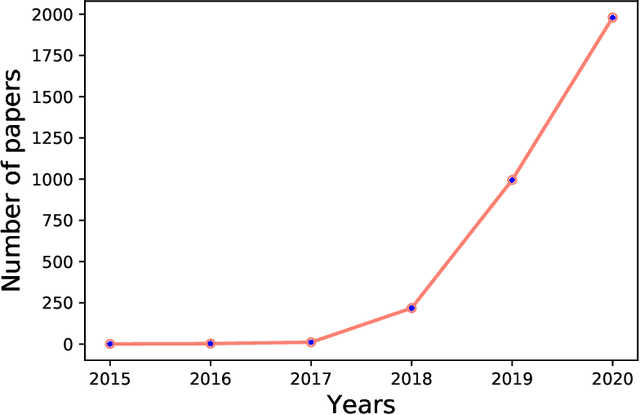
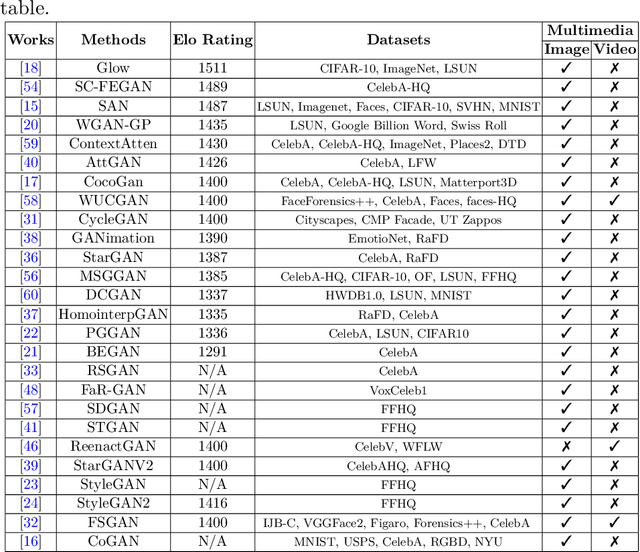
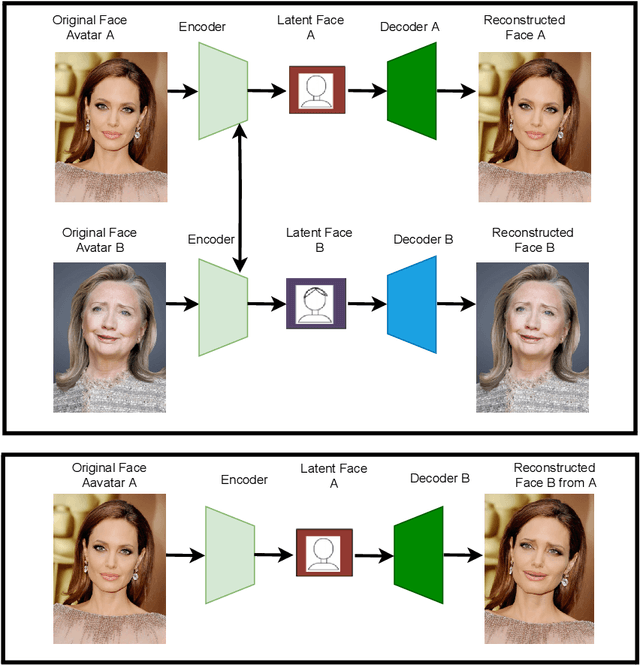
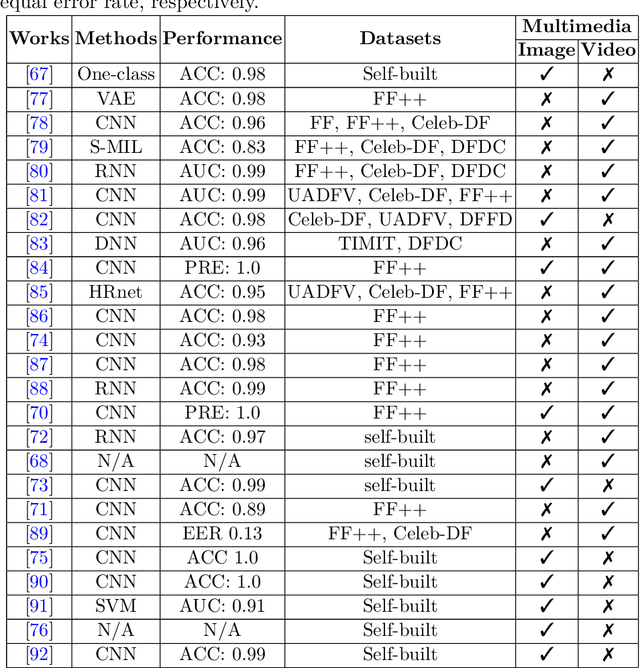
The rapid advancement in deep learning makes the differentiation of authentic and manipulated facial images and video clips unprecedentedly harder. The underlying technology of manipulating facial appearances through deep generative approaches, enunciated as DeepFake that have emerged recently by promoting a vast number of malicious face manipulation applications. Subsequently, the need of other sort of techniques that can assess the integrity of digital visual content is indisputable to reduce the impact of the creations of DeepFake. A large body of research that are performed on DeepFake creation and detection create a scope of pushing each other beyond the current status. This study presents challenges, research trends, and directions related to DeepFake creation and detection techniques by reviewing the notable research in the DeepFake domain to facilitate the development of more robust approaches that could deal with the more advance DeepFake in the future.