 Add to Chrome
 Add to Firefox
 Add to Edge
Agentic Artificial Intelligence (AI): Architectures, Taxonomies, and Evaluation of Large Language Model Agents
Jan 18, 2026
Artificial Intelligence is moving from models that only generate text to Agentic AI, where systems behave as autonomous entities that can perceive, reason, plan, and act. Large Language Models (LLMs) are no longer used only as passive knowledge engines but as cognitive controllers that combine memory, tool use, and feedback from their environment to pursue extended goals. This shift already supports the automation of complex workflows in software engineering, scientific discovery, and web navigation, yet the variety of emerging designs, from simple single loop agents to hierarchical multi agent systems, makes the landscape hard to navigate. In this paper, we investigate architectures and propose a unified taxonomy that breaks agents into Perception, Brain, Planning, Action, Tool Use, and Collaboration. We use this lens to describe the move from linear reasoning procedures to native inference time reasoning models, and the transition from fixed API calls to open standards like the Model Context Protocol (MCP) and Native Computer Use. We also group the environments in which these agents operate, including digital operating systems, embodied robotics, and other specialized domains, and we review current evaluation practices. Finally, we highlight open challenges, such as hallucination in action, infinite loops, and prompt injection, and outline future research directions toward more robust and reliable autonomous systems.

When Algorithms Manage Humans: A Double Machine Learning Approach to Estimating Nonlinear Effects of Algorithmic Control on Gig Worker Performance and Wellbeing
Dec 25, 2025A central question for the future of work is whether person centered management can survive when algorithms take on managerial roles. Standard tools often miss what is happening because worker responses to algorithmic systems are rarely linear. We use a Double Machine Learning framework to estimate a moderated mediation model without imposing restrictive functional forms. Using survey data from 464 gig workers, we find a clear nonmonotonic pattern. Supportive HR practices improve worker wellbeing, but their link to performance weakens in a murky middle where algorithmic oversight is present yet hard to interpret. The relationship strengthens again when oversight is transparent and explainable. These results show why simple linear specifications can miss the pattern and sometimes suggest the opposite conclusion. For platform design, the message is practical: control that is only partly defined creates confusion, but clear rules and credible recourse can make strong oversight workable. Methodologically, the paper shows how Double Machine Learning can be used to estimate conditional indirect effects in organizational research without forcing the data into a linear shape.
A-QCF-Net: An Adaptive Quaternion Cross-Fusion Network for Multimodal Liver Tumor Segmentation from Unpaired Datasets
Dec 25, 2025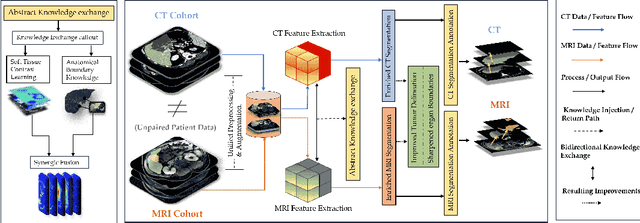
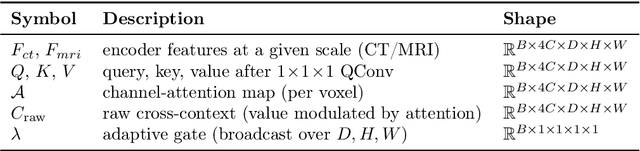
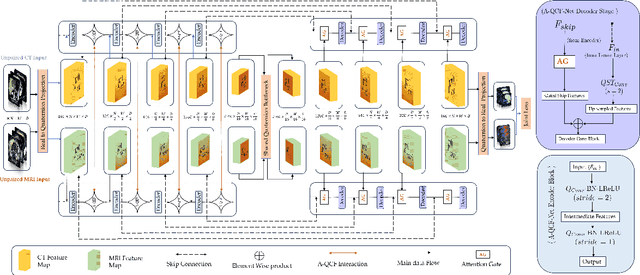
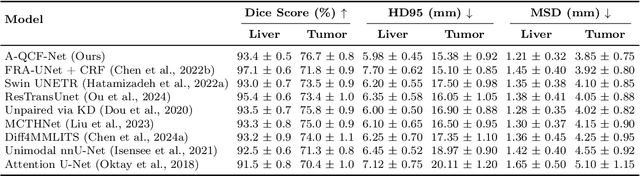
Multimodal medical imaging provides complementary information that is crucial for accurate delineation of pathology, but the development of deep learning models is limited by the scarcity of large datasets in which different modalities are paired and spatially aligned. This paper addresses this fundamental limitation by proposing an Adaptive Quaternion Cross-Fusion Network (A-QCF-Net) that learns a single unified segmentation model from completely separate and unpaired CT and MRI cohorts. The architecture exploits the parameter efficiency and expressive power of Quaternion Neural Networks to construct a shared feature space. At its core is the Adaptive Quaternion Cross-Fusion (A-QCF) block, a data driven attention module that enables bidirectional knowledge transfer between the two streams. By learning to modulate the flow of information dynamically, the A-QCF block allows the network to exchange abstract modality specific expertise, such as the sharp anatomical boundary information available in CT and the subtle soft tissue contrast provided by MRI. This mutual exchange regularizes and enriches the feature representations of both streams. We validate the framework by jointly training a single model on the unpaired LiTS (CT) and ATLAS (MRI) datasets. The jointly trained model achieves Tumor Dice scores of 76.7% on CT and 78.3% on MRI, significantly exceeding the strong unimodal nnU-Net baseline by margins of 5.4% and 4.7% respectively. Furthermore, comprehensive explainability analysis using Grad-CAM and Grad-CAM++ confirms that the model correctly focuses on relevant pathological structures, ensuring the learned representations are clinically meaningful. This provides a robust and clinically viable paradigm for unlocking the large unpaired imaging archives that are common in healthcare.