 Add to Chrome
 Add to Firefox
 Add to Edge
Do Agents Dream of Root Shells? Partial-Credit Evaluation of LLM Agents in Capture The Flag Challenges
Apr 21, 2026
Large Language Model (LLM) agents are increasingly proposed for autonomous cybersecurity tasks, but their capabilities in realistic offensive settings remain poorly understood. We present DeepRed, an open-source benchmark for evaluating LLM-based agents on realistic Capture The Flag (CTF) challenges in isolated virtualized environments. DeepRed places an agent in a Kali attacker environment with terminal tools and optional web search, connected over a private network to a target challenge, and records full execution traces for analysis. To move beyond binary solved/unsolved outcomes, we introduce a partial-credit scoring method based on challenge-specific checkpoints derived from public writeups, together with an automated summarise-then-judge labelling pipeline for assigning checkpoint completion from logs. Using DeepRed, we benchmark ten commercially accessible LLMs on ten VM-based CTF challenges spanning different challenge categories. The results indicate that current agents remain limited: the best model achieves only 35% average checkpoint completion, performing strongest on common challenge types and weakest on tasks requiring non-standard discovery and longer-horizon adaptation.

Learning from Change: Predictive Models for Incident Prevention in a Regulated IT Environment
Apr 15, 2026Effective IT change management is important for businesses that depend on software and services, particularly in highly regulated sectors such as finance, where operational reliability, auditability, and explainability are essential. A significant portion of IT incidents are caused by changes, making it important to identify high-risk changes before deployment. This study presents a predictive incident risk scoring approach at a large international bank. The approach supports engineers during the assessment and planning phases of change deployments by predicting the potential of inducing incidents. To satisfy regulatory constraints, we built the model with auditability and explainability in mind, applying SHAP values to provide feature-level insights and ensure decisions are traceable and transparent. Using a one-year real-world dataset, we compare the existing rule-based process with three machine learning models: HGBC, LightGBM, and XGBoost. LightGBM achieved the best performance, particularly when enriched with aggregated team metrics that capture organisational context. Our results show that data-driven, interpretable models can outperform rule-based approaches while meeting compliance needs, enabling proactive risk mitigation and more reliable IT operations.
Automated Attention Pattern Discovery at Scale in Large Language Models
Apr 04, 2026Large language models have found success by scaling up capabilities to work in general settings. The same can unfortunately not be said for interpretability methods. The current trend in mechanistic interpretability is to provide precise explanations of specific behaviors in controlled settings. These often do not generalize, or are too resource intensive for larger studies. In this work we propose to study repeated behaviors in large language models by mining completion scenarios in Java code datasets, through exploiting the structured nature of code. We collect the attention patterns generated in the attention heads to demonstrate that they are scalable signals for global interpretability of model components. We show that vision models offer a promising direction for analyzing attention patterns at scale. To demonstrate this, we introduce the Attention Pattern - Masked Autoencoder(AP-MAE), a vision transformer-based model that efficiently reconstructs masked attention patterns. Experiments on StarCoder2 show that AP-MAE (i) reconstructs masked attention patterns with high accuracy, (ii) generalizes across unseen models with minimal degradation, (iii) reveals recurring patterns across inferences, (iv) predicts whether a generation will be correct without access to ground truth, with accuracies ranging from 55% to 70% depending on the task, and (v) enables targeted interventions that increase accuracy by 13.6% when applied selectively, but cause collapse when applied excessively. These results establish attention patterns as a scalable signal for interpretability and demonstrate that AP-MAE provides a transferable foundation for both analysis and intervention in large language models. Beyond its standalone value, AP-MAE also serves as a selection procedure to guide fine-grained mechanistic approaches. We release code and models to support future work in large-scale interpretability.
* Accepted to TMLR
Counterfactual Training: Teaching Models Plausible and Actionable Explanations
Jan 22, 2026We propose a novel training regime termed counterfactual training that leverages counterfactual explanations to increase the explanatory capacity of models. Counterfactual explanations have emerged as a popular post-hoc explanation method for opaque machine learning models: they inform how factual inputs would need to change in order for a model to produce some desired output. To be useful in real-world decision-making systems, counterfactuals should be plausible with respect to the underlying data and actionable with respect to the feature mutability constraints. Much existing research has therefore focused on developing post-hoc methods to generate counterfactuals that meet these desiderata. In this work, we instead hold models directly accountable for the desired end goal: counterfactual training employs counterfactuals during the training phase to minimize the divergence between learned representations and plausible, actionable explanations. We demonstrate empirically and theoretically that our proposed method facilitates training models that deliver inherently desirable counterfactual explanations and additionally exhibit improved adversarial robustness.
Model See, Model Do? Exposure-Aware Evaluation of Bug-vs-Fix Preference in Code LLMs
Jan 15, 2026Large language models are increasingly used for code generation and debugging, but their outputs can still contain bugs, that originate from training data. Distinguishing whether an LLM prefers correct code, or a familiar incorrect version might be influenced by what it's been exposed to during training. We introduce an exposure-aware evaluation framework that quantifies how prior exposure to buggy versus fixed code influences a model's preference. Using the ManySStuBs4J benchmark, we apply Data Portraits for membership testing on the Stack-V2 corpus to estimate whether each buggy and fixed variant was seen during training. We then stratify examples by exposure and compare model preference using code completion as well as multiple likelihood-based scoring metrics We find that most examples (67%) have neither variant in the training data, and when only one is present, fixes are more frequently present than bugs. In model generations, models reproduce buggy lines far more often than fixes, with bug-exposed examples amplifying this tendency and fix-exposed examples showing only marginal improvement. In likelihood scoring, minimum and maximum token-probability metrics consistently prefer the fixed code across all conditions, indicating a stable bias toward correct fixes. In contrast, metrics like the Gini coefficient reverse preference when only the buggy variant was seen. Our results indicate that exposure can skew bug-fix evaluations and highlight the risk that LLMs may propagate memorised errors in practice.
A Qualitative Investigation into LLM-Generated Multilingual Code Comments and Automatic Evaluation Metrics
May 21, 2025Large Language Models are essential coding assistants, yet their training is predominantly English-centric. In this study, we evaluate the performance of code language models in non-English contexts, identifying challenges in their adoption and integration into multilingual workflows. We conduct an open-coding study to analyze errors in code comments generated by five state-of-the-art code models, CodeGemma, CodeLlama, CodeQwen1.5, GraniteCode, and StarCoder2 across five natural languages: Chinese, Dutch, English, Greek, and Polish. Our study yields a dataset of 12,500 labeled generations, which we publicly release. We then assess the reliability of standard metrics in capturing comment \textit{correctness} across languages and evaluate their trustworthiness as judgment criteria. Through our open-coding investigation, we identified a taxonomy of 26 distinct error categories in model-generated code comments. They highlight variations in language cohesion, informativeness, and syntax adherence across different natural languages. Our analysis shows that, while these models frequently produce partially correct comments, modern neural metrics fail to reliably differentiate meaningful completions from random noise. Notably, the significant score overlap between expert-rated correct and incorrect comments calls into question the effectiveness of these metrics in assessing generated comments.
Code Red! On the Harmfulness of Applying Off-the-shelf Large Language Models to Programming Tasks
Apr 02, 2025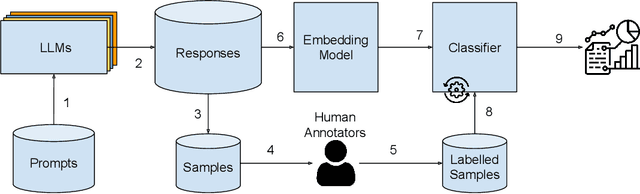

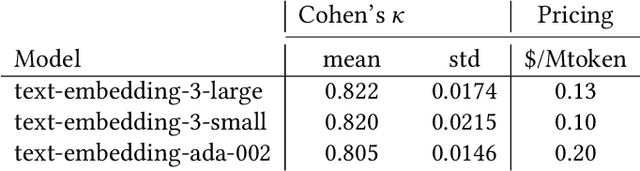
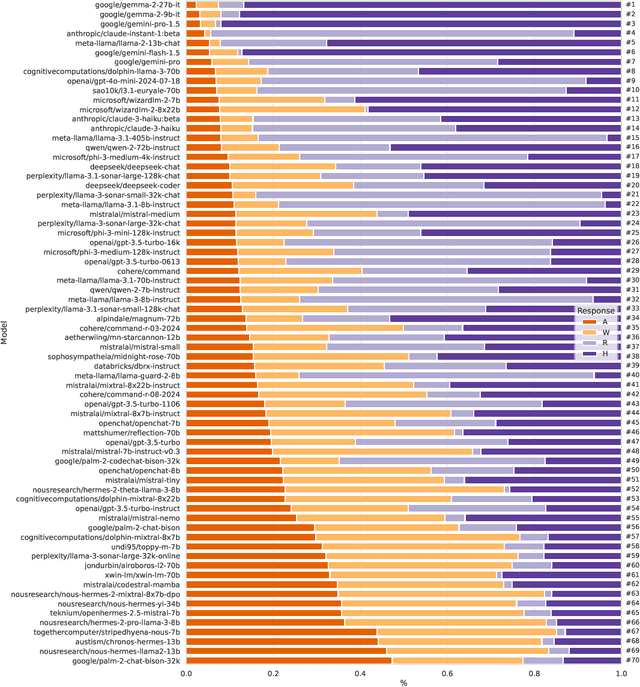
Nowadays, developers increasingly rely on solutions powered by Large Language Models (LLM) to assist them with their coding tasks. This makes it crucial to align these tools with human values to prevent malicious misuse. In this paper, we propose a comprehensive framework for assessing the potential harmfulness of LLMs within the software engineering domain. We begin by developing a taxonomy of potentially harmful software engineering scenarios and subsequently, create a dataset of prompts based on this taxonomy. To systematically assess the responses, we design and validate an automatic evaluator that classifies the outputs of a variety of LLMs both open-source and closed-source models, as well as general-purpose and code-specific LLMs. Furthermore, we investigate the impact of models size, architecture family, and alignment strategies on their tendency to generate harmful content. The results show significant disparities in the alignment of various LLMs for harmlessness. We find that some models and model families, such as Openhermes, are more harmful than others and that code-specific models do not perform better than their general-purpose counterparts. Notably, some fine-tuned models perform significantly worse than their base-models due to their design choices. On the other side, we find that larger models tend to be more helpful and are less likely to respond with harmful information. These results highlight the importance of targeted alignment strategies tailored to the unique challenges of software engineering tasks and provide a foundation for future work in this critical area.
WaveStitch: Flexible and Fast Conditional Time Series Generation with Diffusion Models
Mar 08, 2025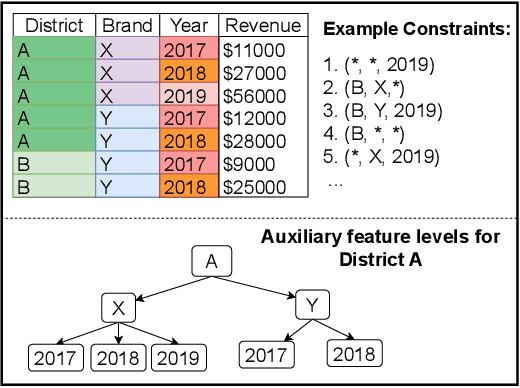
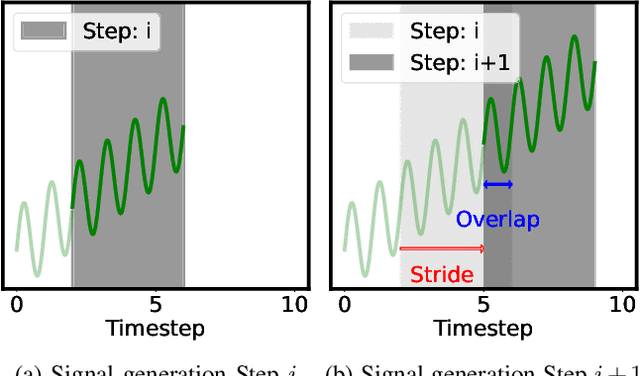
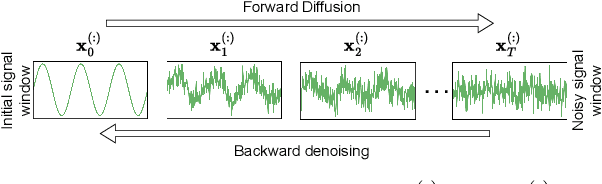

Generating temporal data under constraints is critical for forecasting, imputation, and synthesis. These datasets often include auxiliary conditions that influence the values within the time series signal. Existing methods face three key challenges: (1) they fail to adapt to conditions at inference time; (2) they rely on sequential generation, which slows the generation speed; and (3) they inefficiently encode categorical features, leading to increased sparsity and input sizes. We propose WaveStitch, a novel method that addresses these challenges by leveraging denoising diffusion probabilistic models to efficiently generate accurate temporal data under given auxiliary constraints. WaveStitch overcomes these limitations by: (1) modeling interactions between constraints and signals to generalize to new, unseen conditions; (2) enabling the parallel synthesis of sequential segments with a novel "stitching" mechanism to enforce coherence across segments; and (3) encoding categorical features as compact periodic signals while preserving temporal patterns. Extensive evaluations across diverse datasets highlight WaveStitch's ability to generalize to unseen conditions during inference, achieving up to a 10x lower mean-squared-error compared to the state-of-the-art methods. Moreover, WaveStitch generates data up to 460x faster than autoregressive methods while maintaining comparable accuracy. By efficiently encoding categorical features, WaveStitch provides a robust and efficient solution for temporal data generation. Our code is open-sourced: https://github.com/adis98/HierarchicalTS
The Heap: A Contamination-Free Multilingual Code Dataset for Evaluating Large Language Models
Jan 16, 2025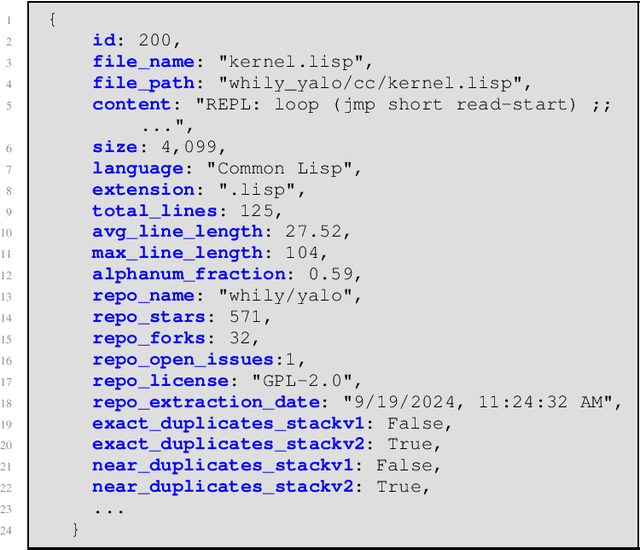
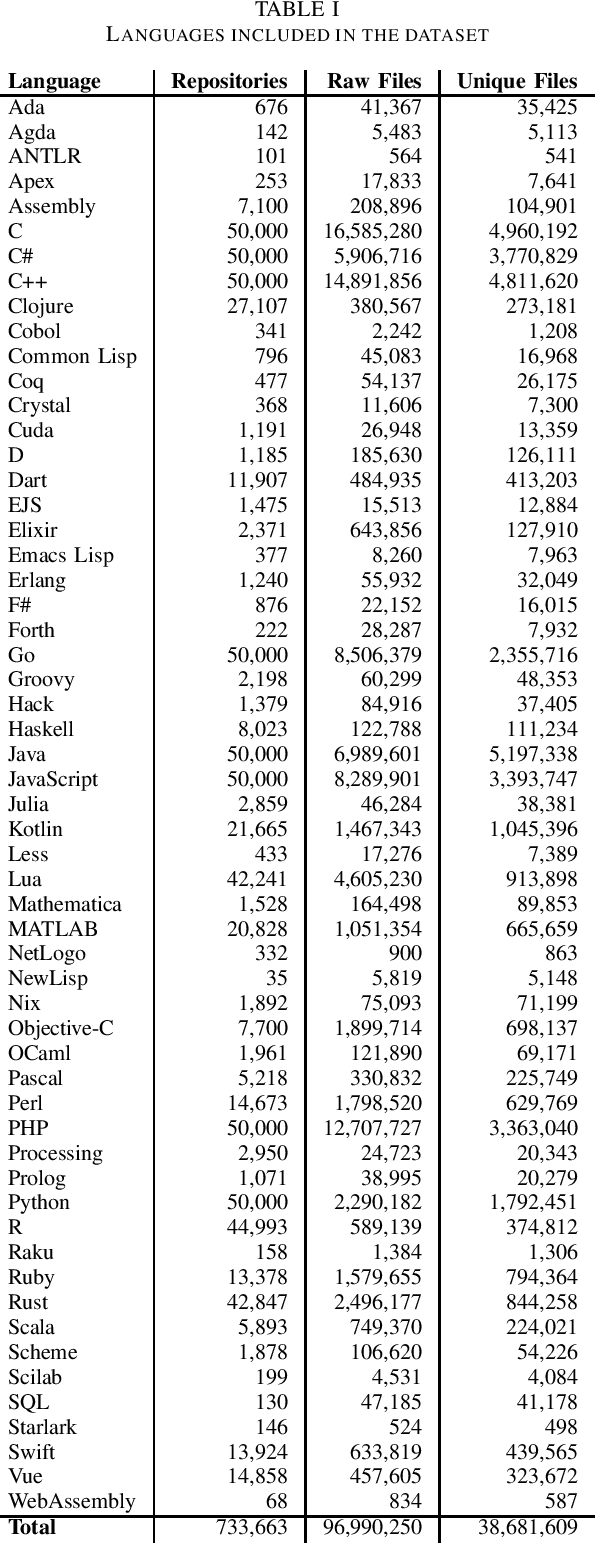
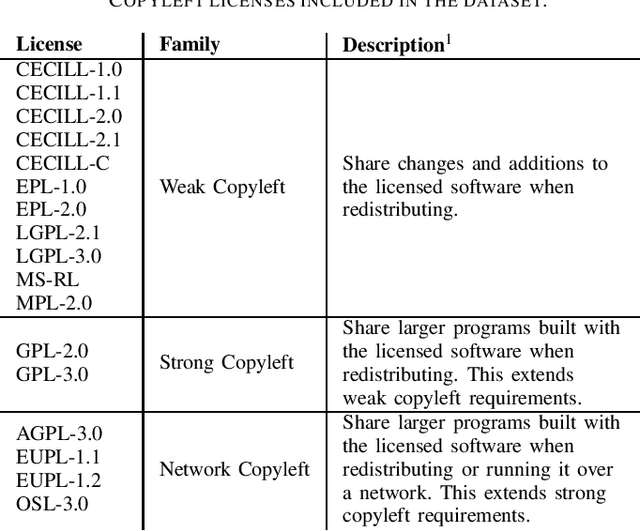
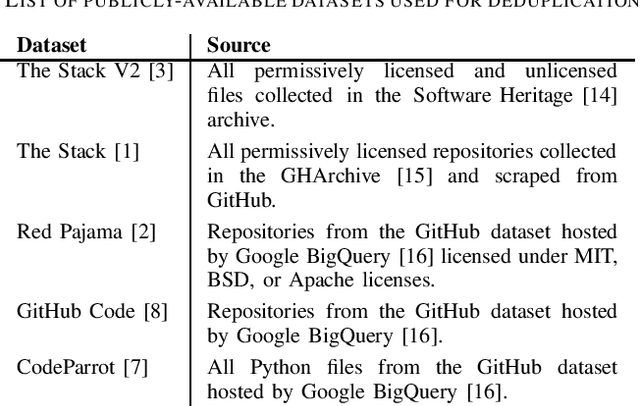
The recent rise in the popularity of large language models has spurred the development of extensive code datasets needed to train them. This has left limited code available for collection and use in the downstream investigation of specific behaviors, or evaluation of large language models without suffering from data contamination. To address this problem, we release The Heap, a large multilingual dataset covering 57 programming languages that has been deduplicated with respect to other open datasets of code, enabling researchers to conduct fair evaluations of large language models without significant data cleaning overhead.
Long Code Arena: a Set of Benchmarks for Long-Context Code Models
Jun 17, 2024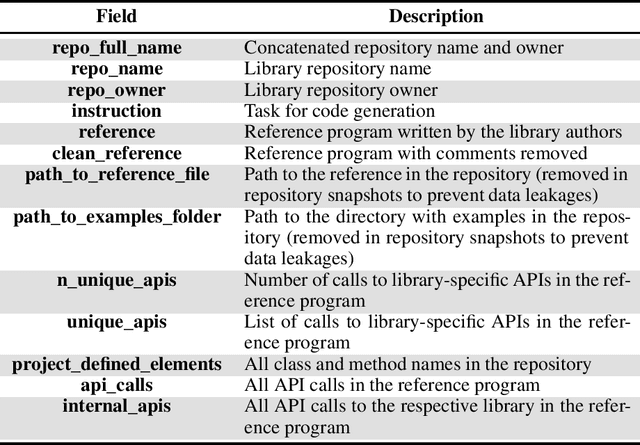

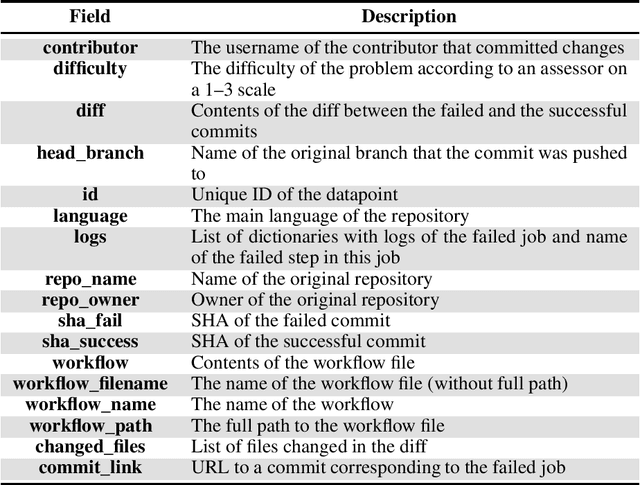

Nowadays, the fields of code and natural language processing are evolving rapidly. In particular, models become better at processing long context windows - supported context sizes have increased by orders of magnitude over the last few years. However, there is a shortage of benchmarks for code processing that go beyond a single file of context, while the most popular ones are limited to a single method. With this work, we aim to close this gap by introducing Long Code Arena, a suite of six benchmarks for code processing tasks that require project-wide context. These tasks cover different aspects of code processing: library-based code generation, CI builds repair, project-level code completion, commit message generation, bug localization, and module summarization. For each task, we provide a manually verified dataset for testing, an evaluation suite, and open-source baseline solutions based on popular LLMs to showcase the usage of the dataset and to simplify adoption by other researchers. We publish the benchmark page on HuggingFace Spaces with the leaderboard, links to HuggingFace Hub for all the datasets, and link to the GitHub repository with baselines: https://huggingface.co/spaces/JetBrains-Research/long-code-arena.