 Add to Chrome
 Add to Firefox
 Add to Edge
Polypersona: Persona-Grounded LLM for Synthetic Survey Responses
Dec 16, 2025
This paper introduces PolyPersona, a generative framework for synthesizing persona-conditioned survey responses across multiple domains. The framework instruction-tunes compact chat models using parameter-efficient LoRA adapters with 4-bit quantization under a resource-adaptive training setup. A dialogue-based data pipeline explicitly preserves persona cues, ensuring consistent behavioral alignment across generated responses. Using this pipeline, we construct a dataset of 3,568 synthetic survey responses spanning ten domains and 433 distinct personas, enabling controlled instruction tuning and systematic multi-domain evaluation. We evaluate the generated responses using a multi-metric evaluation suite that combines standard text generation metrics, including BLEU, ROUGE, and BERTScore, with survey-specific metrics designed to assess structural coherence, stylistic consistency, and sentiment alignment.Experimental results show that compact models such as TinyLlama 1.1B and Phi-2 achieve performance comparable to larger 7B to 8B baselines, with a highest BLEU score of 0.090 and ROUGE-1 of 0.429. These findings demonstrate that persona-conditioned fine-tuning enables small language models to generate reliable and coherent synthetic survey data. The proposed framework provides an efficient and reproducible approach for survey data generation, supporting scalable evaluation while facilitating bias analysis through transparent and open protocols.

Residual GRU+MHSA: A Lightweight Hybrid Recurrent Attention Model for Cardiovascular Disease Detection
Dec 16, 2025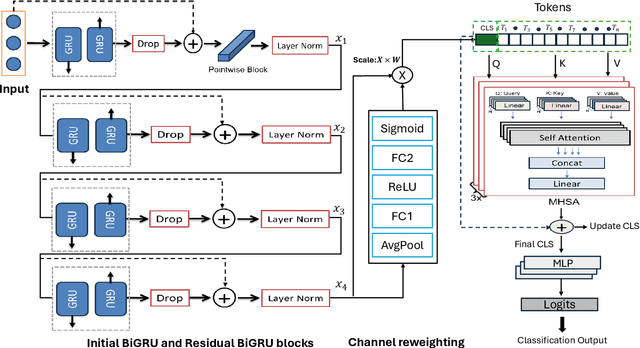
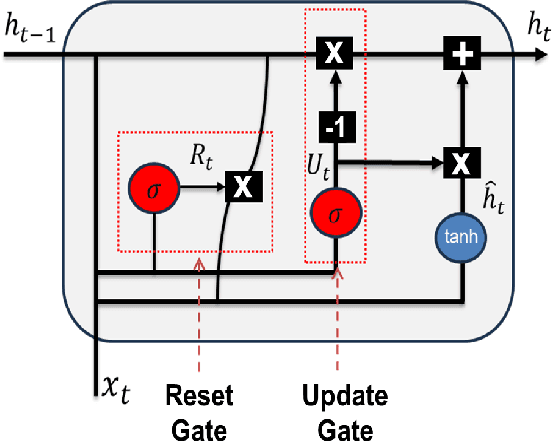
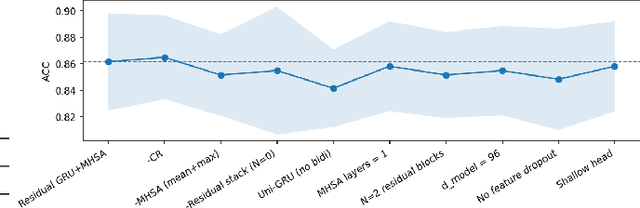
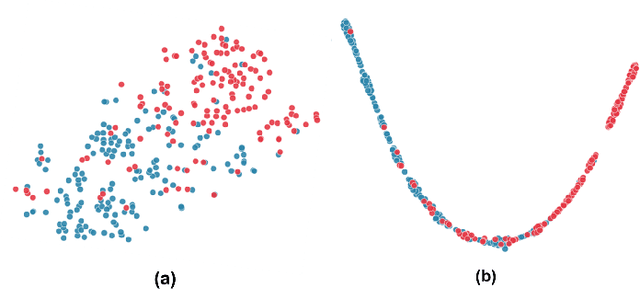
Cardiovascular disease (CVD) remains the leading cause of mortality worldwide, underscoring the need for reliable and efficient predictive tools that support early intervention. Traditional diagnostic approaches rely on handcrafted features and clinician expertise, while machine learning methods improve reproducibility but often struggle to generalize across noisy and heterogeneous clinical data. In this work, we propose Residual GRU with Multi-Head Self-Attention, a compact deep learning architecture designed for tabular clinical records. The model integrates residual bidirectional gated recurrent units for sequential modeling of feature columns, a channel reweighting block, and multi-head self-attention pooling with a learnable classification token to capture global context. We evaluate the model on the UCI Heart Disease dataset using 5-fold stratified cross-validation and compare it against classical methods such as Logistic Regression, Random Forest, and Support Vector Machines, as well as modern deep learning baselines including DeepMLP, convolutional networks, recurrent networks, and Transformers. The proposed model achieves an accuracy of 0.861, macro-F1 of 0.860, ROC-AUC of 0.908, and PR-AUC of 0.904, outperforming all baselines. Ablation studies confirm the individual contributions of residual recurrence, channel gating, and attention pooling. t-SNE visualizations further indicate that the learned embeddings exhibit clearer separation between disease and non-disease classes compared to raw features. These results demonstrate that lightweight hybrid recurrent and attention-based architectures provide a strong balance between accuracy and efficiency for clinical risk prediction, supporting deployment in resource-constrained healthcare settings.
ColFigPhotoAttnNet: Reliable Finger Photo Presentation Attack Detection Leveraging Window-Attention on Color Spaces
Mar 07, 2025Finger photo Presentation Attack Detection (PAD) can significantly strengthen smartphone device security. However, these algorithms are trained to detect certain types of attacks. Furthermore, they are designed to operate on images acquired by specific capture devices, leading to poor generalization and a lack of robustness in handling the evolving nature of mobile hardware. The proposed investigation is the first to systematically analyze the performance degradation of existing deep learning PAD systems, convolutional and transformers, in cross-capture device settings. In this paper, we introduce the ColFigPhotoAttnNet architecture designed based on window attention on color channels, followed by the nested residual network as the predictor to achieve a reliable PAD. Extensive experiments using various capture devices, including iPhone13 Pro, GooglePixel 3, Nokia C5, and OnePlusOne, were carried out to evaluate the performance of proposed and existing methods on three publicly available databases. The findings underscore the effectiveness of our approach.