 Add to Chrome
 Add to Firefox
 Add to Edge
On the Limits of Layer Pruning for Generative Reasoning in LLMs
Feb 02, 2026
Recent works have shown that layer pruning can compress large language models (LLMs) while retaining strong performance on classification benchmarks with little or no finetuning. However, existing pruning techniques often suffer severe degradation on generative reasoning tasks. Through a systematic study across multiple model families, we find that tasks requiring multi-step reasoning are particularly sensitive to depth reduction. Beyond surface-level text degeneration, we observe degradation of critical algorithmic capabilities, including arithmetic computation for mathematical reasoning and balanced parenthesis generation for code synthesis. Under realistic post-training constraints, without access to pretraining-scale data or compute, we evaluate a simple mitigation strategy based on supervised finetuning with Self-Generated Responses. This approach achieves strong recovery on classification tasks, retaining up to 90\% of baseline performance, and yields substantial gains of up to 20--30 percentage points on generative benchmarks compared to prior post-pruning techniques. Crucially, despite these gains, recovery for generative reasoning remains fundamentally limited relative to classification tasks and is viable primarily at lower pruning ratios. Overall, we characterize the practical limits of layer pruning for generative reasoning and provide guidance on when depth reduction can be applied effectively under constrained post-training regimes.

Reinforcement Learning vs. Distillation: Understanding Accuracy and Capability in LLM Reasoning
May 20, 2025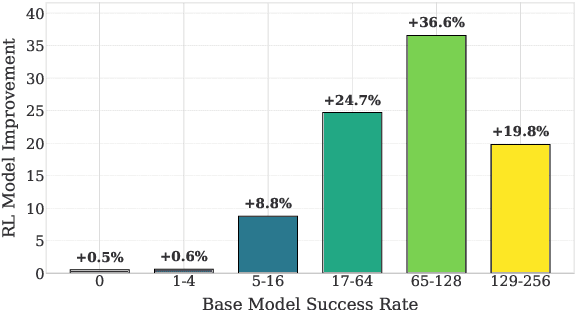
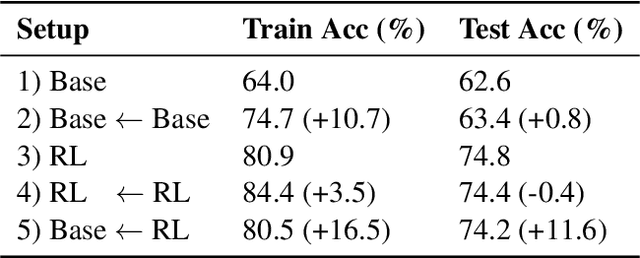
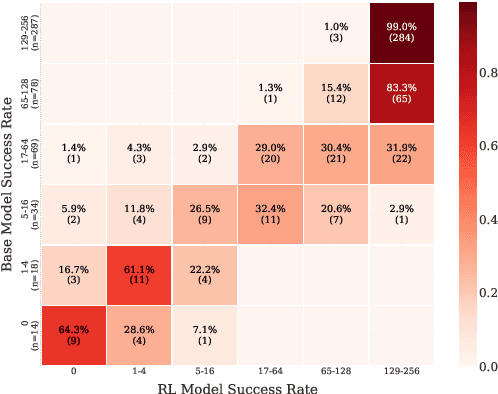
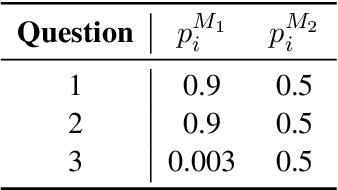
Recent studies have shown that reinforcement learning with verifiable rewards (RLVR) enhances overall accuracy but fails to improve capability, while distillation can improve both. In this paper, we investigate the mechanisms behind these phenomena. First, we demonstrate that RLVR does not improve capability because it focuses on improving the accuracy of the less-difficult questions to the detriment of the accuracy of the most difficult questions, thereby leading to no improvement in capability. Second, we find that RLVR does not merely increase the success probability for the less difficult questions, but in our small model settings produces quality responses that were absent in its output distribution before training. In addition, we show these responses are neither noticeably longer nor feature more reflection-related keywords, underscoring the need for more reliable indicators of response quality. Third, we show that while distillation reliably improves accuracy by learning strong reasoning patterns, it only improves capability when new knowledge is introduced. Moreover, when distilling only with reasoning patterns and no new knowledge, the accuracy of the less-difficult questions improves to the detriment of the most difficult questions, similar to RLVR. Together, these findings offer a clearer understanding of how RLVR and distillation shape reasoning behavior in language models.
Warm Up Before You Train: Unlocking General Reasoning in Resource-Constrained Settings
May 19, 2025Designing effective reasoning-capable LLMs typically requires training using Reinforcement Learning with Verifiable Rewards (RLVR) or distillation with carefully curated Long Chain of Thoughts (CoT), both of which depend heavily on extensive training data. This creates a major challenge when the amount of quality training data is scarce. We propose a sample-efficient, two-stage training strategy to develop reasoning LLMs under limited supervision. In the first stage, we "warm up" the model by distilling Long CoTs from a toy domain, namely, Knights \& Knaves (K\&K) logic puzzles to acquire general reasoning skills. In the second stage, we apply RLVR to the warmed-up model using a limited set of target-domain examples. Our experiments demonstrate that this two-phase approach offers several benefits: $(i)$ the warmup phase alone facilitates generalized reasoning, leading to performance improvements across a range of tasks, including MATH, HumanEval$^{+}$, and MMLU-Pro. $(ii)$ When both the base model and the warmed-up model are RLVR trained on the same small dataset ($\leq100$ examples), the warmed-up model consistently outperforms the base model; $(iii)$ Warming up before RLVR training allows a model to maintain cross-domain generalizability even after training on a specific domain; $(iv)$ Introducing warmup in the pipeline improves not only accuracy but also overall sample efficiency during RLVR training. The results in this paper highlight the promise of warmup for building robust reasoning LLMs in data-scarce environments.