 Add to Chrome
 Add to Firefox
 Add to Edge
SICAGE: Speaker-Independent Culture-Aware Gesture Generation using TED4C-L Dataset
Jun 29, 2026
Recent co-speech gesture generation methods often overlook cultural differences, limiting their effectiveness in human-agent interaction. Moreover, culture-conditioned models are rarely evaluated under speaker-disjoint splits, so apparent "cultural" behavior may be confounded with speaker-specific gesturing style. We introduce SICAGE, a modular framework for culture-aware co-speech gesture generation that conditions motion synthesis models on speaker-independent cultural representations. SICAGE learns these representations from audio and text by treating each speaker as a separate domain while imposing invariance across speakers. This encourages representations to remain culture-discriminative while reducing dependence on speaker identity. The resulting cultural embeddings condition a multimodal generator to produce culturally appropriate gestures. We instantiate this idea with two domain generalization approaches: adversarial learning and Fishr regularization. We further introduce ALaDiT, a real-time diffusion-based gesture generator designed to efficiently incorporate the learned cultural embeddings. To validate our method, we built TED4C-L, a 106-hour multimodal dataset of 764 TED speakers from four cultural groups. Experiments show that SICAGE improves motion realism, diversity, beat synchronization, semantic relevance, and cultural consistency.

A Multi-Operator Mixed-Reality Interface for Multi-Robot Control and Coordination: Co-Located and Private Workspace Collaboration
Jun 05, 2026Multi-operator control of robot teams requires not only access to the same mission information, but also mechanisms for maintaining shared awareness and preventing conflicting interventions. Building on our previous HORUS interface (Holistic Operational Reality for Unified Systems) we present a mixed-reality interface that extends single-operator multi-robot supervision to collaborative multi-operator use. The system supports two complementary modes: a co-located shared workspace, in which operators observe and manipulate the same mini-map in the same physical location, and a private-workspace mode, in which operators work on the same mission through independently placed local workspaces. The architecture combines registration-driven scene construction, lightweight shared-session synchronization, and per-robot control leases to support collaborative monitoring, tasking, and teleoperation while preventing conflicting commands. We evaluated the approach in a human-subject study with 36 participants (18 pairs) controlling three Nova Carter mobile robots in two search environments. The performance of the objective task was comparable across the two modes, indicating that both modes supported effective mission execution. However, the co-located shared workspace significantly improved perceived collaboration, shared understanding, and handoff clarity, and was the preferred collaborative mode. These results indicate that physically co-locating the MR workspace improves how operators coordinate even when the underlying robot-control tools remain unchanged.
BPDA-GMM: Bayesian Probabilistic Data Association via Gaussian Mixture Models for Semantic SLAM
Jun 03, 2026Probabilistic data association (PDA) improves semantic SLAM in perceptually aliased scenes, but existing methods often assume a fixed landmark set, recompute association weights as the map grows, or rely on hand-tuned null-hypothesis weights. To address these limitations, we propose \textbf{BPDA-GMM}, an online Bayesian PDA framework for semantic SLAM with a growing object-level map. BPDA-GMM uses a Dirichlet-process prior to induce a Chinese Restaurant Process (CRP) association model, where accumulated evidence favors existing landmarks, and the concentration parameter assigns probability mass to new landmarks. For each semantic detection, plausible candidates are selected by a joint semantic-geometric gate, CRP-weighted association probabilities are computed, and object landmarks are updated as semantic Gaussians in closed form. The resulting landmark set forms a Gaussian mixture model, and its dominant component is passed to the back-end as a max-mixture semantic factor. When association weights are inconclusive, an ambiguity-triggered $α$-divergence tempering step improves discrimination. Finally, a decoupled back-end zeroes the pose Jacobian of semantic factors, allowing noisy detections to refine landmarks without directly perturbing the trajectory. Experiments in simulation and on a real indoor dataset demonstrate improved trajectory accuracy, semantic mapping quality, and robustness to perceptual aliasing and classifier errors over state-of-the-art baselines. Code and video are publicly available at https://github.com/thanhnguyencanh/BPDA-SLAM.
Enhancing Worker Safety in Harbors Using Quadruped Robots
Jan 27, 2026Infrastructure inspection is becoming increasingly relevant in the field of robotics due to its significant impact on ensuring workers' safety. The harbor environment presents various challenges in designing a robotic solution for inspection, given the complexity of daily operations. This work introduces an initial phase to identify critical areas within the port environment. Following this, a preliminary solution using a quadruped robot for inspecting these critical areas is analyzed.
Designing Empathetic Companions: Exploring Personality, Emotion, and Trust in Social Robots
Apr 17, 2025How should a companion robot behave? In this research, we present a cognitive architecture based on a tailored personality model to investigate the impact of robotic personalities on the perception of companion robots. Drawing from existing literature, we identified empathy, trust, and enjoyability as key factors in building companionship with social robots. Based on these insights, we implemented a personality-dependent, emotion-aware generator, recognizing the crucial role of robot emotions in shaping these elements. We then conducted a user study involving 84 dyadic conversation sessions with the emotional robot Navel, which exhibited different personalities. Results were derived from a multimodal analysis, including questionnaires, open-ended responses, and behavioral observations. This approach allowed us to validate the developed emotion generator and explore the relationship between the personality traits of Agreeableness, Extraversion, Conscientiousness, and Empathy. Furthermore, we drew robust conclusions on how these traits influence relational trust, capability trust, enjoyability, and sociability.
Toward a Universal Concept of Artificial Personality: Implementing Robotic Personality in a Kinova Arm
Jan 12, 2025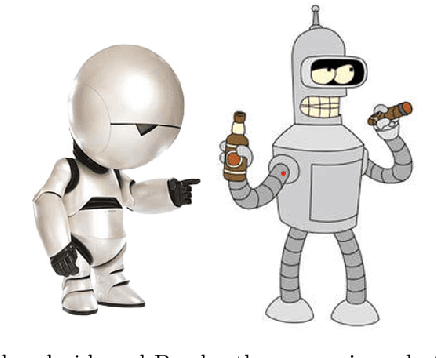

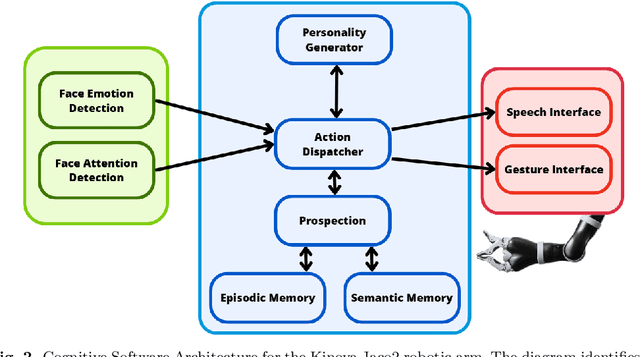

The fundamental role of personality in shaping interactions is increasingly being exploited in robotics. A carefully designed robotic personality has been shown to improve several key aspects of Human-Robot Interaction (HRI). However, the fragmentation and rigidity of existing approaches reveal even greater challenges when applied to non-humanoid robots. On one hand, the state of the art is very dispersed; on the other hand, Industry 4.0 is moving towards a future where humans and industrial robots are going to coexist. In this context, the proper design of a robotic personality can lead to more successful interactions. This research takes a first step in that direction by integrating a comprehensive cognitive architecture built upon the definition of robotic personality - validated on humanoid robots - into a robotic Kinova Jaco2 arm. The robot personality is defined through the cognitive architecture as a vector in the three-dimensional space encompassing Conscientiousness, Extroversion, and Agreeableness, affecting how actions are executed, the action selection process, and the internal reaction to environmental stimuli. Our main objective is to determine whether users perceive distinct personalities in the robot, regardless of its shape, and to understand the role language plays in shaping these perceptions. To achieve this, we conducted a user study comprising 144 sessions of a collaborative game between a Kinova Jaco2 arm and participants, where the robot's behavior was influenced by its assigned personality. Furthermore, we compared two conditions: in the first, the robot communicated solely through gestures and action choices, while in the second, it also utilized verbal interaction.
Moderating Group Conversation Dynamics with Social Robots
Jul 31, 2024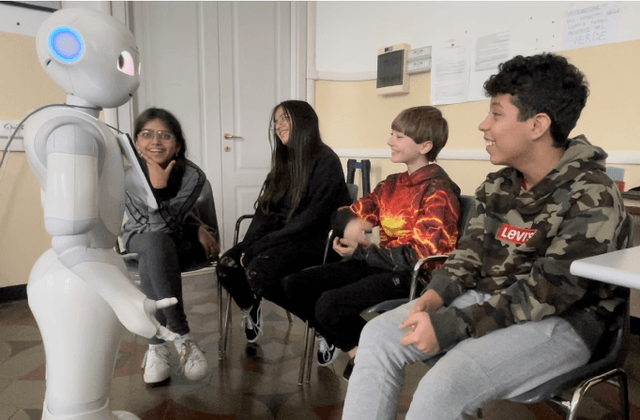

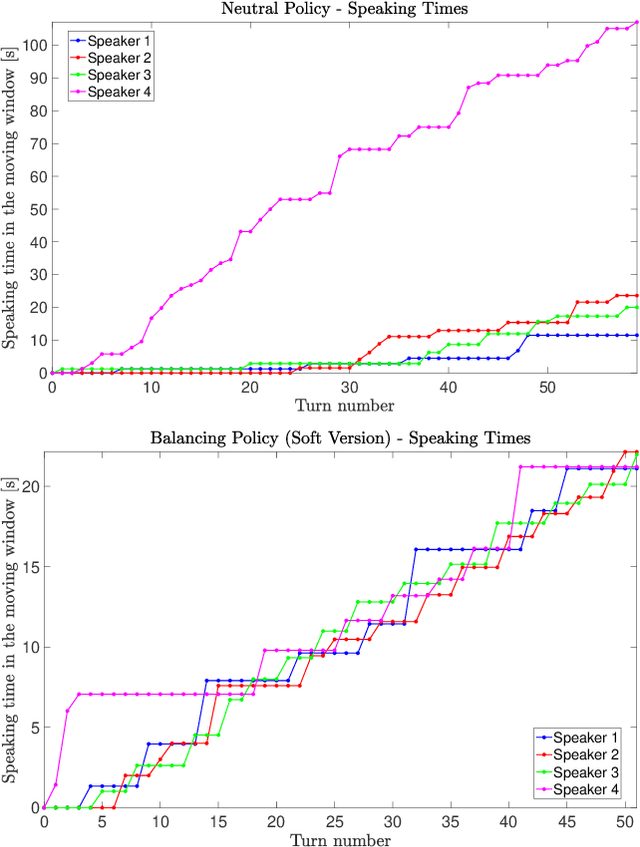
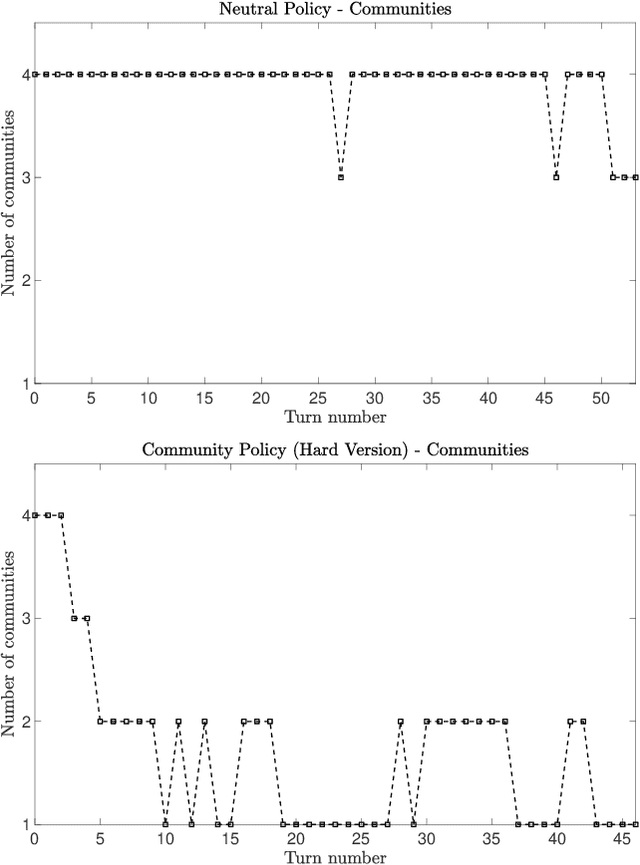
This research investigates the impact of social robot participation in group conversations and assesses the effectiveness of various addressing policies. The study involved 300 participants, divided into groups of four, interacting with a humanoid robot serving as the moderator. The robot utilized conversation data to determine the most appropriate speaker to address. The findings indicate that the robot's addressing policy significantly influenced conversation dynamics, resulting in more balanced attention to each participant and a reduction in subgroup formation.
Improving the ROS 2 Navigation Stack with Real-Time Local Costmap Updates for Agricultural Applications
Jul 26, 2024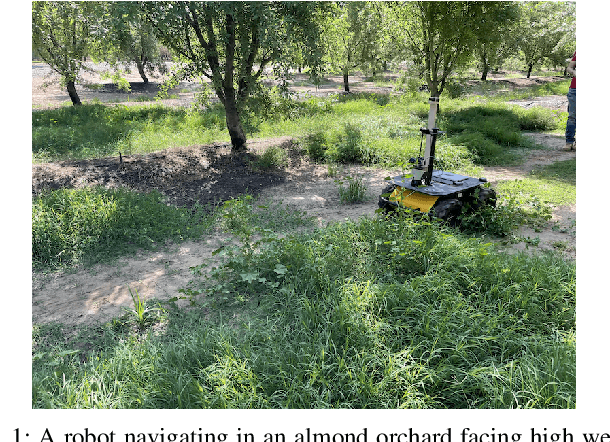
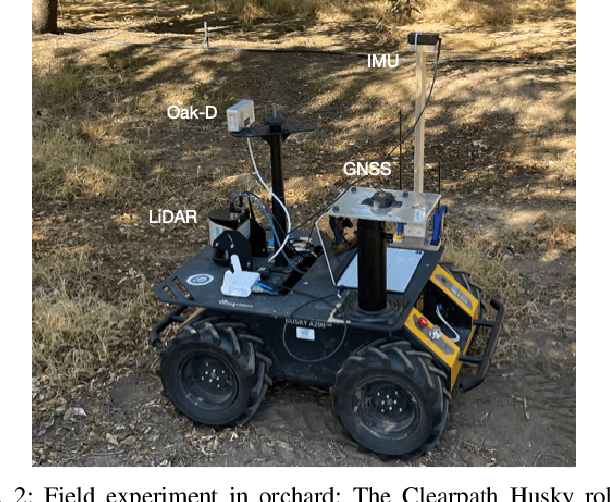
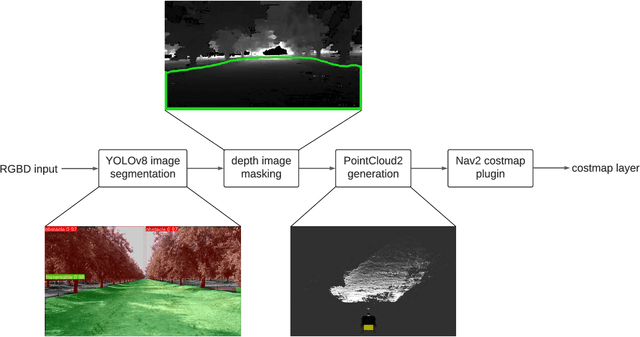
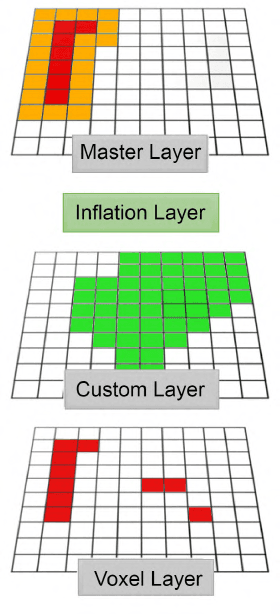
The ROS 2 Navigation Stack (Nav2) has emerged as a widely used software component providing the underlying basis to develop a variety of high-level functionalities. However, when used in outdoor environments such as orchards and vineyards, its functionality is notably limited by the presence of obstacles and/or situations not commonly found in indoor settings. One such example is given by tall grass and weeds that can be safely traversed by a robot, but that can be perceived as obstacles by LiDAR sensors, and then force the robot to take longer paths to avoid them, or abort navigation altogether. To overcome these limitations, domain specific extensions must be developed and integrated into the software pipeline. This paper presents a new, lightweight approach to address this challenge and improve outdoor robot navigation. Leveraging the multi-scale nature of the costmaps supporting Nav2, we developed a system that using a depth camera performs pixel level classification on the images, and in real time injects corrections into the local cost map, thus enabling the robot to traverse areas that would otherwise be avoided by the Nav2. Our approach has been implemented and validated on a Clearpath Husky and we demonstrate that with this extension the robot is able to perform navigation tasks that would be otherwise not practical with the standard components.
Labeling Sentences with Symbolic and Deictic Gestures via Semantic Similarity
Jul 03, 2024
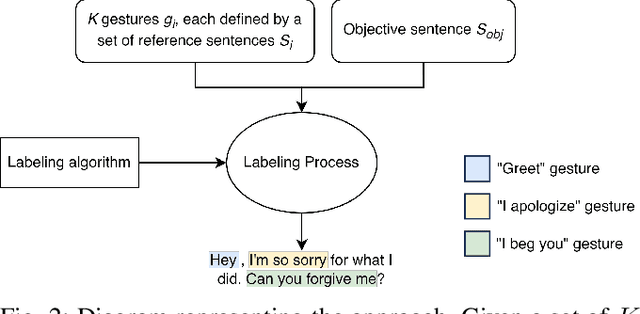
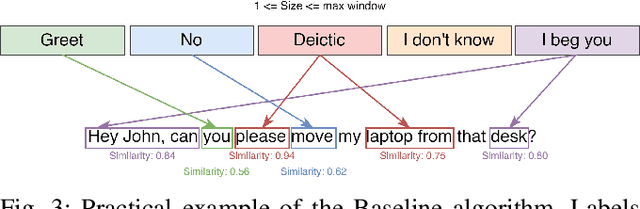
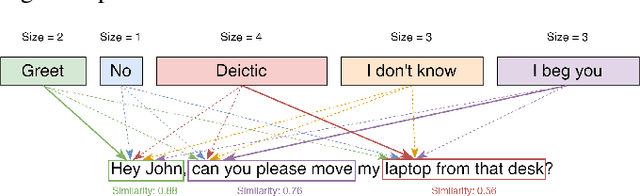
Co-speech gesture generation on artificial agents has gained attention recently, mainly when it is based on data-driven models. However, end-to-end methods often fail to generate co-speech gestures related to semantics with specific forms, i.e., Symbolic and Deictic gestures. In this work, we identify which words in a sentence are contextually related to Symbolic and Deictic gestures. Firstly, we appropriately chose 12 gestures recognized by people from the Italian culture, which different humanoid robots can reproduce. Then, we implemented two rule-based algorithms to label sentences with Symbolic and Deictic gestures. The rules depend on the semantic similarity scores computed with the RoBerta model between sentences that heuristically represent gestures and sub-sentences inside an objective sentence that artificial agents have to pronounce. We also implemented a baseline algorithm that assigns gestures without computing similarity scores. Finally, to validate the results, we asked 30 persons to label a set of sentences with Deictic and Symbolic gestures through a Graphical User Interface (GUI), and we compared the labels with the ones produced by our algorithms. For this scope, we computed Average Precision (AP) and Intersection Over Union (IOU) scores, and we evaluated the Average Computational Time (ACT). Our results show that semantic similarity scores are useful for finding Symbolic and Deictic gestures in utterances.
Enhancing LLM-Based Human-Robot Interaction with Nuances for Diversity Awareness
Jun 25, 2024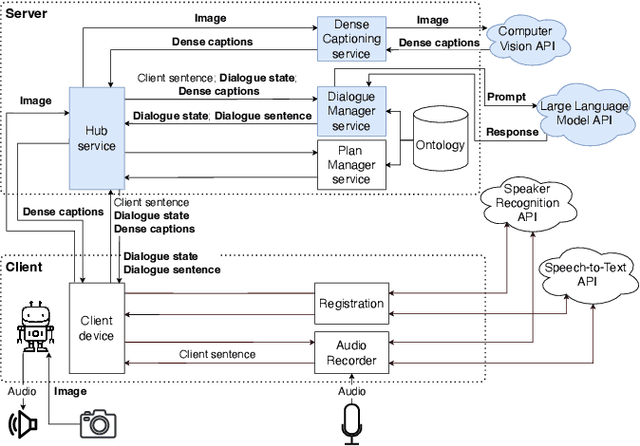
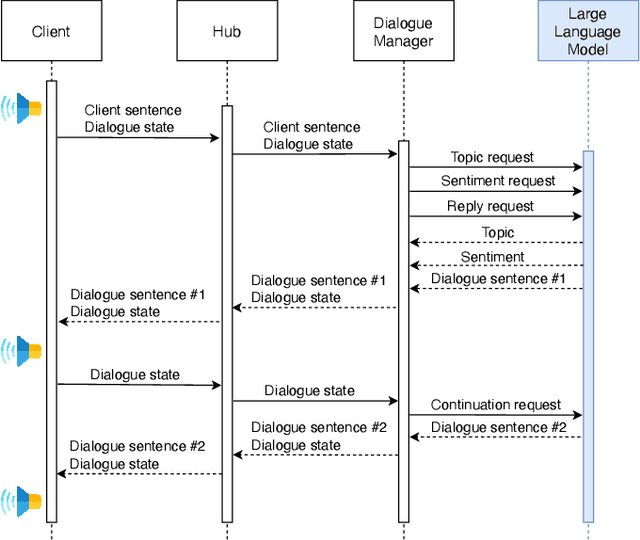
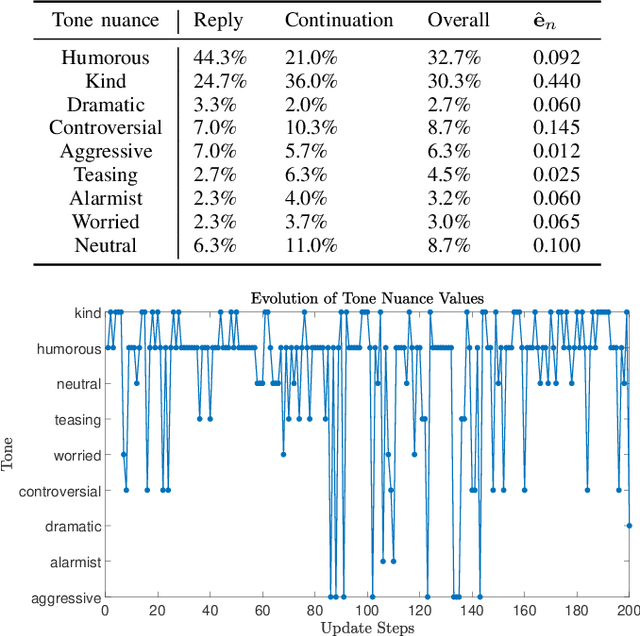
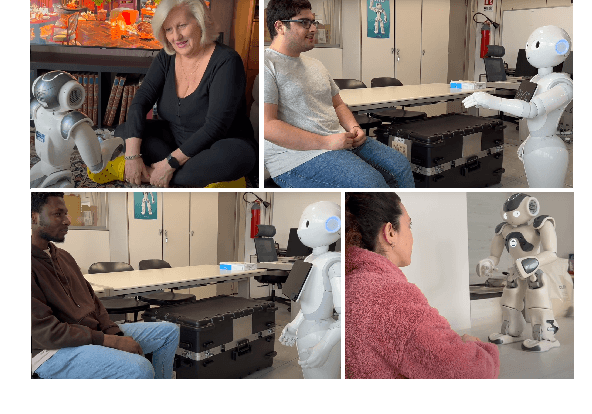
This paper presents a system for diversity-aware autonomous conversation leveraging the capabilities of large language models (LLMs). The system adapts to diverse populations and individuals, considering factors like background, personality, age, gender, and culture. The conversation flow is guided by the structure of the system's pre-established knowledge base, while LLMs are tasked with various functions, including generating diversity-aware sentences. Achieving diversity-awareness involves providing carefully crafted prompts to the models, incorporating comprehensive information about users, conversation history, contextual details, and specific guidelines. To assess the system's performance, we conducted both controlled and real-world experiments, measuring a wide range of performance indicators.