 Add to Chrome
 Add to Firefox
 Add to Edge
The Llama 4 Herd: Architecture, Training, Evaluation, and Deployment Notes
Jan 15, 2026
This document consolidates publicly reported technical details about Metas Llama 4 model family. It summarizes (i) released variants (Scout and Maverick) and the broader herd context including the previewed Behemoth teacher model, (ii) architectural characteristics beyond a high-level MoE description covering routed/shared-expert structure, early-fusion multimodality, and long-context design elements reported for Scout (iRoPE and length generalization strategies), (iii) training disclosures spanning pre-training, mid-training for long-context extension, and post-training methodology (lightweight SFT, online RL, and lightweight DPO) as described in release materials, (iv) developer-reported benchmark results for both base and instruction-tuned checkpoints, and (v) practical deployment constraints observed across major serving environments, including provider-specific context limits and quantization packaging. The manuscript also summarizes licensing obligations relevant to redistribution and derivative naming, and reviews publicly described safeguards and evaluation practices. The goal is to provide a compact technical reference for researchers and practitioners who need precise, source-backed facts about Llama 4.

Shopping Queries Dataset: A Large-Scale ESCI Benchmark for Improving Product Search
Jun 14, 2022


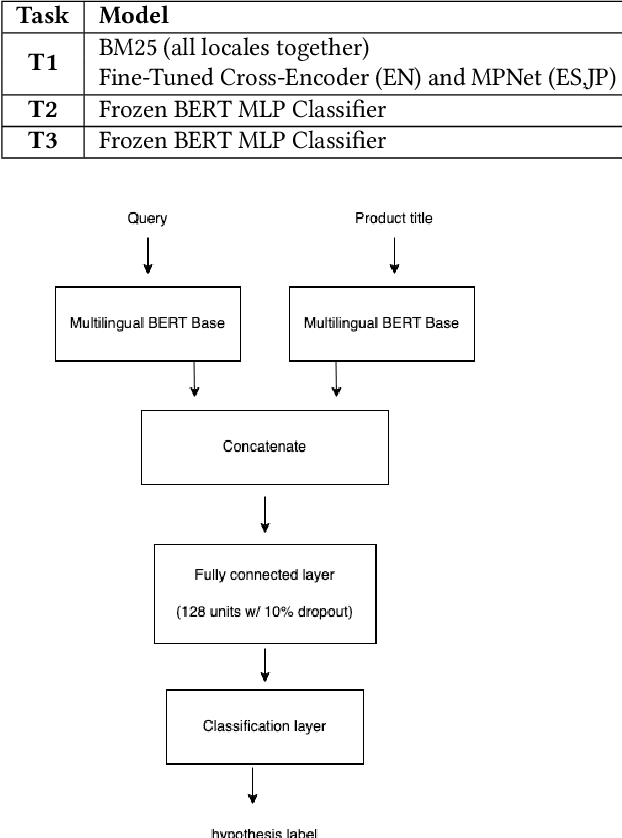
Improving the quality of search results can significantly enhance users experience and engagement with search engines. In spite of several recent advancements in the fields of machine learning and data mining, correctly classifying items for a particular user search query has been a long-standing challenge, which still has a large room for improvement. This paper introduces the "Shopping Queries Dataset", a large dataset of difficult Amazon search queries and results, publicly released with the aim of fostering research in improving the quality of search results. The dataset contains around 130 thousand unique queries and 2.6 million manually labeled (query,product) relevance judgements. The dataset is multilingual with queries in English, Japanese, and Spanish. The Shopping Queries Dataset is being used in one of the KDDCup'22 challenges. In this paper, we describe the dataset and present three evaluation tasks along with baseline results: (i) ranking the results list, (ii) classifying product results into relevance categories, and (iii) identifying substitute products for a given query. We anticipate that this data will become the gold standard for future research in the topic of product search.