 Add to Chrome
 Add to Firefox
 Add to Edge
Align Your Structures: Generating Trajectories with Structure Pretraining for Molecular Dynamics
Apr 05, 2026
Generating molecular dynamics (MD) trajectories using deep generative models has attracted increasing attention, yet remains inherently challenging due to the limited availability of MD data and the complexities involved in modeling high-dimensional MD distributions. To overcome these challenges, we propose a novel framework that leverages structure pretraining for MD trajectory generation. Specifically, we first train a diffusion-based structure generation model on a large-scale conformer dataset, on top of which we introduce an interpolator module trained on MD trajectory data, designed to enforce temporal consistency among generated structures. Our approach effectively harnesses abundant structural data to mitigate the scarcity of MD trajectory data and effectively decomposes the intricate MD modeling task into two manageable subproblems: structural generation and temporal alignment. We comprehensively evaluate our method on the QM9 and DRUGS small-molecule datasets across unconditional generation, forward simulation, and interpolation tasks, and further extend our framework and analysis to tetrapeptide and protein monomer systems. Experimental results confirm that our approach excels in generating chemically realistic MD trajectories, as evidenced by remarkable improvements of accuracy in geometric, dynamical, and energetic measurements.

NeuralPLexer3: Accurate Biomolecular Complex Structure Prediction with Flow Models
Dec 18, 2024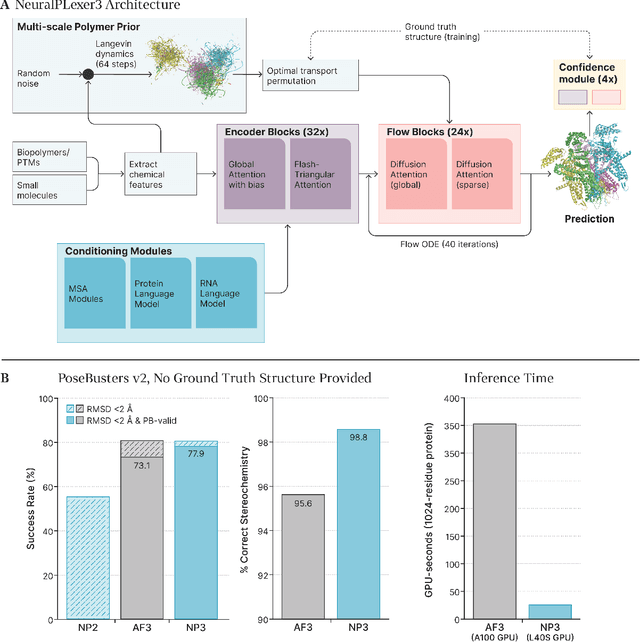
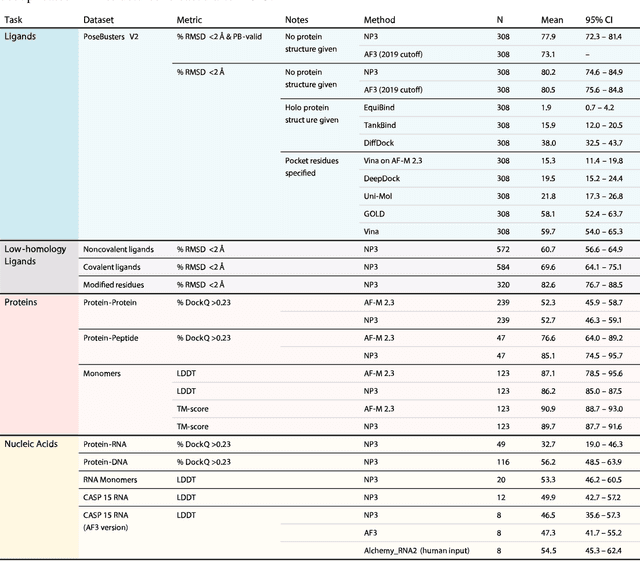
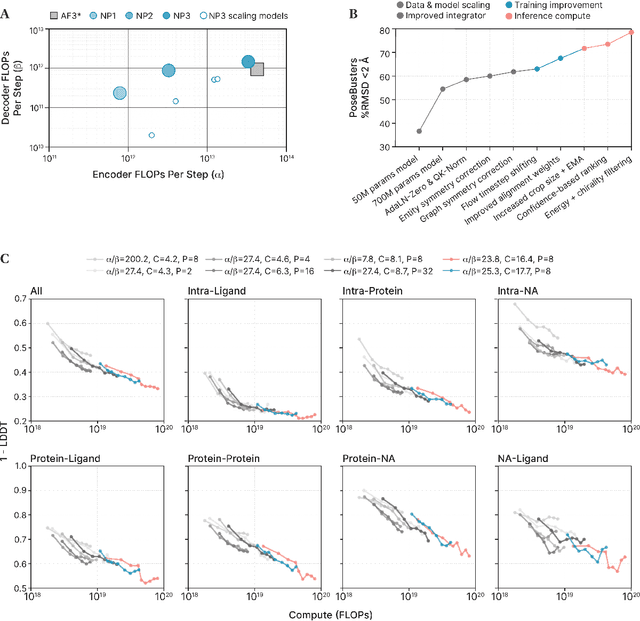
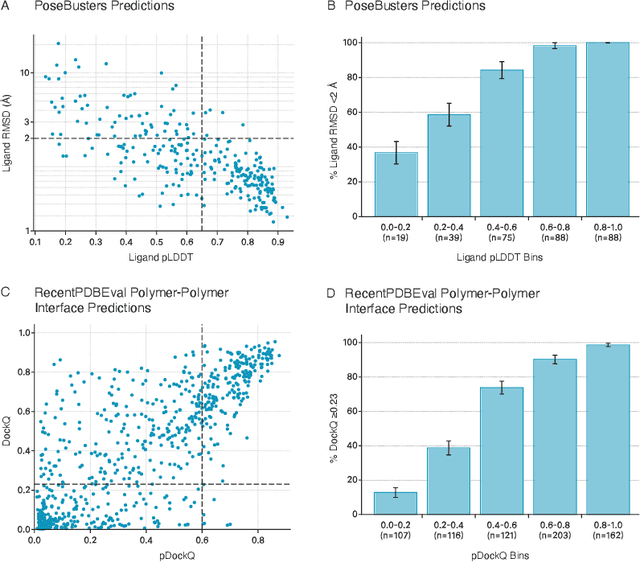
Structure determination is essential to a mechanistic understanding of diseases and the development of novel therapeutics. Machine-learning-based structure prediction methods have made significant advancements by computationally predicting protein and bioassembly structures from sequences and molecular topology alone. Despite substantial progress in the field, challenges remain to deliver structure prediction models to real-world drug discovery. Here, we present NeuralPLexer3 -- a physics-inspired flow-based generative model that achieves state-of-the-art prediction accuracy on key biomolecular interaction types and improves training and sampling efficiency compared to its predecessors and alternative methodologies. Examined through newly developed benchmarking strategies, NeuralPLexer3 excels in vital areas that are crucial to structure-based drug design, such as physical validity and ligand-induced conformational changes.