 Add to Chrome
 Add to Firefox
 Add to Edge
TheoremBench: Evaluating LLMs on Theorem Proving in Formal Mathematics
Jun 08, 2026
LLMs have recently achieved strong results on formal proving benchmarks. However, existing evaluations remain heavily concentrated on competition-style problems and often fail to capture how models behave on longer, more dependency-rich mathematical developments. We introduce TheoremBench, a Lean4 benchmark designed to evaluate theorem provers beyond contest settings. The benchmark is built from nearly one hundred classical theorems and is released in two complementary forms: a plain main version containing one target theorem per instance, and a premised version that expands each theorem into a structured family of related proving tasks consisting of the main theorem together with automatically extracted supporting subtheorems. This design enables evaluation of not only whether the final theorem was proved from scratch, but also of partial progress through the internal proof structure of a theorem. Our experiments show that explicit premises substantially improve performance for Lean4-capable prover models. To provide a comprehensive evaluation, we introduce theorem-level coverage and token-efficiency metrics that expose qualitative differences in proof behavior. The results show that current provers remain strongly biased toward easy subtheorems and often solve theorems through long and inefficient tactic traces rather than compact proof plans. TheoremBench therefore provides a more fine-grained view of formal reasoning ability and highlights the importance of structural benchmark design for evaluating Lean4 theorem provers.

OCC-RAG: Optimal Cognitive Core for Faithful Question Answering
May 30, 2026Recent progress in the development of language models has been defined by scale, with each generation absorbing more of the world's knowledge into its weights. However, many practical applications benefit more from robust reasoning than from extensive parametric knowledge. In this setting, task-specialized small language models (SLMs) offer a principled design choice. We introduce Optimal Cognitive Core (OCC), a family of SLMs built around this premise. As a variant of OCC, we present OCC-RAG, optimized for faithful question answering (QA) grounded in the provided context. This task directly aligns with the OCC design approach, requiring multi-hop reasoning over supplied passages while ignoring memorized knowledge. To train OCC-RAG, we implement a novel pipeline for synthesizing multi-context, multi-hop QA data at scale, producing a corpus of over three million examples targeting multi-hop reasoning, strict context faithfulness, and calibrated abstention. We release OCC-RAG-0.6B and OCC-RAG-1.7B, both mid-trained on this corpus. The models produce structured reasoning traces with source citations grounded in literal quotes from the context. Through OCC-RAG, we demonstrate that compact, task-specialized SLMs can match or exceed general-purpose models 2 -- 6x their size across multi-hop reasoning (HotpotQA, MuSiQue, TAT-QA), faithfulness (ConFiQA), and refusal (MuSiQue-Un) benchmarks.
Sanity Checks for Sparse Autoencoders: Do SAEs Beat Random Baselines?
Feb 15, 2026Sparse Autoencoders (SAEs) have emerged as a promising tool for interpreting neural networks by decomposing their activations into sparse sets of human-interpretable features. Recent work has introduced multiple SAE variants and successfully scaled them to frontier models. Despite much excitement, a growing number of negative results in downstream tasks casts doubt on whether SAEs recover meaningful features. To directly investigate this, we perform two complementary evaluations. On a synthetic setup with known ground-truth features, we demonstrate that SAEs recover only $9\%$ of true features despite achieving $71\%$ explained variance, showing that they fail at their core task even when reconstruction is strong. To evaluate SAEs on real activations, we introduce three baselines that constrain SAE feature directions or their activation patterns to random values. Through extensive experiments across multiple SAE architectures, we show that our baselines match fully-trained SAEs in interpretability (0.87 vs 0.90), sparse probing (0.69 vs 0.72), and causal editing (0.73 vs 0.72). Together, these results suggest that SAEs in their current state do not reliably decompose models' internal mechanisms.
OrtSAE: Orthogonal Sparse Autoencoders Uncover Atomic Features
Sep 26, 2025Sparse autoencoders (SAEs) are a technique for sparse decomposition of neural network activations into human-interpretable features. However, current SAEs suffer from feature absorption, where specialized features capture instances of general features creating representation holes, and feature composition, where independent features merge into composite representations. In this work, we introduce Orthogonal SAE (OrtSAE), a novel approach aimed to mitigate these issues by enforcing orthogonality between the learned features. By implementing a new training procedure that penalizes high pairwise cosine similarity between SAE features, OrtSAE promotes the development of disentangled features while scaling linearly with the SAE size, avoiding significant computational overhead. We train OrtSAE across different models and layers and compare it with other methods. We find that OrtSAE discovers 9% more distinct features, reduces feature absorption (by 65%) and composition (by 15%), improves performance on spurious correlation removal (+6%), and achieves on-par performance for other downstream tasks compared to traditional SAEs.
The Rogue Scalpel: Activation Steering Compromises LLM Safety
Sep 26, 2025Activation steering is a promising technique for controlling LLM behavior by adding semantically meaningful vectors directly into a model's hidden states during inference. It is often framed as a precise, interpretable, and potentially safer alternative to fine-tuning. We demonstrate the opposite: steering systematically breaks model alignment safeguards, making it comply with harmful requests. Through extensive experiments on different model families, we show that even steering in a random direction can increase the probability of harmful compliance from 0% to 2-27%. Alarmingly, steering benign features from a sparse autoencoder (SAE), a common source of interpretable directions, increases these rates by a further 2-4%. Finally, we show that combining 20 randomly sampled vectors that jailbreak a single prompt creates a universal attack, significantly increasing harmful compliance on unseen requests. These results challenge the paradigm of safety through interpretability, showing that precise control over model internals does not guarantee precise control over model behavior.
I Have Covered All the Bases Here: Interpreting Reasoning Features in Large Language Models via Sparse Autoencoders
Mar 24, 2025Large Language Models (LLMs) have achieved remarkable success in natural language processing. Recent advances have led to the developing of a new class of reasoning LLMs; for example, open-source DeepSeek-R1 has achieved state-of-the-art performance by integrating deep thinking and complex reasoning. Despite these impressive capabilities, the internal reasoning mechanisms of such models remain unexplored. In this work, we employ Sparse Autoencoders (SAEs), a method to learn a sparse decomposition of latent representations of a neural network into interpretable features, to identify features that drive reasoning in the DeepSeek-R1 series of models. First, we propose an approach to extract candidate ''reasoning features'' from SAE representations. We validate these features through empirical analysis and interpretability methods, demonstrating their direct correlation with the model's reasoning abilities. Crucially, we demonstrate that steering these features systematically enhances reasoning performance, offering the first mechanistic account of reasoning in LLMs. Code available at https://github.com/AIRI-Institute/SAE-Reasoning
DeepLOC: Deep Learning-based Bone Pathology Localization and Classification in Wrist X-ray Images
Aug 24, 2023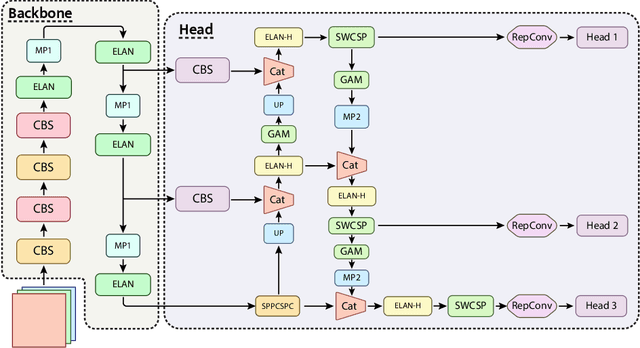
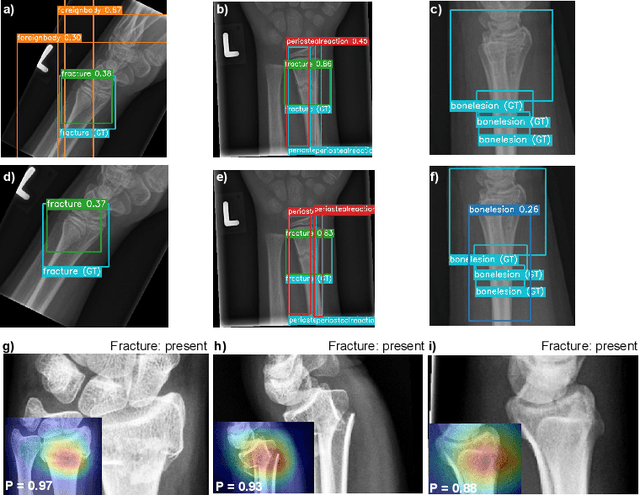
In recent years, computer-aided diagnosis systems have shown great potential in assisting radiologists with accurate and efficient medical image analysis. This paper presents a novel approach for bone pathology localization and classification in wrist X-ray images using a combination of YOLO (You Only Look Once) and the Shifted Window Transformer (Swin) with a newly proposed block. The proposed methodology addresses two critical challenges in wrist X-ray analysis: accurate localization of bone pathologies and precise classification of abnormalities. The YOLO framework is employed to detect and localize bone pathologies, leveraging its real-time object detection capabilities. Additionally, the Swin, a transformer-based module, is utilized to extract contextual information from the localized regions of interest (ROIs) for accurate classification.