 Add to Chrome
 Add to Firefox
 Add to Edge
Generative Chemical Language Models for Energetic Materials Discovery
Mar 30, 2026
The discovery of new energetic materials remains a pressing challenge hindered by limited availability of high-quality data. To address this, we have developed generative molecular language models that have been pretrained on extensive chemical data and then fine-tuned with curated energetic materials datasets. This transfer-learning strategy extends the chemical language model capabilities beyond the pharmacological space in which they have been predominantly developed, offering a framework applicable to other data-spare discovery problems. Furthermore, we discuss the benefits of fragment-based molecular encodings for chemical language models, in particular in constructing synthetically accessible structures. Together, these advances provide a foundation for accelerating the design of next-generation energetic materials with demanding performance requirements.

Meta-GPT: Decoding the Metasurface Genome with Generative Artificial Intelligence
Dec 15, 2025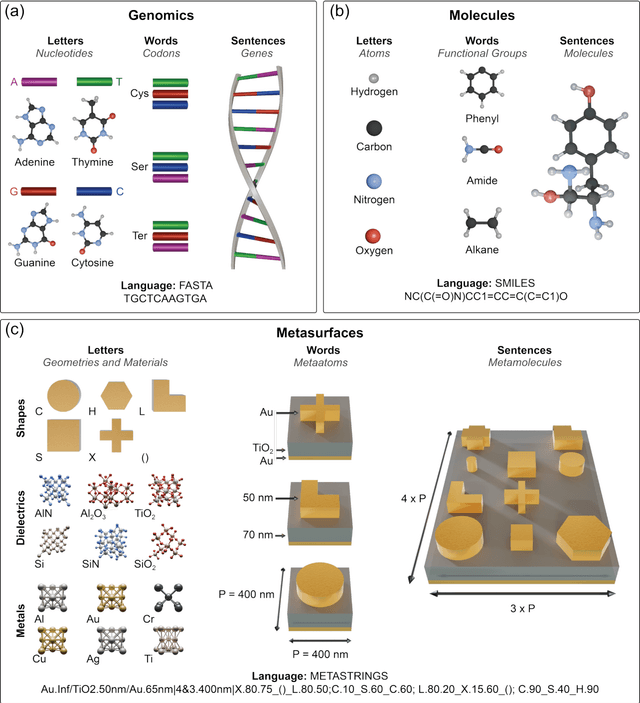
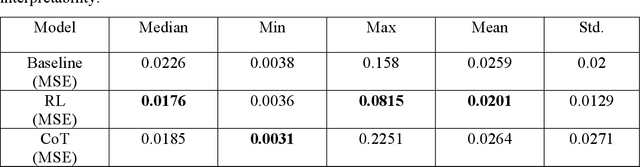
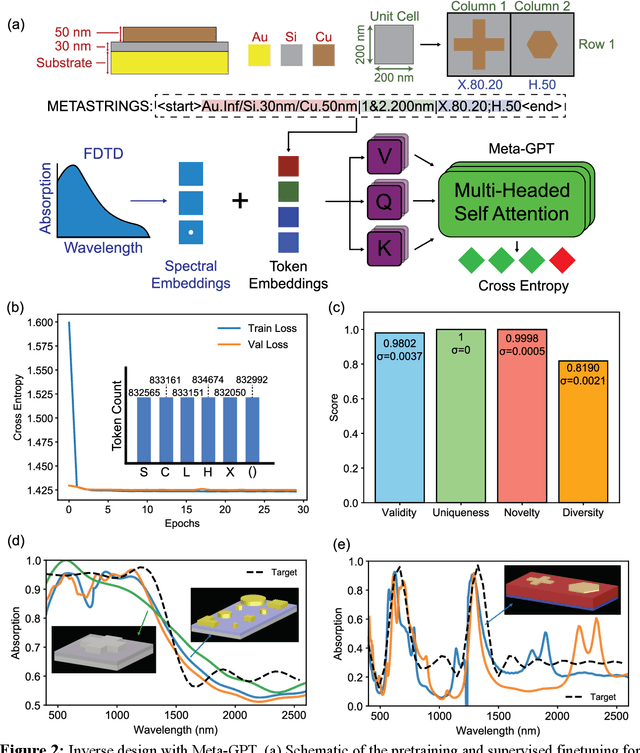
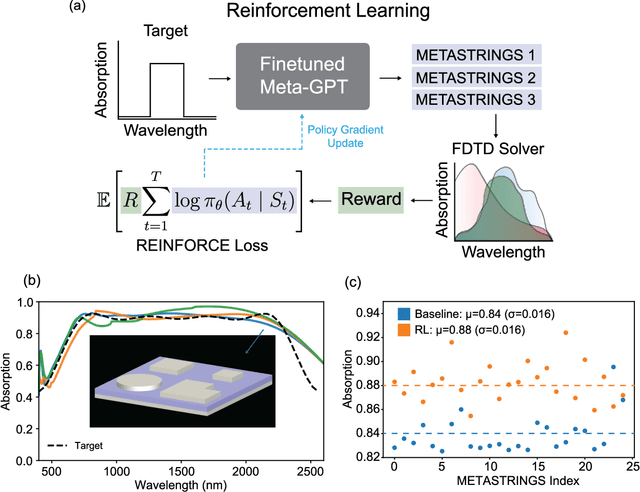
Advancing artificial intelligence for physical sciences requires representations that are both interpretable and compatible with the underlying laws of nature. We introduce METASTRINGS, a symbolic language for photonics that expresses nanostructures as textual sequences encoding materials, geometries, and lattice configurations. Analogous to molecular textual representations in chemistry, METASTRINGS provides a framework connecting human interpretability with computational design by capturing the structural hierarchy of photonic metasurfaces. Building on this representation, we develop Meta-GPT, a foundation transformer model trained on METASTRINGS and finetuned with physics-informed supervised, reinforcement, and chain-of-thought learning. Across various design tasks, the model achieves <3% mean-squared spectral error and maintains >98% syntactic validity, generating diverse metasurface prototypes whose experimentally measured optical responses match their target spectra. These results demonstrate that Meta-GPT can learn the compositional rules of light-matter interactions through METASTRINGS, laying a rigorous foundation for AI-driven photonics and representing an important step toward a metasurface genome project.