 Add to Chrome
 Add to Firefox
 Add to Edge
Predicting Polymer Solubility in Solvents Using SMILES Strings
Dec 10, 2025
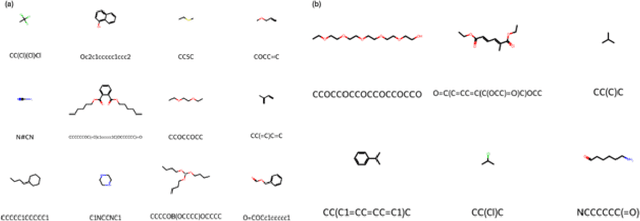
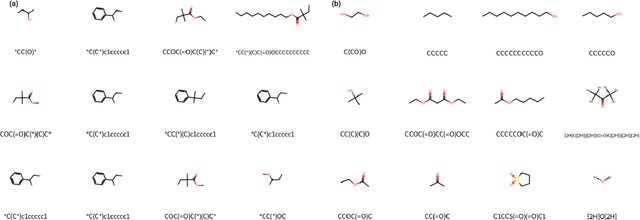
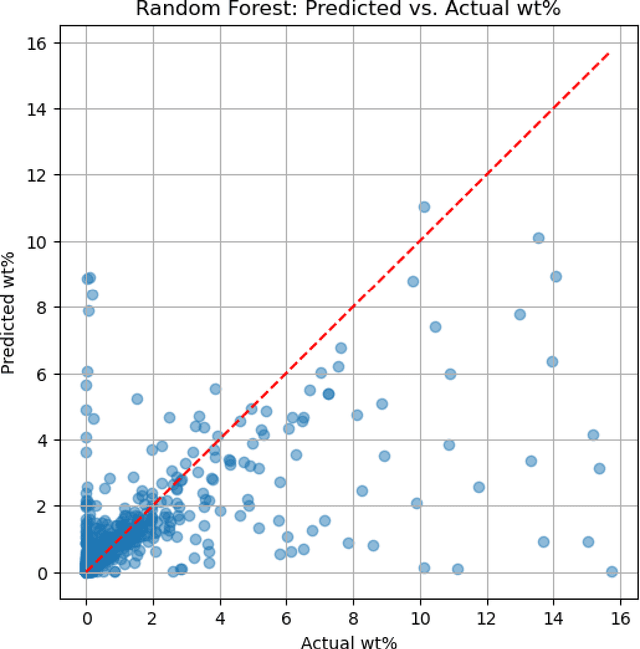
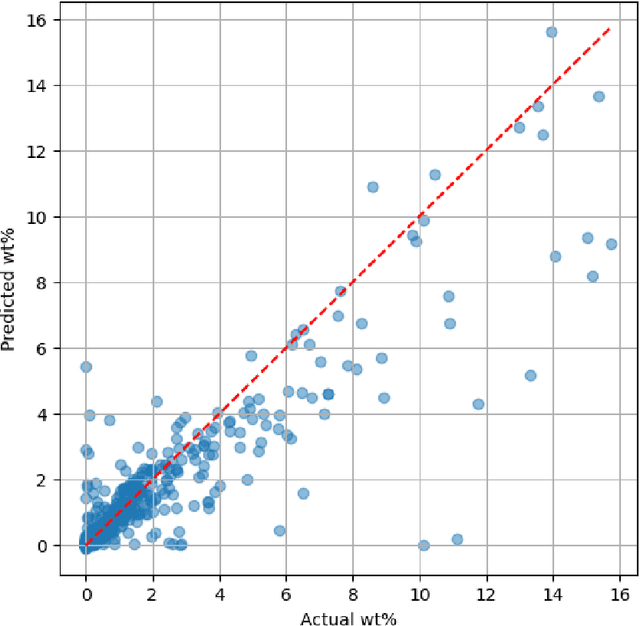
Understanding and predicting polymer solubility in various solvents is critical for applications ranging from recycling to pharmaceutical formulation. This work presents a deep learning framework that predicts polymer solubility, expressed as weight percent (wt%), directly from SMILES representations of both polymers and solvents. A dataset of 8,049 polymer solvent pairs at 25 deg C was constructed from calibrated molecular dynamics simulations (Zhou et al., 2023), and molecular descriptors and fingerprints were combined into a 2,394 feature representation per sample. A fully connected neural network with six hidden layers was trained using the Adam optimizer and evaluated using mean squared error loss, achieving strong agreement between predicted and actual solubility values. Generalizability was demonstrated using experimentally measured data from the Materials Genome Project, where the model maintained high accuracy on 25 unseen polymer solvent combinations. These findings highlight the viability of SMILES based machine learning models for scalable solubility prediction and high-throughput solvent screening, supporting applications in green chemistry, polymer processing, and materials design.

Predicting mechanical properties of Carbon Nanotube (CNT) images Using Multi-Layer Synthetic Finite Element Model Simulations
Jul 16, 2023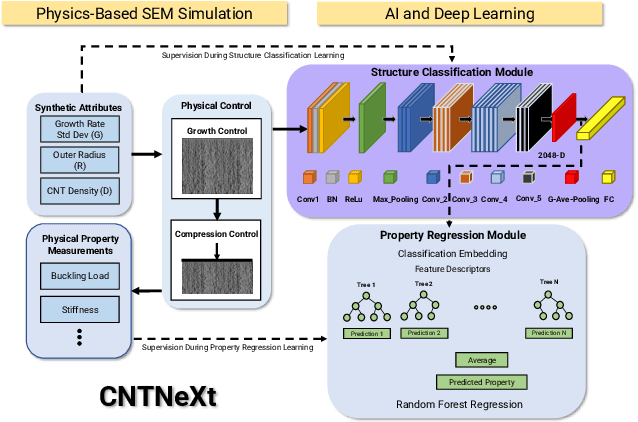
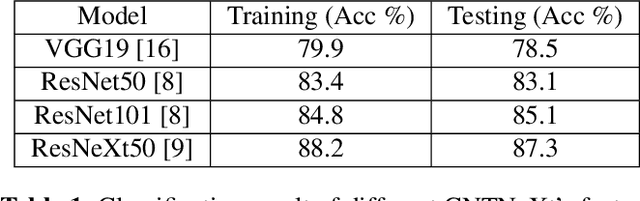
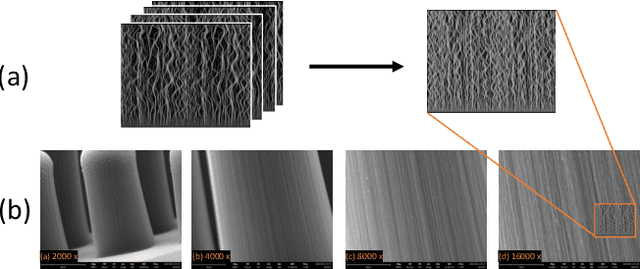
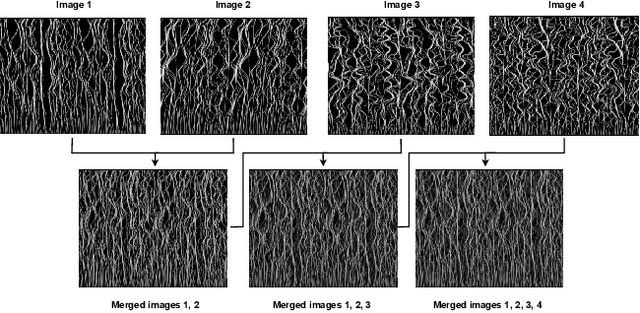
We present a pipeline for predicting mechanical properties of vertically-oriented carbon nanotube (CNT) forest images using a deep learning model for artificial intelligence (AI)-based materials discovery. Our approach incorporates an innovative data augmentation technique that involves the use of multi-layer synthetic (MLS) or quasi-2.5D images which are generated by blending 2D synthetic images. The MLS images more closely resemble 3D synthetic and real scanning electron microscopy (SEM) images of CNTs but without the computational cost of performing expensive 3D simulations or experiments. Mechanical properties such as stiffness and buckling load for the MLS images are estimated using a physics-based model. The proposed deep learning architecture, CNTNeXt, builds upon our previous CNTNet neural network, using a ResNeXt feature representation followed by random forest regression estimator. Our machine learning approach for predicting CNT physical properties by utilizing a blended set of synthetic images is expected to outperform single synthetic image-based learning when it comes to predicting mechanical properties of real scanning electron microscopy images. This has the potential to accelerate understanding and control of CNT forest self-assembly for diverse applications.