 Add to Chrome
 Add to Firefox
 Add to Edge
SynthAVE: Scalable Synthetic Labeling for E-Commerce with LLM-Arena Validation
Jul 08, 2026
Fine-tuning large language models (LLMs) for e-commerce attribute extraction requires labeled data representative across thousands of product types, attributes, and multiple languages. This combinatorial scale translates to millions of annotations, rendering human labeling prohibitively costly. While recent work has demonstrated synthetic label generation using LLMs, deploying such approaches at industrial scale requires integrated quality control mechanisms. We present SynthAVE, a large-scale human-validated benchmark for attribute value extraction spanning 12,726 products across 229 product types, 792 attributes, and 4 languages (Spanish, French, Italian, German). To validate synthetic labels at scale, we introduce a multi-LLM arena framework where samples are independently evaluated by 21 judge configurations (7 model families $\times$ 3 prompts), with final labels determined via majority voting. The majority vote ensemble agrees with human experts at Cohen's $κ= 0.92$ (95.2% agreement), while individual judges show substantial inter-model agreement (Fleiss' $κ= 0.76$). This demonstrates that diverse models with varying individual judgments aggregate into highly reliable predictions, enabling cost-effective validation at scale while maintaining quality parity with human review.

Natural Language Processing for Systems Engineering: Automatic Generation of Systems Modelling Language Diagrams
Aug 09, 2022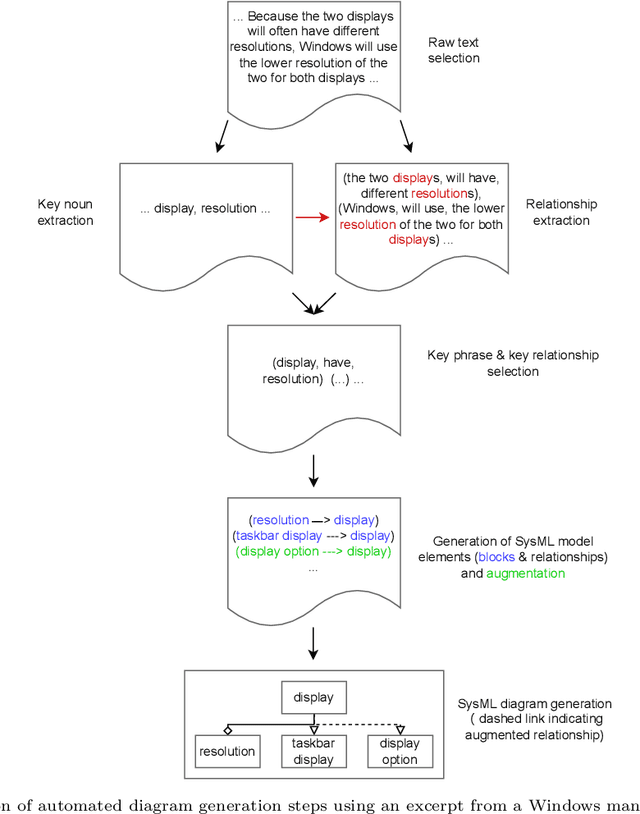
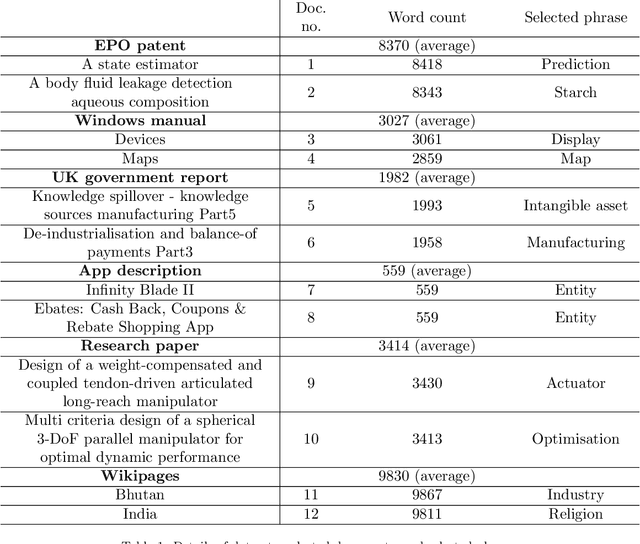
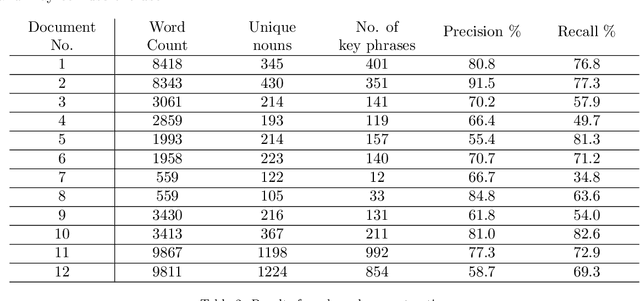
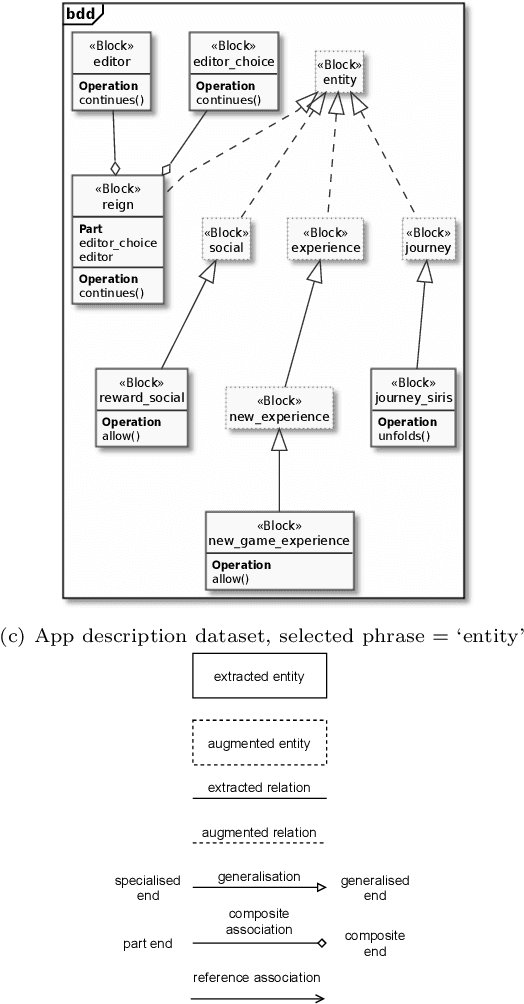
The design of complex engineering systems is an often long and articulated process that highly relies on engineers' expertise and professional judgment. As such, the typical pitfalls of activities involving the human factor often manifest themselves in terms of lack of completeness or exhaustiveness of the analysis, inconsistencies across design choices or documentation, as well as an implicit degree of subjectivity. An approach is proposed to assist systems engineers in the automatic generation of systems diagrams from unstructured natural language text. Natural Language Processing (NLP) techniques are used to extract entities and their relationships from textual resources (e.g., specifications, manuals, technical reports, maintenance reports) available within an organisation, and convert them into Systems Modelling Language (SysML) diagrams, with particular focus on structure and requirement diagrams. The intention is to provide the users with a more standardised, comprehensive and automated starting point onto which subsequently refine and adapt the diagrams according to their needs. The proposed approach is flexible and open-domain. It consists of six steps which leverage open-access tools, and it leads to an automatic generation of SysML diagrams without intermediate modelling requirement, but through the specification of a set of parameters by the user. The applicability and benefits of the proposed approach are shown through six case studies having different textual sources as inputs, and benchmarked against manually defined diagram elements.