 Add to Chrome
 Add to Firefox
 Add to Edge
Concerning Uncertainty -- A Systematic Survey of Uncertainty-Aware XAI
Mar 27, 2026
This paper surveys uncertainty-aware explainable artificial intelligence (UAXAI), examining how uncertainty is incorporated into explanatory pipelines and how such methods are evaluated. Across the literature, three recurring approaches to uncertainty quantification emerge (Bayesian, Monte Carlo, and Conformal methods), alongside distinct strategies for integrating uncertainty into explanations: assessing trustworthiness, constraining models or explanations, and explicitly communicating uncertainty. Evaluation practices remain fragmented and largely model centered, with limited attention to users and inconsistent reporting of reliability properties (e.g., calibration, coverage, explanation stability). Recent work leans towards calibration, distribution free techniques and recognizes explainer variability as a central concern. We argue that progress in UAXAI requires unified evaluation principles that link uncertainty propagation, robustness, and human decision-making, and highlight counterfactual and calibration approaches as promising avenues for aligning interpretability with reliability.

Uncertainty quantification in automated valuation models with locally weighted conformal prediction
Dec 11, 2023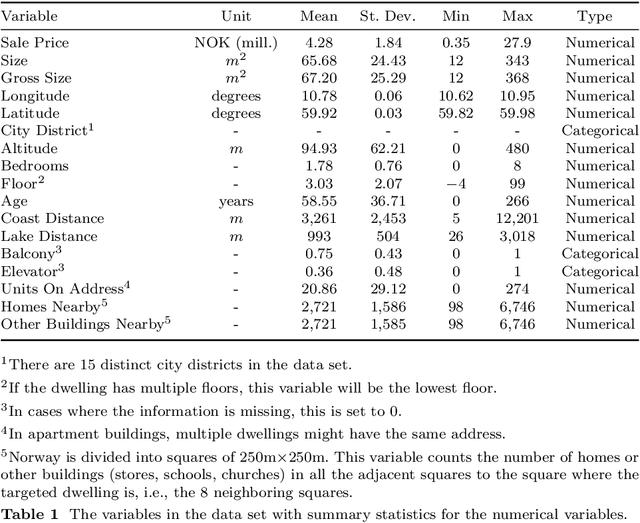
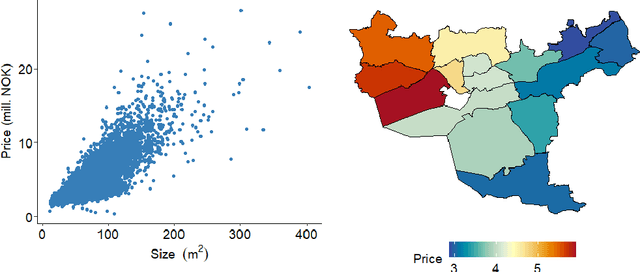
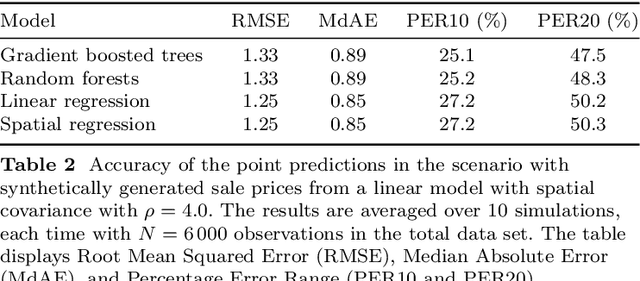
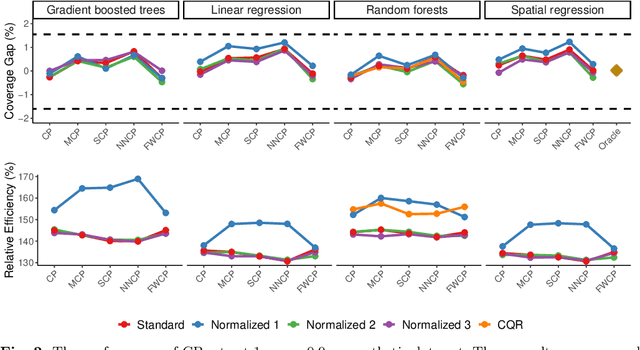
Non-parametric machine learning models, such as random forests and gradient boosted trees, are frequently used to estimate house prices due to their predictive accuracy, but such methods are often limited in their ability to quantify prediction uncertainty. Conformal Prediction (CP) is a model-agnostic framework for constructing confidence sets around machine learning prediction models with minimal assumptions. However, due to the spatial dependencies observed in house prices, direct application of CP leads to confidence sets that are not calibrated everywhere, i.e., too large of confidence sets in certain geographical regions and too small in others. We survey various approaches to adjust the CP confidence set to account for this and demonstrate their performance on a data set from the housing market in Oslo, Norway. Our findings indicate that calibrating the confidence sets on a \textit{locally weighted} version of the non-conformity scores makes the coverage more consistently calibrated in different geographical regions. We also perform a simulation study on synthetically generated sale prices to empirically explore the performance of CP on housing market data under idealized conditions with known data-generating mechanisms.