 Add to Chrome
 Add to Firefox
 Add to Edge
DBLAST: Dependent Block Drafting for Stochastic Speculative Decoding
Aug 05, 2026
Speculative decoding accelerates large language models' inference by using a lightweight drafter to propose multiple future tokens and a target model to verify them. While recent block and diffusion-style drafters can predict several positions in a single pass, their training and sampling procedures are typically optimized for greedy decoding or assume that positions in the draft block are conditionally independent. This assumption becomes brittle in non-greedy speculative decoding, where the target distribution is deliberately stochastic and multiple continuations become plausible. We study this mismatch for block diffusion drafters and show that the accepted draft length degrades as the entropy of the target sampling distribution increases. We propose a dependent block drafter based on a low-rank latent mixture over token positions, complemented by an acceptance-oriented training objective that directly targets the expected verified length. Experiments with Qwen3-4B and Qwen3-8B on GSM8K, MT-Bench, HumanEval, and creative-writing benchmarks show that our approach, namely DBLast, consistently improves accepted length over independent block sampling, especially in higher-entropy decoding regimes.

Variable-Decision Frequency Option Critic
Dec 11, 2022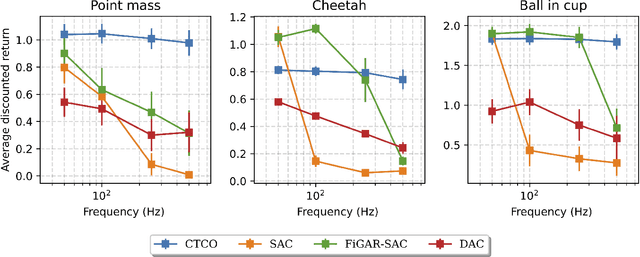
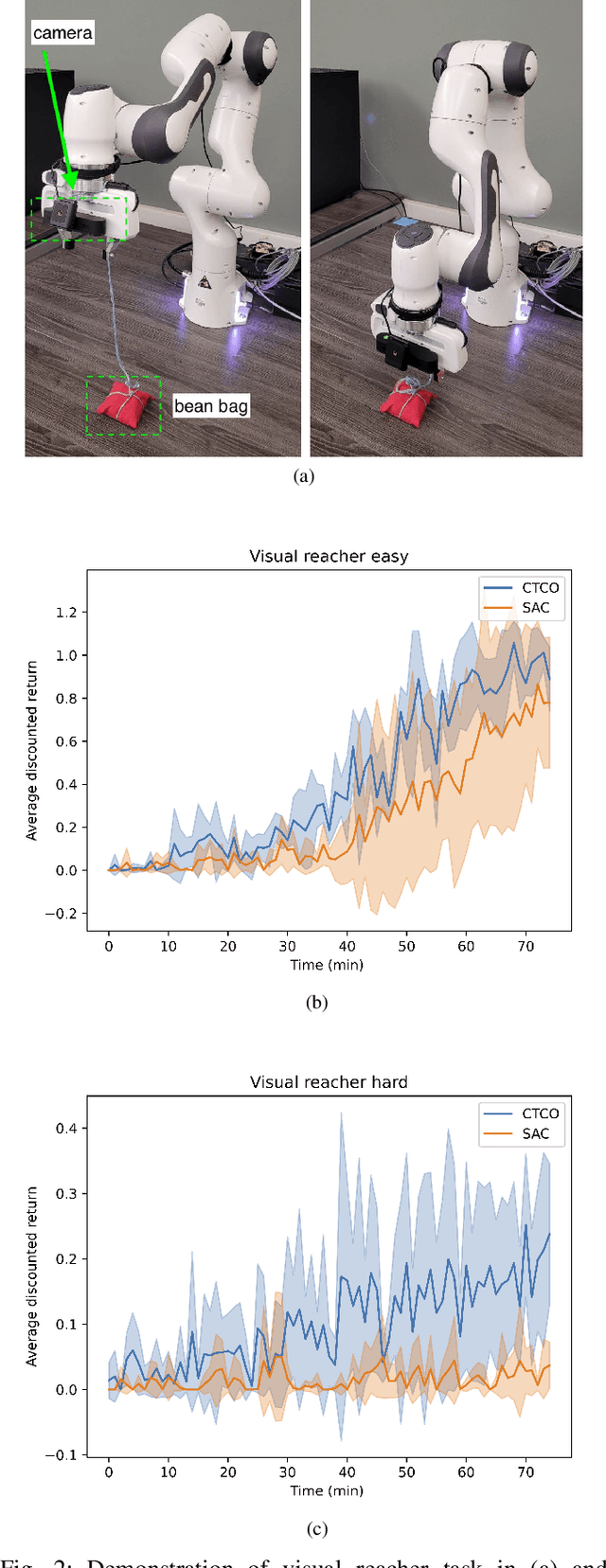
In classic reinforcement learning algorithms, agents make decisions at discrete and fixed time intervals. The physical duration between one decision and the next becomes a critical hyperparameter. When this duration is too short, the agent needs to make many decisions to achieve its goal, aggravating the problem's difficulty. But when this duration is too long, the agent becomes incapable of controlling the system. Physical systems, however, do not need a constant control frequency. For learning agents, it is desirable to operate with low frequency when possible and high frequency when necessary. We propose a framework called Continuous-Time Continuous-Options (CTCO), where the agent chooses options as sub-policies of variable durations. Such options are time-continuous and can interact with the system at any desired frequency providing a smooth change of actions. The empirical analysis shows that our algorithm is competitive w.r.t. other time-abstraction techniques, such as classic option learning and action repetition, and practically overcomes the difficult choice of the decision frequency.