 Add to Chrome
 Add to Firefox
 Add to Edge
The Value of Personalized Recommendations: Evidence from Netflix
Nov 11, 2025
Personalized recommendation systems shape much of user choice online, yet their targeted nature makes separating out the value of recommendation and the underlying goods challenging. We build a discrete choice model that embeds recommendation-induced utility, low-rank heterogeneity, and flexible state dependence and apply the model to viewership data at Netflix. We exploit idiosyncratic variation introduced by the recommendation algorithm to identify and separately value these components as well as to recover model-free diversion ratios that we can use to validate our structural model. We use the model to evaluate counterfactuals that quantify the incremental engagement generated by personalized recommendations. First, we show that replacing the current recommender system with a matrix factorization or popularity-based algorithm would lead to 4% and 12% reduction in engagement, respectively, and decreased consumption diversity. Second, most of the consumption increase from recommendations comes from effective targeting, not mechanical exposure, with the largest gains for mid-popularity goods (as opposed to broadly appealing or very niche goods).

Automatic Double Reinforcement Learning in Semiparametric Markov Decision Processes with Applications to Long-Term Causal Inference
Jan 12, 2025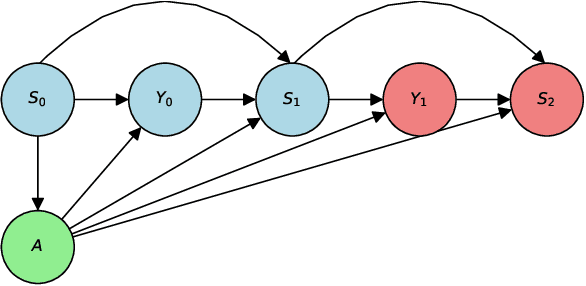
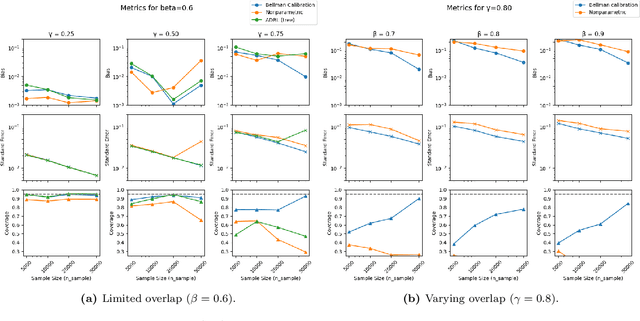
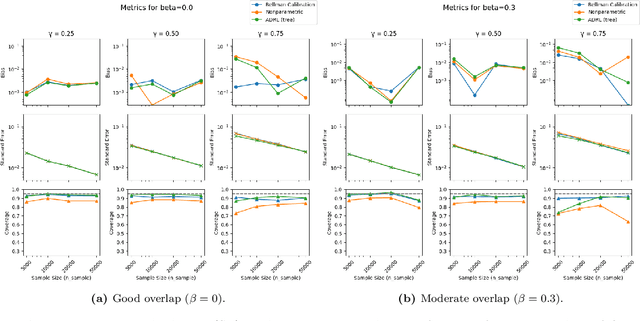
Double reinforcement learning (DRL) enables statistically efficient inference on the value of a policy in a nonparametric Markov Decision Process (MDP) given trajectories generated by another policy. However, this approach necessarily requires stringent overlap between the state distributions, which is often violated in practice. To relax this requirement and extend DRL, we study efficient inference on linear functionals of the $Q$-function (of which policy value is a special case) in infinite-horizon, time-invariant MDPs under semiparametric restrictions on the $Q$-function. These restrictions can reduce the overlap requirement and lower the efficiency bound, yielding more precise estimates. As an important example, we study the evaluation of long-term value under domain adaptation, given a few short trajectories from the new domain and restrictions on the difference between the domains. This can be used for long-term causal inference. Our method combines flexible estimates of the $Q$-function and the Riesz representer of the functional of interest (e.g., the stationary state density ratio for policy value) and is automatic in that we do not need to know the form of the latter - only the functional we care about. To address potential model misspecification bias, we extend the adaptive debiased machine learning (ADML) framework of \citet{van2023adaptive} to construct nonparametrically valid and superefficient estimators that adapt to the functional form of the $Q$-function. As a special case, we propose a novel adaptive debiased plug-in estimator that uses isotonic-calibrated fitted $Q$-iteration - a new calibration algorithm for MDPs - to circumvent the computational challenges of estimating debiasing nuisances from min-max objectives.