 Add to Chrome
 Add to Firefox
 Add to Edge
Towards Human-AI-Robot Collaboration and AI-Agent based Digital Twins for Parkinson's Disease Management: Review and Outlook
Nov 08, 2025
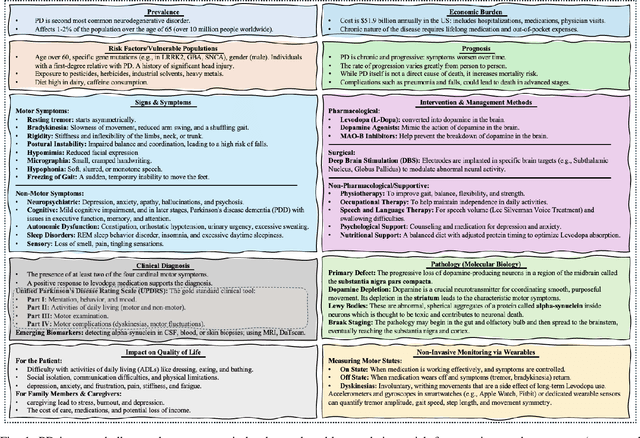
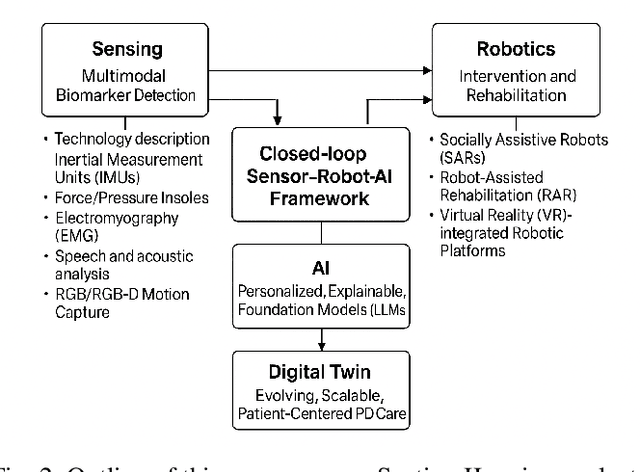
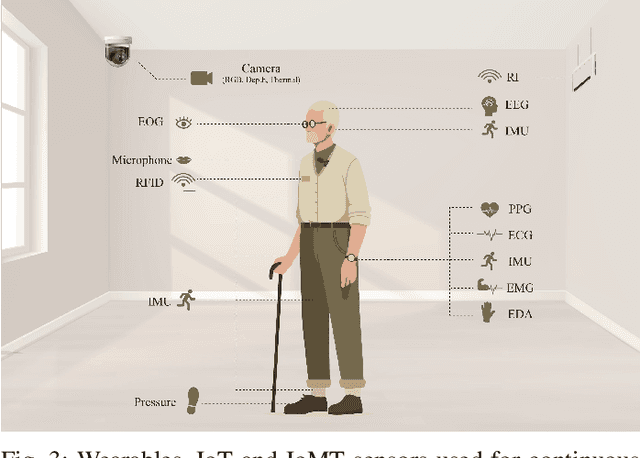
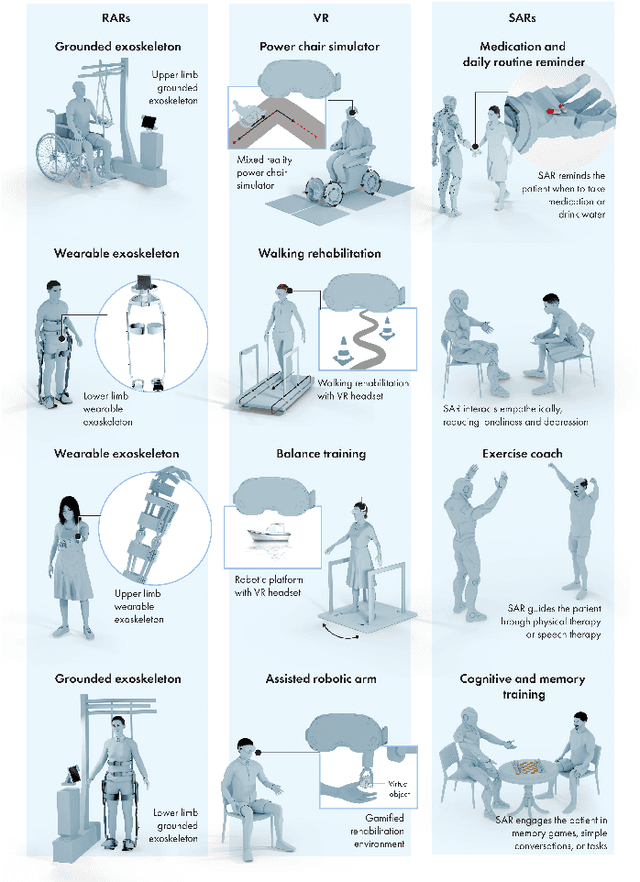
The current body of research on Parkinson's disease (PD) screening, monitoring, and management has evolved along two largely independent trajectories. The first research community focuses on multimodal sensing of PD-related biomarkers using noninvasive technologies such as inertial measurement units (IMUs), force/pressure insoles, electromyography (EMG), electroencephalography (EEG), speech and acoustic analysis, and RGB/RGB-D motion capture systems. These studies emphasize data acquisition, feature extraction, and machine learning-based classification for PD screening, diagnosis, and disease progression modeling. In parallel, a second research community has concentrated on robotic intervention and rehabilitation, employing socially assistive robots (SARs), robot-assisted rehabilitation (RAR) systems, and virtual reality (VR)-integrated robotic platforms for improving motor and cognitive function, enhancing social engagement, and supporting caregivers. Despite the complementary goals of these two domains, their methodological and technological integration remains limited, with minimal data-level or decision-level coupling between the two. With the advent of advanced artificial intelligence (AI), including large language models (LLMs), agentic AI systems, a unique opportunity now exists to unify these research streams. We envision a closed-loop sensor-AI-robot framework in which multimodal sensing continuously guides the interaction between the patient, caregiver, humanoid robot (and physician) through AI agents that are powered by a multitude of AI models such as robotic and wearables foundation models, LLM-based reasoning, reinforcement learning, and continual learning. Such closed-loop system enables personalized, explainable, and context-aware intervention, forming the basis for digital twin of the PD patient that can adapt over time to deliver intelligent, patient-centered PD care.

Indoor Position and Attitude Tracking with SO(3) Manifold
Jan 02, 2025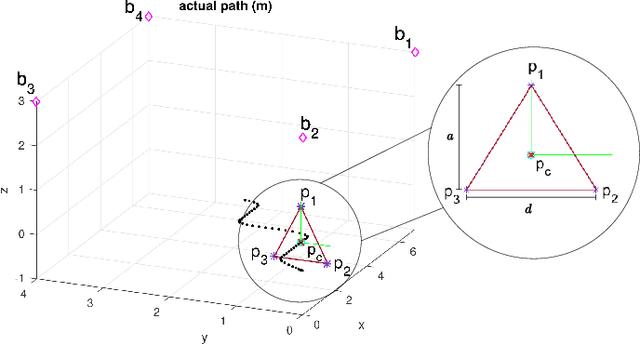
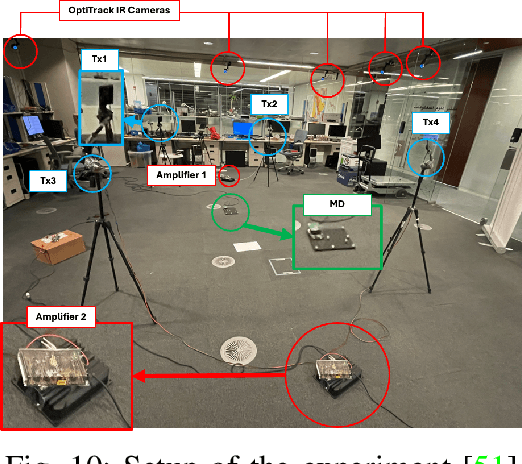
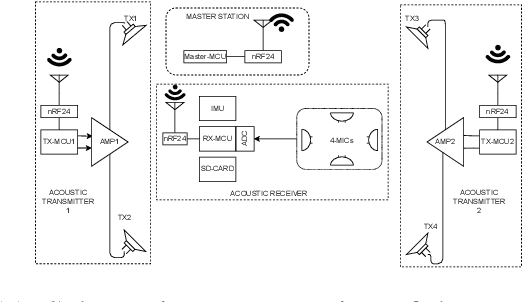
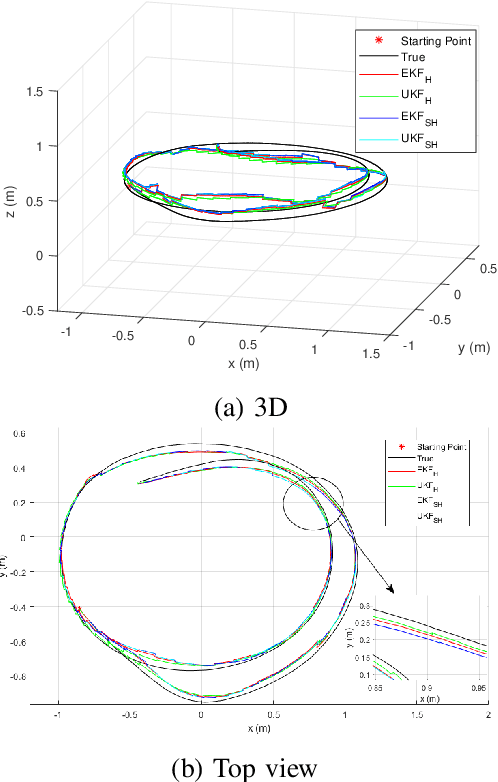
Driven by technological breakthroughs, indoor tracking and localization have gained importance in various applications including the Internet of Things (IoT), robotics, and unmanned aerial vehicles (UAVs). To tackle some of the challenges associated with indoor tracking, this study explores the potential benefits of incorporating the SO(3) manifold structure of the rotation matrix. The goal is to enhance the 3D tracking performance of the extended Kalman filter (EKF) and unscented Kalman filter (UKF) of a moving target within an indoor environment. Our results demonstrate that the proposed extended Kalman filter with Riemannian (EKFRie) and unscented Kalman filter with Riemannian (UKFRie) algorithms consistently outperform the conventional EKF and UKF in terms of position and orientation accuracy. While the conventional EKF and UKF achieved root mean square error (RMSE) of 0.36m and 0.43m, respectively, for a long stair path, the proposed EKFRie and UKFRie algorithms achieved a lower RMSE of 0.21m and 0.10m. Our results show also the outperforming of the proposed algorithms over the EKF and UKF algorithms with the Isosceles triangle manifold. While the latter achieved RMSE of 7.26cm and 7.27cm, respectively, our proposed algorithms achieved RMSE of 6.73cm and 6.16cm. These results demonstrate the enhanced performance of the proposed algorithms.