 Add to Chrome
 Add to Firefox
 Add to Edge
H2H Music Improv: A Communication Model and Audio-Visual Dataset for Music Improvisation
Aug 14, 2026
Current real-time AI improvisation systems lack the communication awareness human musicians rely on: rather than treating communication as a foundational algorithm design concern, most systems layer interaction strategies post-hoc onto generative algorithms through explicit controls and predefined modes. This gap persists in part because no formalized, machine-readable communication model with musicians exists. To address this, we study how expert musicians communicate in free (non-idiomatic) improvisation, unconstrained by prior discussion or agreement. Through a collaborative co-design process with expert improvisers, we derive a communication model that (1) captures how free improvisers negotiate musical ideas and enter stable musical spaces, and (2) is formalized as a machine-readable annotation scheme. We further present the H2H (Human-to-Human) Music Improvisation dataset: six hours of audio-visual expert duo improvisations with clean per-player stems and per-player annotations of both their own intentions and their perception of their partner's intentions. To our knowledge, this is the first such dataset for free improvisation. Together, the communication model and the dataset offer a new lens and resource for studying musician communication and may in future inform the design of AI musical partners that communicate by design.

NeoLightning: A Modern Reimagination of Gesture-Based Sound Design
May 15, 2025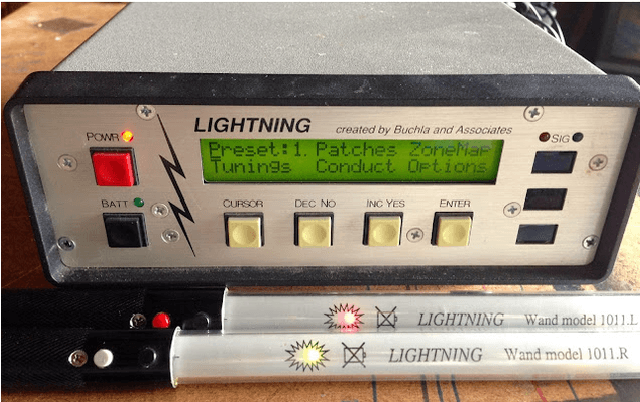
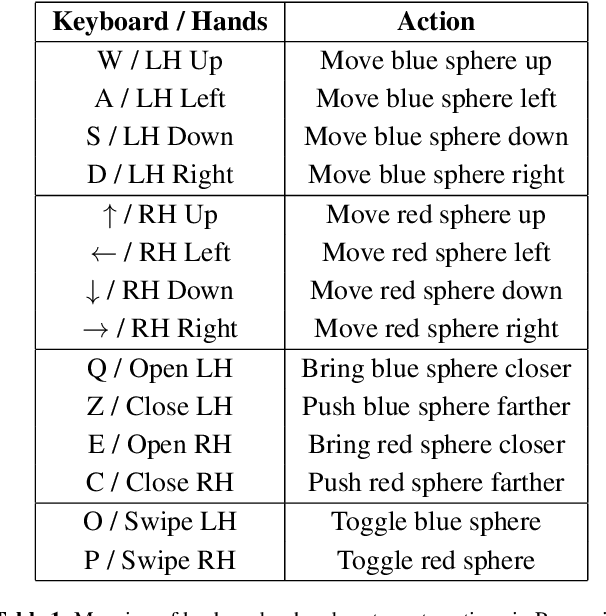
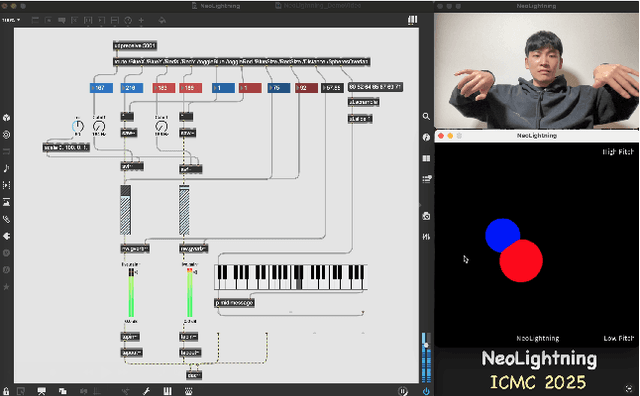

This paper introduces NeoLightning, a modern reinterpretation of the Buchla Lightning. NeoLightning preserves the innovative spirit of Don Buchla's "Buchla Lightning" (introduced in the 1990s) while making its gesture-based interaction accessible to contemporary users. While the original Buchla Lightning and many other historical instruments were groundbreaking in their time, they are now largely unsupported, limiting user interaction to indirect experiences. To address this, NeoLightning leverages MediaPipe for deep learning-based gesture recognition and employs Max/MSP and Processing for real-time multimedia processing. The redesigned system offers precise, low-latency gesture recognition and immersive 3D interaction. By merging the creative spirit of the original Lightning with modern advancements, NeoLightning redefines gesture-based musical interaction, expanding possibilities for expressive performance and interactive sound design.