 Add to Chrome
 Add to Firefox
 Add to Edge
Learning To Sample From Diffusion Models Via Inverse Reinforcement Learning
Feb 09, 2026
Diffusion models generate samples through an iterative denoising process, guided by a neural network. While training the denoiser on real-world data is computationally demanding, the sampling procedure itself is more flexible. This adaptability serves as a key lever in practice, enabling improvements in both the quality of generated samples and the efficiency of the sampling process. In this work, we introduce an inverse reinforcement learning framework for learning sampling strategies without retraining the denoiser. We formulate the diffusion sampling procedure as a discrete-time finite-horizon Markov Decision Process, where actions correspond to optional modifications of the sampling dynamics. To optimize action scheduling, we avoid defining an explicit reward function. Instead, we directly match the target behavior expected from the sampler using policy gradient techniques. We provide experimental evidence that this approach can improve the quality of samples generated by pretrained diffusion models and automatically tune sampling hyperparameters.

Conditional Distribution Quantization in Machine Learning
Feb 11, 2025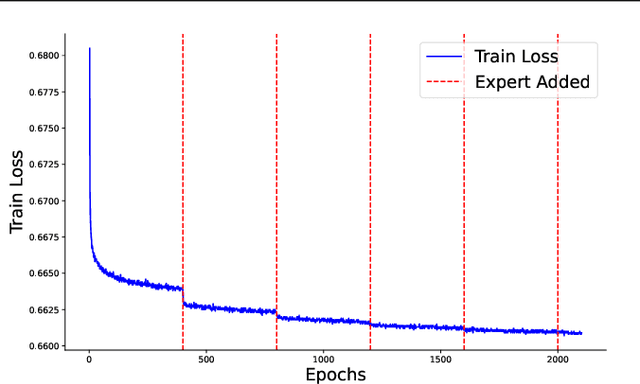

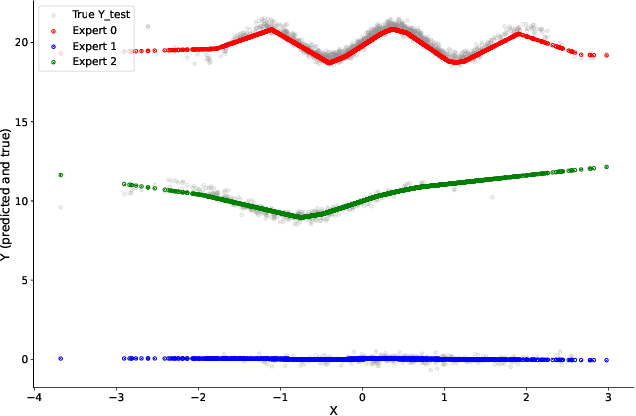
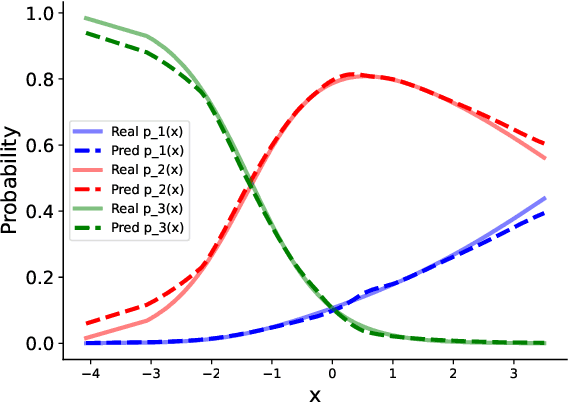
Conditional expectation \mathbb{E}(Y \mid X) often fails to capture the complexity of multimodal conditional distributions \mathcal{L}(Y \mid X). To address this, we propose using n-point conditional quantizations--functional mappings of X that are learnable via gradient descent--to approximate \mathcal{L}(Y \mid X). This approach adapts Competitive Learning Vector Quantization (CLVQ), tailored for conditional distributions. It goes beyond single-valued predictions by providing multiple representative points that better reflect multimodal structures. It enables the approximation of the true conditional law in the Wasserstein distance. The resulting framework is theoretically grounded and useful for uncertainty quantification and multimodal data generation tasks. For example, in computer vision inpainting tasks, multiple plausible reconstructions may exist for the same partially observed input image X. We demonstrate the effectiveness of our approach through experiments on synthetic and real-world datasets.