 Add to Chrome
 Add to Firefox
 Add to Edge
Intelligent Multimodal Retrieval and Reasoning for Geospatial Knowledge Discovery on the I-GUIDE Platform
Jun 14, 2026
Geospatial knowledge discovery increasingly requires search across heterogeneous artifacts: datasets, maps, notebooks, software, publications, and the provenance links among them. Conventional geoportals support metadata and spatial filtering, but they rarely provide semantic retrieval, graph-aware provenance traversal, and conversational synthesis in one integrated system. This paper presents I-GUIDE Smart Search, a production multimodal geospatial retrieval-augmented generation (RAG) system embedded in the I-GUIDE Platform, and reports on its design, deployment, and evaluation. The system combines production-maintained OpenSearch keyword, vector, and spatial indexes with a Neo4j knowledge graph and an iterative RAG pipeline for memory-aware query augmentation, reasoning, retrieval-method routing, relevance grading, grounded generation, hallucination and relevance checking. In a single-A100 RAG deployment, I-GUIDE Smart Search supports interactive use up to about 100 concurrent simulated users, reaching 4.4 requests per second with p50 latency near 25 seconds despite 20-50 LLM calls per query. For answer quality, we evaluate a four-category benchmark of 170 unique human-filtered user-facing queries, together with ten intent-specific probe sets generated from the deployed indexes and graph. Smart Search improves retrieved evidence coverage and judged answer quality over non-retrieval and naive-RAG baselines, with the clearest gains on exact-identifier, spatially constrained, simple-recommendation, and domain-specific factual queries requiring current indexed evidence. We distill transferable deployment lessons for spatial RAG systems, covering spatial metadata quality, graph provenance, retrieval routing, interface contracts, refusal-aware evaluation, latency-cost tradeoffs, and the role of the user interface in deployed geospatial cyberinfrastructure.

Building Machine Learning Challenges for Anomaly Detection in Science
Mar 03, 2025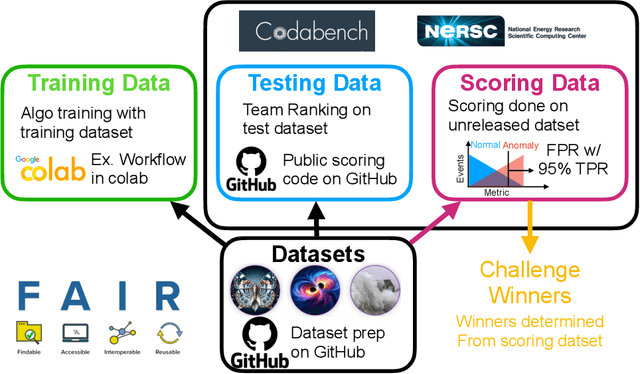
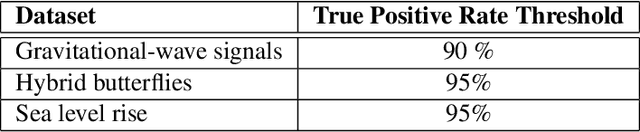
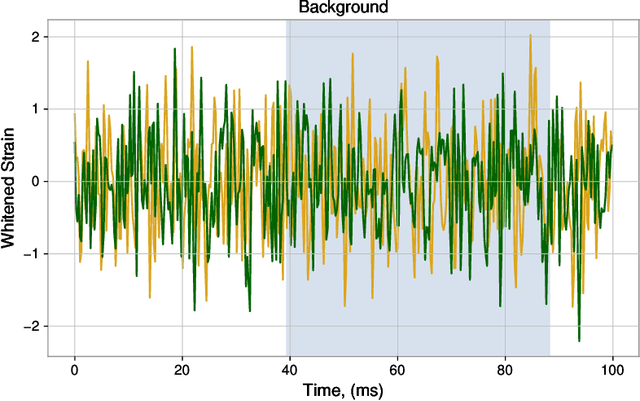
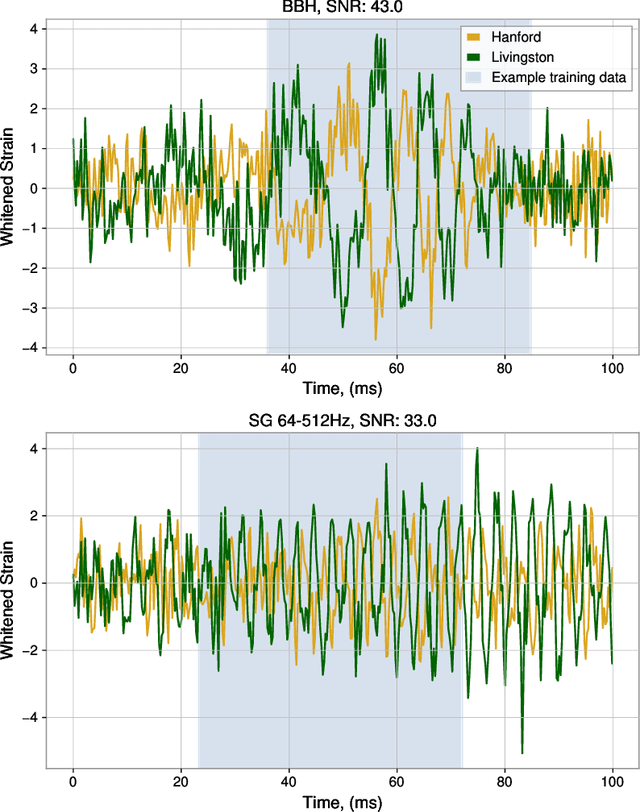
Scientific discoveries are often made by finding a pattern or object that was not predicted by the known rules of science. Oftentimes, these anomalous events or objects that do not conform to the norms are an indication that the rules of science governing the data are incomplete, and something new needs to be present to explain these unexpected outliers. The challenge of finding anomalies can be confounding since it requires codifying a complete knowledge of the known scientific behaviors and then projecting these known behaviors on the data to look for deviations. When utilizing machine learning, this presents a particular challenge since we require that the model not only understands scientific data perfectly but also recognizes when the data is inconsistent and out of the scope of its trained behavior. In this paper, we present three datasets aimed at developing machine learning-based anomaly detection for disparate scientific domains covering astrophysics, genomics, and polar science. We present the different datasets along with a scheme to make machine learning challenges around the three datasets findable, accessible, interoperable, and reusable (FAIR). Furthermore, we present an approach that generalizes to future machine learning challenges, enabling the possibility of large, more compute-intensive challenges that can ultimately lead to scientific discovery.