 Add to Chrome
 Add to Firefox
 Add to Edge
Omnilingual ASR: Open-Source Multilingual Speech Recognition for 1600+ Languages
Nov 12, 2025
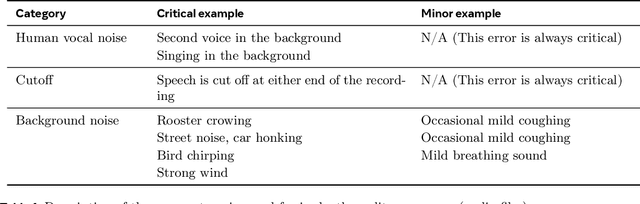
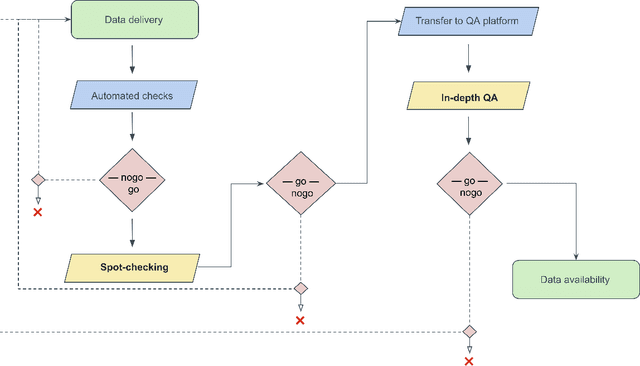
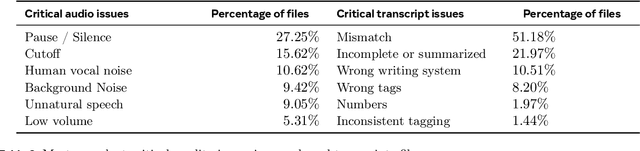
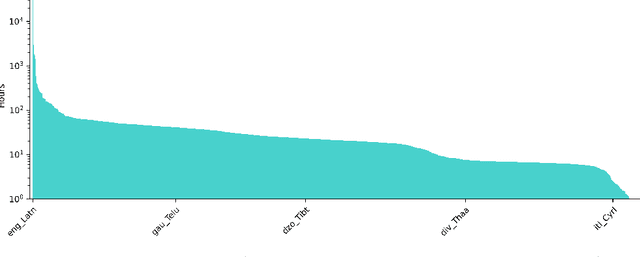
Automatic speech recognition (ASR) has advanced in high-resource languages, but most of the world's 7,000+ languages remain unsupported, leaving thousands of long-tail languages behind. Expanding ASR coverage has been costly and limited by architectures that restrict language support, making extension inaccessible to most--all while entangled with ethical concerns when pursued without community collaboration. To transcend these limitations, we introduce Omnilingual ASR, the first large-scale ASR system designed for extensibility. Omnilingual ASR enables communities to introduce unserved languages with only a handful of data samples. It scales self-supervised pre-training to 7B parameters to learn robust speech representations and introduces an encoder-decoder architecture designed for zero-shot generalization, leveraging a LLM-inspired decoder. This capability is grounded in a massive and diverse training corpus; by combining breadth of coverage with linguistic variety, the model learns representations robust enough to adapt to unseen languages. Incorporating public resources with community-sourced recordings gathered through compensated local partnerships, Omnilingual ASR expands coverage to over 1,600 languages, the largest such effort to date--including over 500 never before served by ASR. Automatic evaluations show substantial gains over prior systems, especially in low-resource conditions, and strong generalization. We release Omnilingual ASR as a family of models, from 300M variants for low-power devices to 7B for maximum accuracy. We reflect on the ethical considerations shaping this design and conclude by discussing its societal impact. In particular, we highlight how open-sourcing models and tools can lower barriers for researchers and communities, inviting new forms of participation. Open-source artifacts are available at https://github.com/facebookresearch/omnilingual-asr.

Federated Learning Priorities Under the European Union Artificial Intelligence Act
Feb 05, 2024

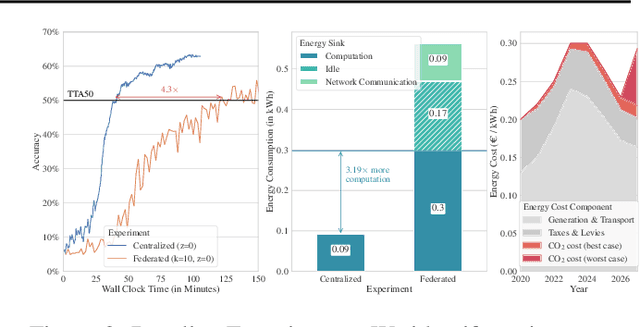

The age of AI regulation is upon us, with the European Union Artificial Intelligence Act (AI Act) leading the way. Our key inquiry is how this will affect Federated Learning (FL), whose starting point of prioritizing data privacy while performing ML fundamentally differs from that of centralized learning. We believe the AI Act and future regulations could be the missing catalyst that pushes FL toward mainstream adoption. However, this can only occur if the FL community reprioritizes its research focus. In our position paper, we perform a first-of-its-kind interdisciplinary analysis (legal and ML) of the impact the AI Act may have on FL and make a series of observations supporting our primary position through quantitative and qualitative analysis. We explore data governance issues and the concern for privacy. We establish new challenges regarding performance and energy efficiency within lifecycle monitoring. Taken together, our analysis suggests there is a sizable opportunity for FL to become a crucial component of AI Act-compliant ML systems and for the new regulation to drive the adoption of FL techniques in general. Most noteworthy are the opportunities to defend against data bias and enhance private and secure computation