 Add to Chrome
 Add to Firefox
 Add to Edge
Data-driven generalized perimeter control: Zürich case study
Mar 17, 2026
Urban traffic congestion is a key challenge for the development of modern cities, requiring advanced control techniques to optimize existing infrastructures usage. Despite the extensive availability of data, modeling such complex systems remains an expensive and time consuming step when designing model-based control approaches. On the other hand, machine learning approaches require simulations to bootstrap models, or are unable to deal with the sparse nature of traffic data and enforce hard constraints. We propose a novel formulation of traffic dynamics based on behavioral systems theory and apply data-enabled predictive control to steer traffic dynamics via dynamic traffic light control. A high-fidelity simulation of the city of Zürich, the largest closed-loop microscopic simulation of urban traffic in the literature to the best of our knowledge, is used to validate the performance of the proposed method in terms of total travel time and CO2 emissions.

Urban traffic congestion control: a DeePC change
Nov 16, 2023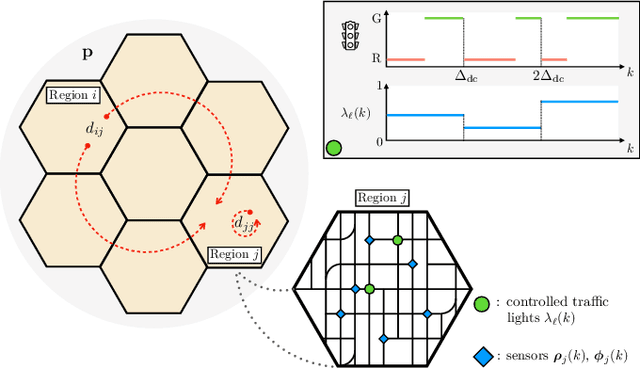
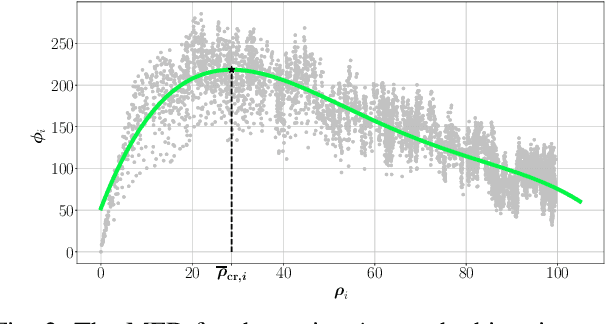
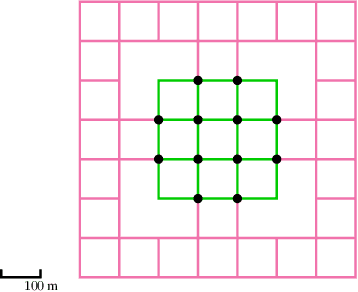
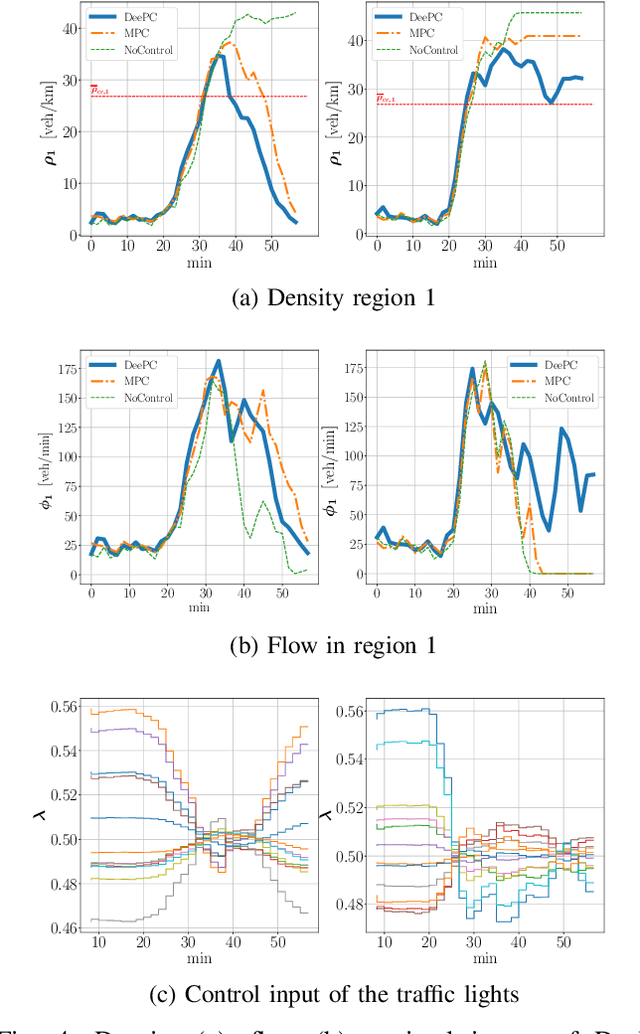
Urban traffic congestion remains a pressing challenge in our rapidly expanding cities, despite the abundance of available data and the efforts of policymakers. By leveraging behavioral system theory and data-driven control, this paper exploits the DeePC algorithm in the context of urban traffic control performed via dynamic traffic lights. To validate our approach, we consider a high-fidelity case study using the state-of-the-art simulation software package Simulation of Urban MObility (SUMO). Preliminary results indicate that DeePC outperforms existing approaches across various key metrics, including travel time and CO$_2$ emissions, demonstrating its potential for effective traffic management