 Add to Chrome
 Add to Firefox
 Add to Edge
SYNAPSE: Framework for Neuron Analysis and Perturbation in Sequence Encoding
Mar 09, 2026
In recent years, Artificial Intelligence has become a powerful partner for complex tasks such as data analysis, prediction, and problem-solving, yet its lack of transparency raises concerns about its reliability. In sensitive domains such as healthcare or cybersecurity, ensuring transparency, trustworthiness, and robustness is essential, since the consequences of wrong decisions or successful attacks can be severe. Prior neuron-level interpretability approaches are primarily descriptive, task-dependent, or require retraining, which limits their use as systematic, reusable tools for evaluating internal robustness across architectures and domains. To overcome these limitations, this work proposes SYNAPSE, a systematic, training-free framework for understanding and stress-testing the internal behavior of Transformer models across domains. It extracts per-layer [CLS] representations, trains a lightweight linear probe to obtain global and per-class neuron rankings, and applies forward-hook interventions during inference. This design enables controlled experiments on internal representations without altering the original model, thereby allowing weaknesses, stability patterns, and label-specific sensitivities to be measured and compared directly across tasks and architectures. Across all experiments, SYNAPSE reveals a consistent, domain-independent organization of internal representations, in which task-relevant information is encoded in broad, overlapping neuron subsets. This redundancy provides a strong degree of functional stability, while class-wise asymmetries expose heterogeneous specialization patterns and enable label-aware analysis. In contrast, small structured manipulations in weight or logit space are sufficient to redirect predictions, highlighting complementary vulnerability profiles and illustrating how SYNAPSE can guide the development of more robust Transformer models.

Dynamic Management of a Deep Learning-Based Anomaly Detection System for 5G Networks
Jan 21, 2026Fog and mobile edge computing (MEC) will play a key role in the upcoming fifth generation (5G) mobile networks to support decentralized applications, data analytics and management into the network itself by using a highly distributed compute model. Furthermore, increasing attention is paid to providing user-centric cybersecurity solutions, which particularly require collecting, processing and analyzing significantly large amount of data traffic and huge number of network connections in 5G networks. In this regard, this paper proposes a MEC-oriented solution in 5G mobile networks to detect network anomalies in real-time and in autonomic way. Our proposal uses deep learning techniques to analyze network flows and to detect network anomalies. Moreover, it uses policies in order to provide an efficient and dynamic management system of the computing resources used in the anomaly detection process. The paper presents relevant aspects of the deployment of the proposal and experimental results to show its performance.
DMPA: Model Poisoning Attacks on Decentralized Federated Learning for Model Differences
Feb 07, 2025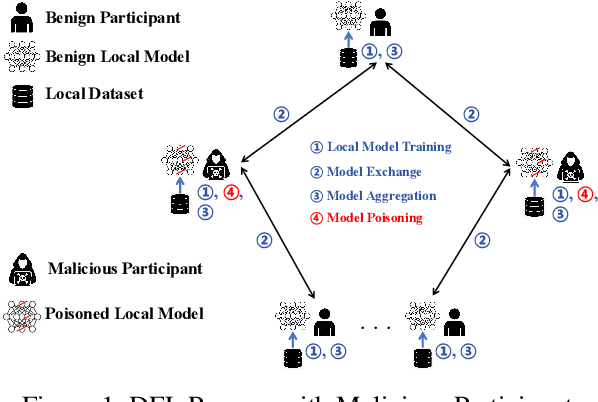
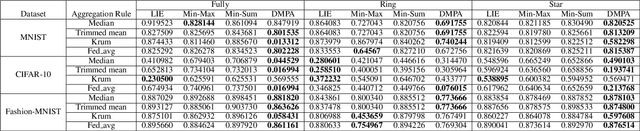
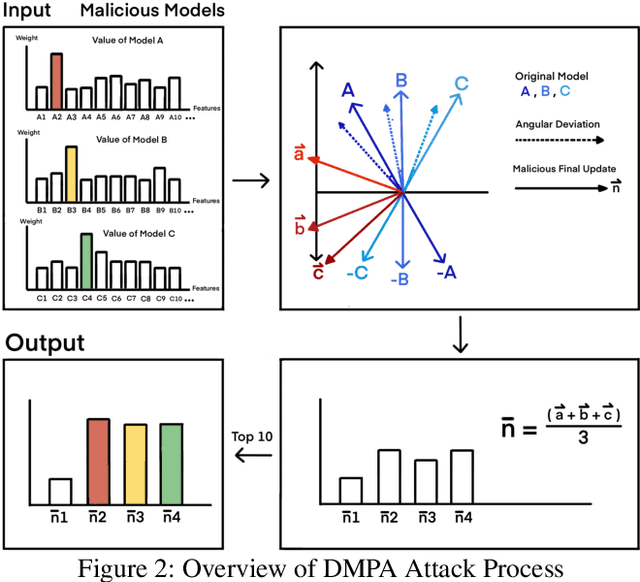
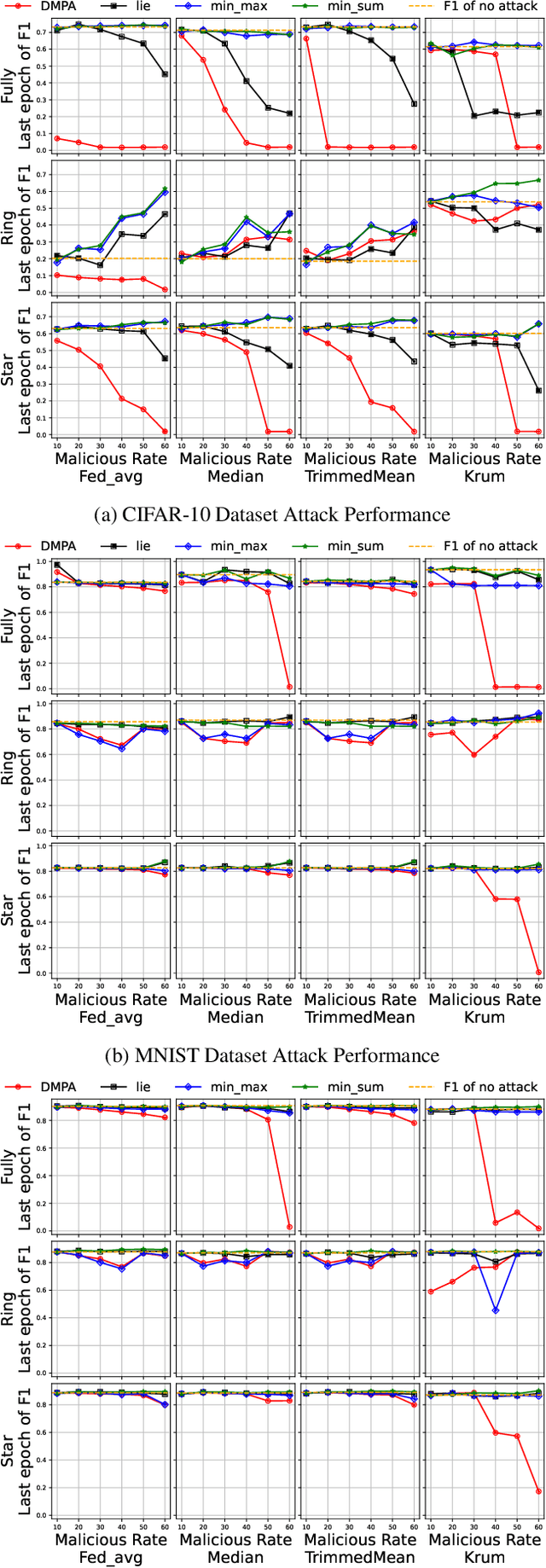
Federated learning (FL) has garnered significant attention as a prominent privacy-preserving Machine Learning (ML) paradigm. Decentralized FL (DFL) eschews traditional FL's centralized server architecture, enhancing the system's robustness and scalability. However, these advantages of DFL also create new vulnerabilities for malicious participants to execute adversarial attacks, especially model poisoning attacks. In model poisoning attacks, malicious participants aim to diminish the performance of benign models by creating and disseminating the compromised model. Existing research on model poisoning attacks has predominantly concentrated on undermining global models within the Centralized FL (CFL) paradigm, while there needs to be more research in DFL. To fill the research gap, this paper proposes an innovative model poisoning attack called DMPA. This attack calculates the differential characteristics of multiple malicious client models and obtains the most effective poisoning strategy, thereby orchestrating a collusive attack by multiple participants. The effectiveness of this attack is validated across multiple datasets, with results indicating that the DMPA approach consistently surpasses existing state-of-the-art FL model poisoning attack strategies.
S-VOTE: Similarity-based Voting for Client Selection in Decentralized Federated Learning
Jan 31, 2025Decentralized Federated Learning (DFL) enables collaborative, privacy-preserving model training without relying on a central server. This decentralized approach reduces bottlenecks and eliminates single points of failure, enhancing scalability and resilience. However, DFL also introduces challenges such as suboptimal models with non-IID data distributions, increased communication overhead, and resource usage. Thus, this work proposes S-VOTE, a voting-based client selection mechanism that optimizes resource usage and enhances model performance in federations with non-IID data conditions. S-VOTE considers an adaptive strategy for spontaneous local training that addresses participation imbalance, allowing underutilized clients to contribute without significantly increasing resource costs. Extensive experiments on benchmark datasets demonstrate the S-VOTE effectiveness. More in detail, it achieves lower communication costs by up to 21%, 4-6% faster convergence, and improves local performance by 9-17% compared to baseline methods in some configurations, all while achieving a 14-24% energy consumption reduction. These results highlight the potential of S-VOTE to address DFL challenges in heterogeneous environments.
ProFe: Communication-Efficient Decentralized Federated Learning via Distillation and Prototypes
Dec 15, 2024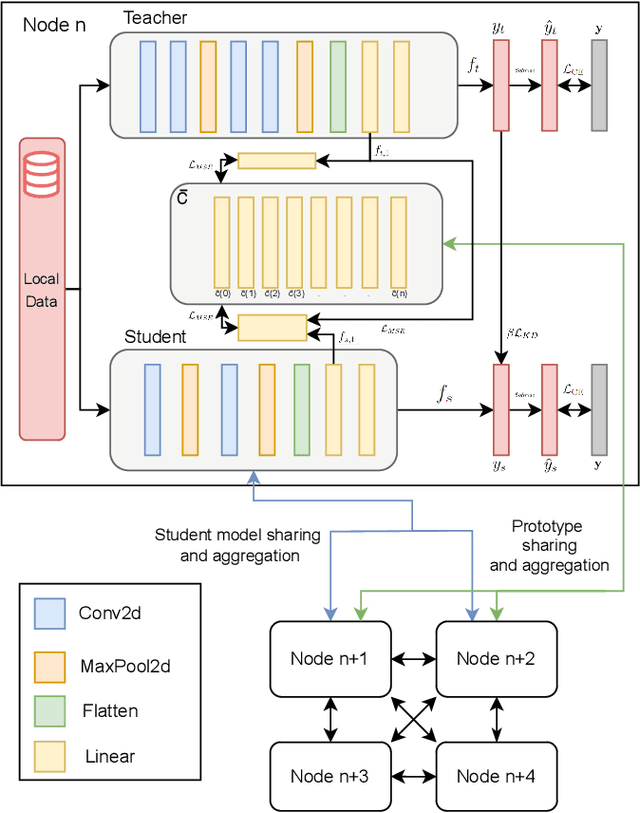
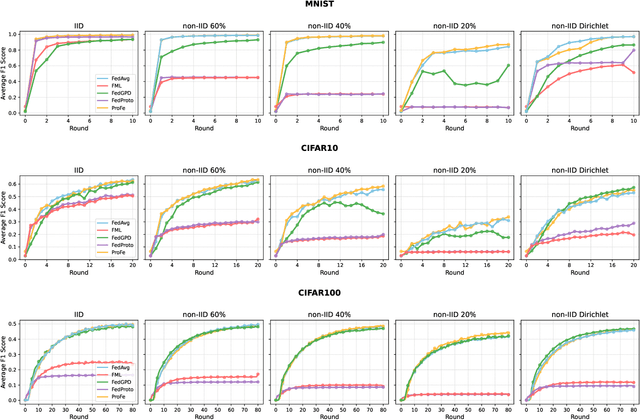
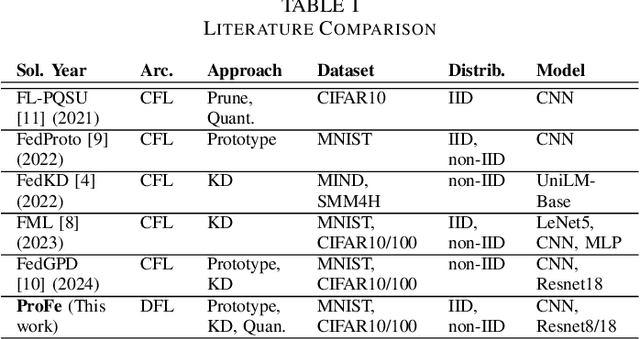

Decentralized Federated Learning (DFL) trains models in a collaborative and privacy-preserving manner while removing model centralization risks and improving communication bottlenecks. However, DFL faces challenges in efficient communication management and model aggregation within decentralized environments, especially with heterogeneous data distributions. Thus, this paper introduces ProFe, a novel communication optimization algorithm for DFL that combines knowledge distillation, prototype learning, and quantization techniques. ProFe utilizes knowledge from large local models to train smaller ones for aggregation, incorporates prototypes to better learn unseen classes, and applies quantization to reduce data transmitted during communication rounds. The performance of ProFe has been validated and compared to the literature by using benchmark datasets like MNIST, CIFAR10, and CIFAR100. Results showed that the proposed algorithm reduces communication costs by up to ~40-50% while maintaining or improving model performance. In addition, it adds ~20% training time due to increased complexity, generating a trade-off.
FedEP: Tailoring Attention to Heterogeneous Data Distribution with Entropy Pooling for Decentralized Federated Learning
Oct 10, 2024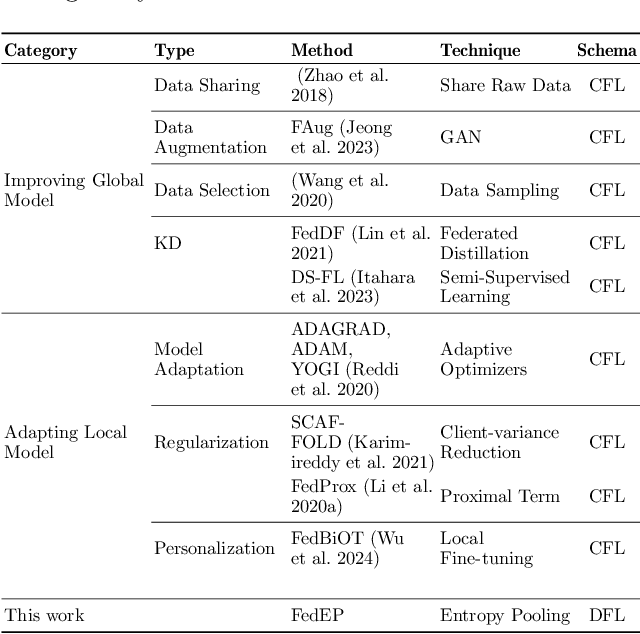
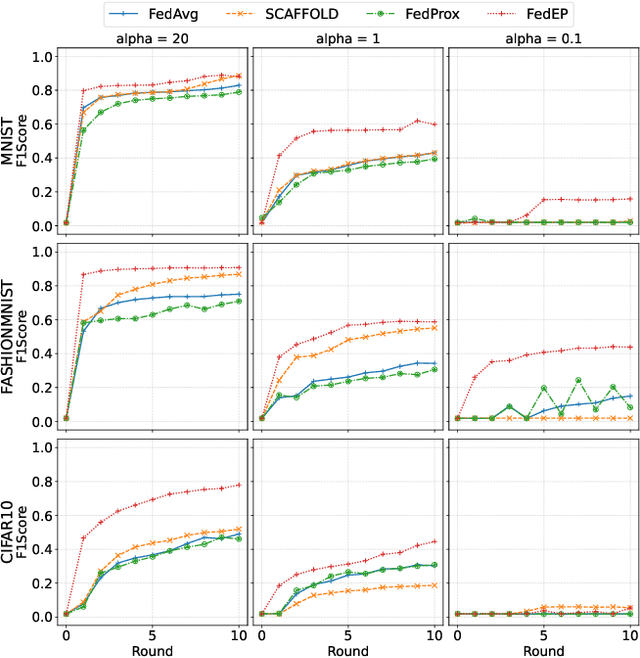
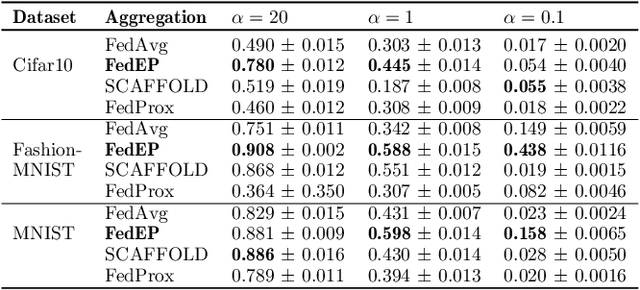
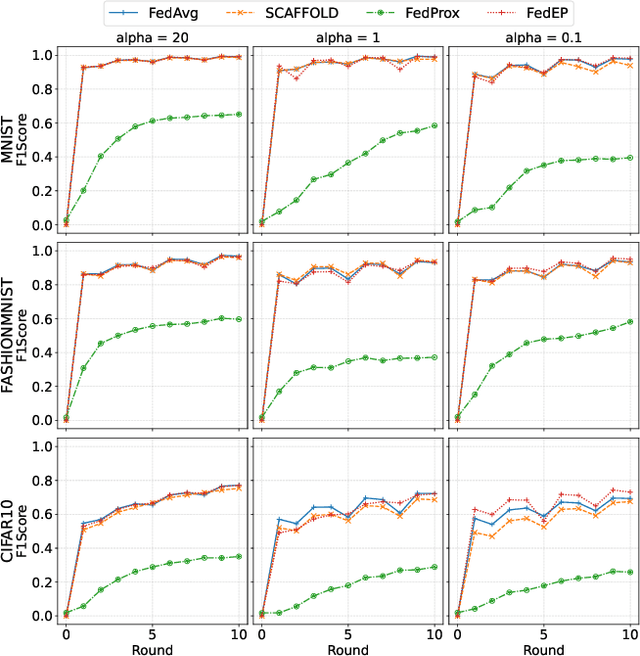
Federated Learning (FL) performance is highly influenced by data distribution across clients, and non-Independent and Identically Distributed (non-IID) leads to a slower convergence of the global model and a decrease in model effectiveness. The existing algorithms for solving the non-IID problem are focused on the traditional centralized FL (CFL), where a central server is used for model aggregation. However, in decentralized FL (DFL), nodes lack the overall vision of the federation. To address the non-IID problem in DFL, this paper proposes a novel DFL aggregation algorithm, Federated Entropy Pooling (FedEP). FedEP mitigates the client drift problem by incorporating the statistical characteristics of local distributions instead of any actual data. Prior to training, each client conducts a local distribution fitting using a Gaussian Mixture Model (GMM) and shares the resulting statistical characteristics with its neighbors. After receiving the statistical characteristics shared by its neighbors, each node tries to fit the global data distribution. In the aggregation phase, each node calculates the Kullback-Leibler (KL) divergences of the local data distribution over the fitted global data distribution, giving the weights to generate the aggregated model. Extensive experiments have demonstrated that FedEP can achieve faster convergence and show higher test performance than state-of-the-art approaches.
De-VertiFL: A Solution for Decentralized Vertical Federated Learning
Oct 08, 2024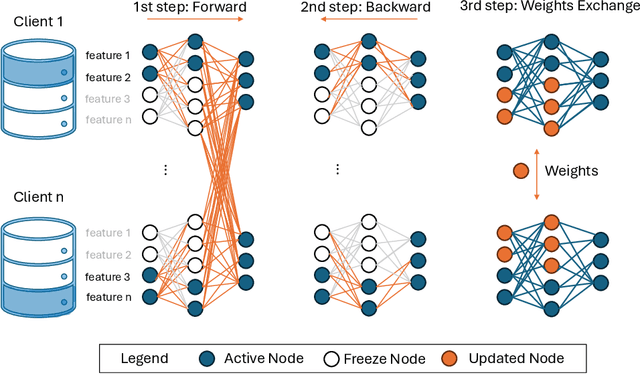
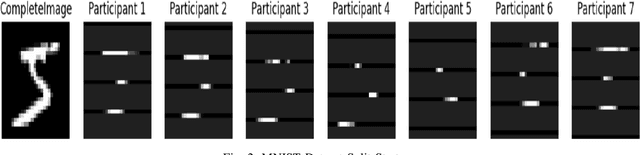
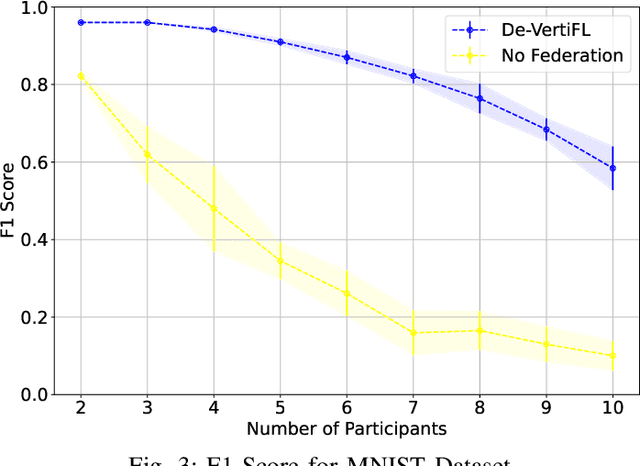
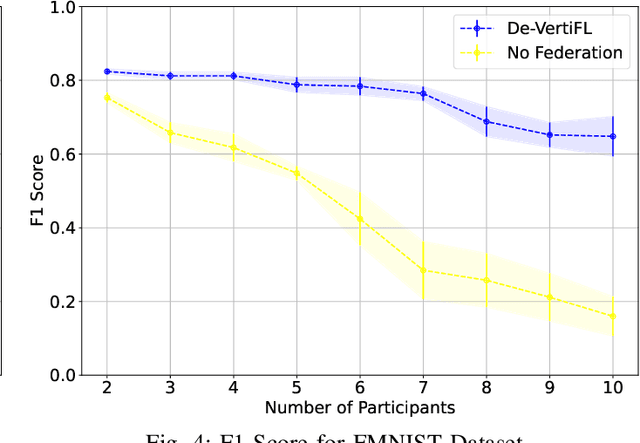
Federated Learning (FL), introduced in 2016, was designed to enhance data privacy in collaborative model training environments. Among the FL paradigm, horizontal FL, where clients share the same set of features but different data samples, has been extensively studied in both centralized and decentralized settings. In contrast, Vertical Federated Learning (VFL), which is crucial in real-world decentralized scenarios where clients possess different, yet sensitive, data about the same entity, remains underexplored. Thus, this work introduces De-VertiFL, a novel solution for training models in a decentralized VFL setting. De-VertiFL contributes by introducing a new network architecture distribution, an innovative knowledge exchange scheme, and a distributed federated training process. Specifically, De-VertiFL enables the sharing of hidden layer outputs among federation clients, allowing participants to benefit from intermediate computations, thereby improving learning efficiency. De-VertiFL has been evaluated using a variety of well-known datasets, including both image and tabular data, across binary and multiclass classification tasks. The results demonstrate that De-VertiFL generally surpasses state-of-the-art methods in F1-score performance, while maintaining a decentralized and privacy-preserving framework.
Transfer Learning in Pre-Trained Large Language Models for Malware Detection Based on System Calls
May 15, 2024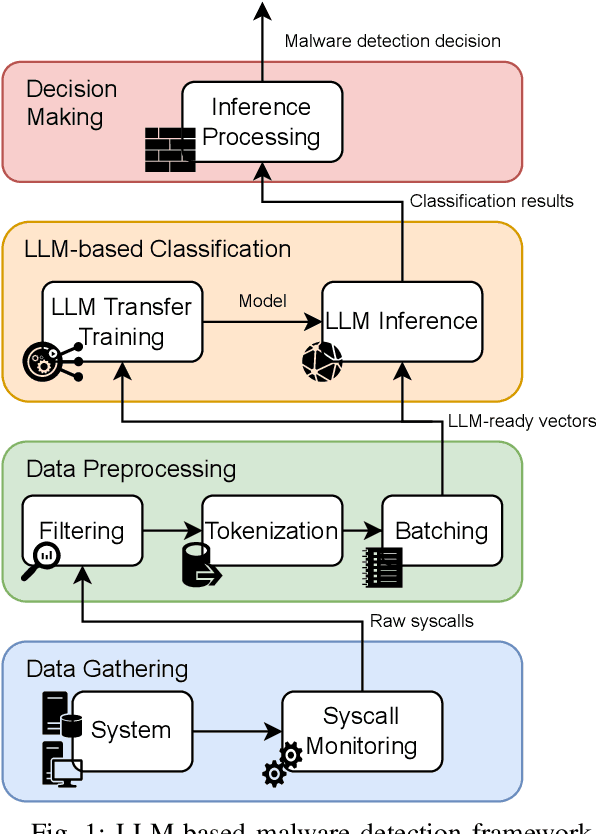
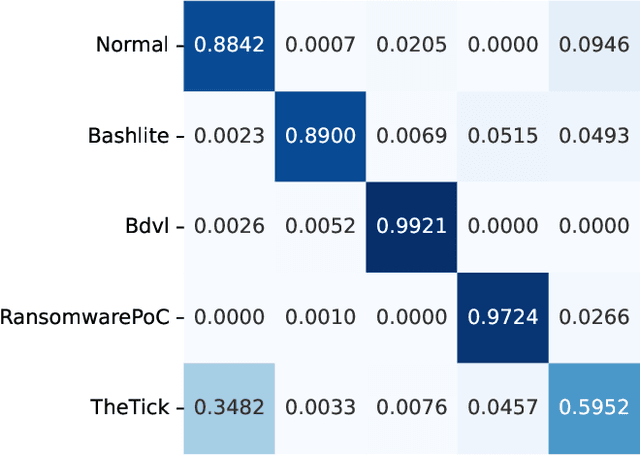
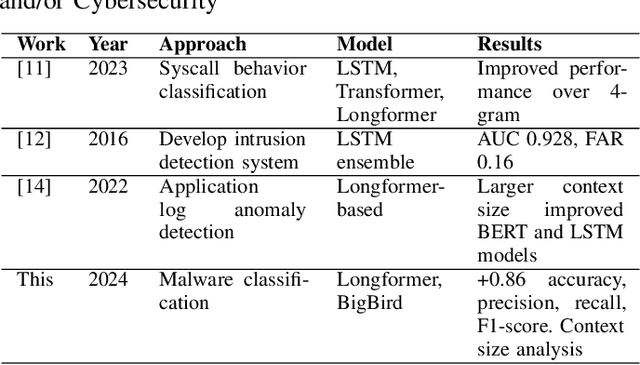
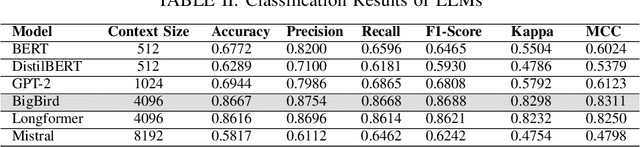
In the current cybersecurity landscape, protecting military devices such as communication and battlefield management systems against sophisticated cyber attacks is crucial. Malware exploits vulnerabilities through stealth methods, often evading traditional detection mechanisms such as software signatures. The application of ML/DL in vulnerability detection has been extensively explored in the literature. However, current ML/DL vulnerability detection methods struggle with understanding the context and intent behind complex attacks. Integrating large language models (LLMs) with system call analysis offers a promising approach to enhance malware detection. This work presents a novel framework leveraging LLMs to classify malware based on system call data. The framework uses transfer learning to adapt pre-trained LLMs for malware detection. By retraining LLMs on a dataset of benign and malicious system calls, the models are refined to detect signs of malware activity. Experiments with a dataset of over 1TB of system calls demonstrate that models with larger context sizes, such as BigBird and Longformer, achieve superior accuracy and F1-Score of approximately 0.86. The results highlight the importance of context size in improving detection rates and underscore the trade-offs between computational complexity and performance. This approach shows significant potential for real-time detection in high-stakes environments, offering a robust solution to evolving cyber threats.
Mitigating Communications Threats in Decentralized Federated Learning through Moving Target Defense
Jul 21, 2023The rise of Decentralized Federated Learning (DFL) has enabled the training of machine learning models across federated participants, fostering decentralized model aggregation and reducing dependence on a server. However, this approach introduces unique communication security challenges that have yet to be thoroughly addressed in the literature. These challenges primarily originate from the decentralized nature of the aggregation process, the varied roles and responsibilities of the participants, and the absence of a central authority to oversee and mitigate threats. Addressing these challenges, this paper first delineates a comprehensive threat model, highlighting the potential risks of DFL communications. In response to these identified risks, this work introduces a security module designed for DFL platforms to counter communication-based attacks. The module combines security techniques such as symmetric and asymmetric encryption with Moving Target Defense (MTD) techniques, including random neighbor selection and IP/port switching. The security module is implemented in a DFL platform called Fedstellar, allowing the deployment and monitoring of the federation. A DFL scenario has been deployed, involving eight physical devices implementing three security configurations: (i) a baseline with no security, (ii) an encrypted configuration, and (iii) a configuration integrating both encryption and MTD techniques. The effectiveness of the security module is validated through experiments with the MNIST dataset and eclipse attacks. The results indicated an average F1 score of 95%, with moderate increases in CPU usage (up to 63.2% +-3.5%) and network traffic (230 MB +-15 MB) under the most secure configuration, mitigating the risks posed by eavesdropping or eclipse attacks.
RansomAI: AI-powered Ransomware for Stealthy Encryption
Jun 27, 2023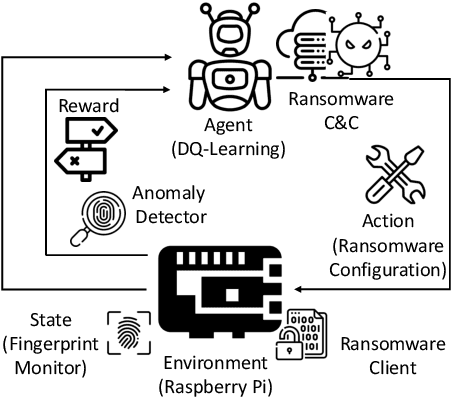
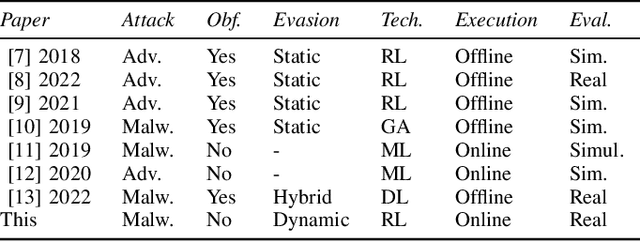
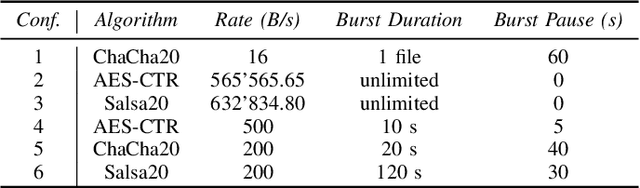

Cybersecurity solutions have shown promising performance when detecting ransomware samples that use fixed algorithms and encryption rates. However, due to the current explosion of Artificial Intelligence (AI), sooner than later, ransomware (and malware in general) will incorporate AI techniques to intelligently and dynamically adapt its encryption behavior to be undetected. It might result in ineffective and obsolete cybersecurity solutions, but the literature lacks AI-powered ransomware to verify it. Thus, this work proposes RansomAI, a Reinforcement Learning-based framework that can be integrated into existing ransomware samples to adapt their encryption behavior and stay stealthy while encrypting files. RansomAI presents an agent that learns the best encryption algorithm, rate, and duration that minimizes its detection (using a reward mechanism and a fingerprinting intelligent detection system) while maximizing its damage function. The proposed framework was validated in a ransomware, Ransomware-PoC, that infected a Raspberry Pi 4, acting as a crowdsensor. A pool of experiments with Deep Q-Learning and Isolation Forest (deployed on the agent and detection system, respectively) has demonstrated that RansomAI evades the detection of Ransomware-PoC affecting the Raspberry Pi 4 in a few minutes with >90% accuracy.