 Add to Chrome
 Add to Firefox
 Add to Edge
Time-Varying Causal Treatment for Quantifying the Causal Effect of Short-Term Variations on Arctic Sea Ice Dynamics
Jan 25, 2026
Quantifying the causal relationship between ice melt and freshwater distribution is critical, as these complex interactions manifest as regional fluctuations in sea surface height (SSH). Leveraging SSH as a proxy for sea ice dynamics enables improved understanding of the feedback mechanisms driving polar climate change and global sea-level rise. However, conventional deep learning models often struggle with reliable treatment effect estimation in spatiotemporal settings due to unobserved confounders and the absence of physical constraints. To address these challenges, we propose the Knowledge-Guided Causal Model Variational Autoencoder (KGCM-VAE) to quantify causal mechanisms between sea ice thickness and SSH. The proposed framework integrates a velocity modulation scheme in which smoothed velocity signals are dynamically amplified via a sigmoid function governed by SSH transitions to generate physically grounded causal treatments. In addition, the model incorporates Maximum Mean Discrepancy (MMD) to balance treated and control covariate distributions in the latent space, along with a causal adjacency-constrained decoder to ensure alignment with established physical structures. Experimental results on both synthetic and real-world Arctic datasets demonstrate that KGCM-VAE achieves superior PEHE compared to state-of-the-art benchmarks. Ablation studies further confirm the effectiveness of the approach, showing that the joint application of MMD and causal adjacency constraints yields a 1.88\% reduction in estimation error.

PhysE-Inv: A Physics-Encoded Inverse Modeling approach for Arctic Snow Depth Prediction
Jan 23, 2026The accurate estimation of Arctic snow depth ($h_s$) remains a critical time-varying inverse problem due to the extreme scarcity and noise inherent in associated sea ice parameters. Existing process-based and data-driven models are either highly sensitive to sparse data or lack the physical interpretability required for climate-critical applications. To address this gap, we introduce PhysE-Inv, a novel framework that integrates a sophisticated sequential architecture, an LSTM Encoder-Decoder with Multi-head Attention and physics-guided contrastive learning, with physics-guided inference.Our core innovation lies in a surjective, physics-constrained inversion methodology. This methodology first leverages the hydrostatic balance forward model as a target-formulation proxy, enabling effective learning in the absence of direct $h_s$ ground truth; second, it uses reconstruction physics regularization over a latent space to dynamically discover hidden physical parameters from noisy, incomplete time-series input. Evaluated against state-of-the-art baselines, PhysE-Inv significantly improves prediction performance, reducing error by 20\% while demonstrating superior physical consistency and resilience to data sparsity compared to empirical methods. This approach pioneers a path for noise-tolerant, interpretable inverse modeling, with wide applicability in geospatial and cryospheric domains.
Causality for Earth Science -- A Review on Time-series and Spatiotemporal Causality Methods
Apr 03, 2024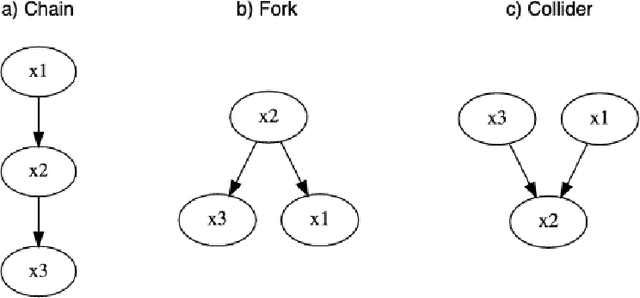
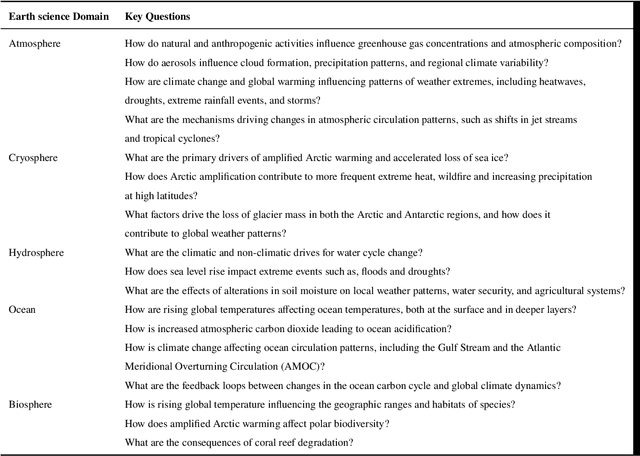
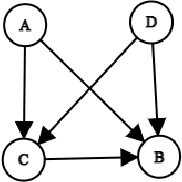
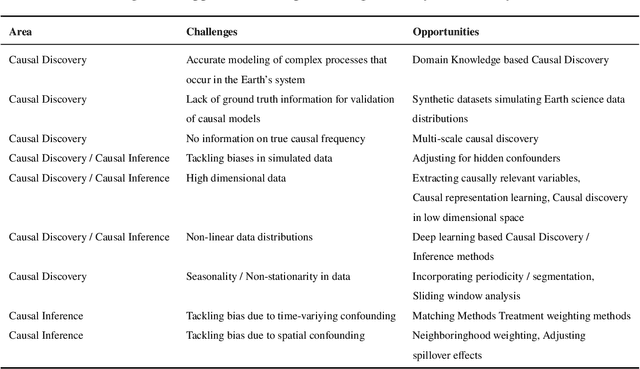
This survey paper covers the breadth and depth of time-series and spatiotemporal causality methods, and their applications in Earth Science. More specifically, the paper presents an overview of causal discovery and causal inference, explains the underlying causal assumptions, and enlists evaluation techniques and key terminologies of the domain area. The paper elicits the various state-of-the-art methods introduced for time-series and spatiotemporal causal analysis along with their strengths and limitations. The paper further describes the existing applications of several methods for answering specific Earth Science questions such as extreme weather events, sea level rise, teleconnections etc. This survey paper can serve as a primer for Data Science researchers interested in data-driven causal study as we share a list of resources, such as Earth Science datasets (synthetic, simulated and observational data) and open source tools for causal analysis. It will equally benefit the Earth Science community interested in taking an AI-driven approach to study the causality of different dynamic and thermodynamic processes as we present the open challenges and opportunities in performing causality-based Earth Science study.