 Add to Chrome
 Add to Firefox
 Add to Edge
Near Field Tapering with Slepian Window: Balancing the Range Angle Sidelobe Trade off
Nov 16, 2025
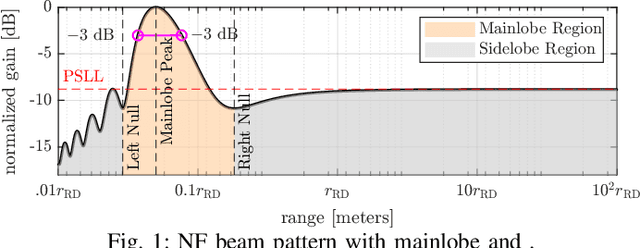
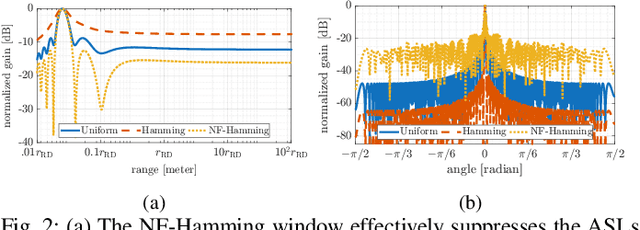
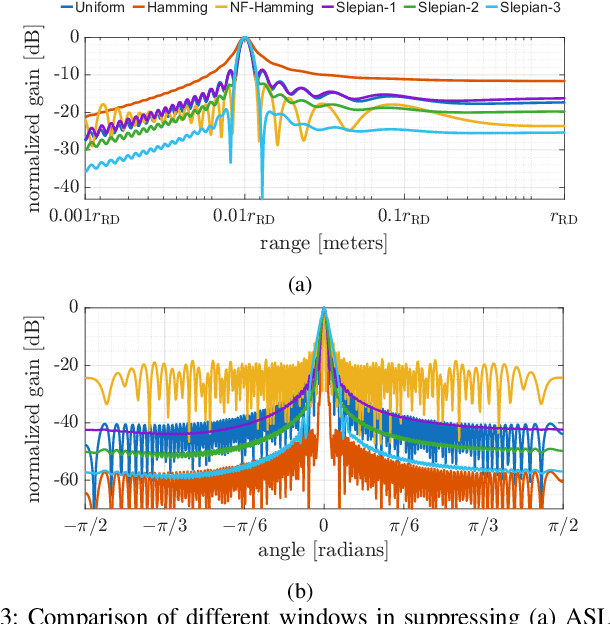
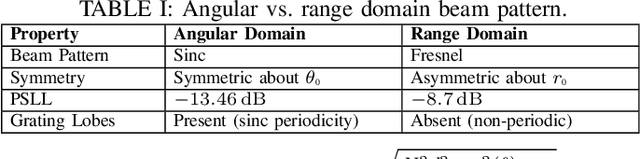
Near-field beamforming enables target discrimination in both range (axial) and angle (lateral) dimensions. Elevated sidelobes along either dimension, however, increase susceptibility to interference and degrade detection performance. Conventional amplitude tapering techniques, designed for far-field scenarios, cannot simultaneously suppress axial and lateral sidelobes in near-field. In this letter, we propose a Slepian-based amplitude tapering approach that maximizes mainlobe energy concentration, achieving significant sidelobe reduction in both dimensions. Numerical results show that the proposed taper improves peak sidelobe suppression by approximately 24 dB in the lateral domain and 10 dB in the axial domain compared to a conventional uniform window.

WESSA at SemEval-2020 Task 9: Code-Mixed Sentiment Analysis using Transformers
Sep 21, 2020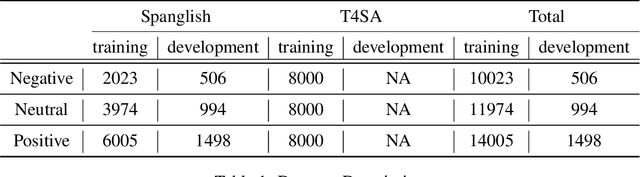
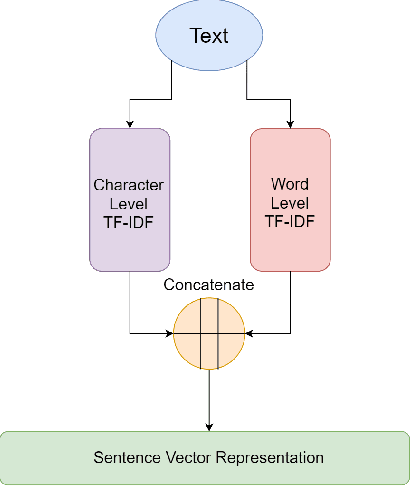
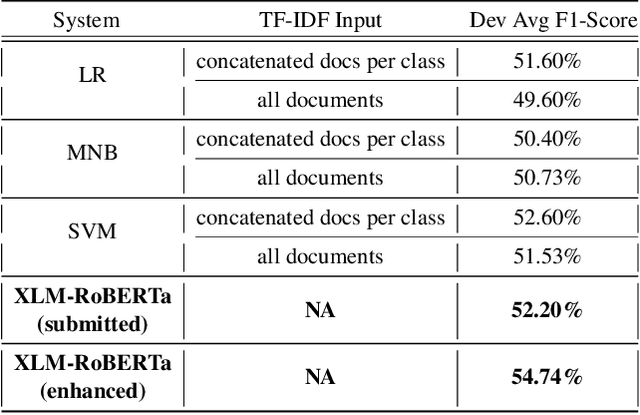
In this paper, we describe our system submitted for SemEval 2020 Task 9, Sentiment Analysis for Code-Mixed Social Media Text alongside other experiments. Our best performing system is a Transfer Learning-based model that fine-tunes "XLM-RoBERTa", a transformer-based multilingual masked language model, on monolingual English and Spanish data and Spanish-English code-mixed data. Our system outperforms the official task baseline by achieving a 70.1% average F1-Score on the official leaderboard using the test set. For later submissions, our system manages to achieve a 75.9% average F1-Score on the test set using CodaLab username "ahmed0sultan".
Blind Cognitive MAC Protocols
Oct 08, 2008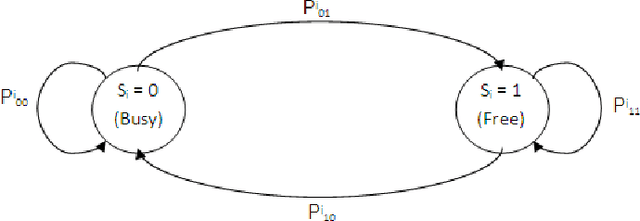
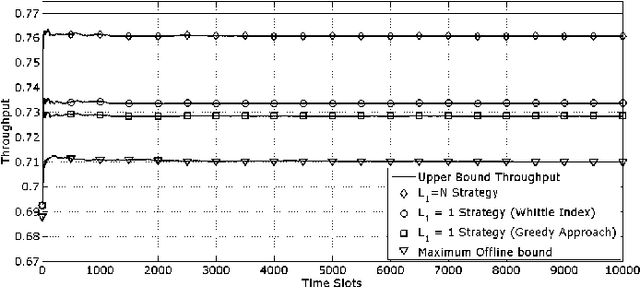
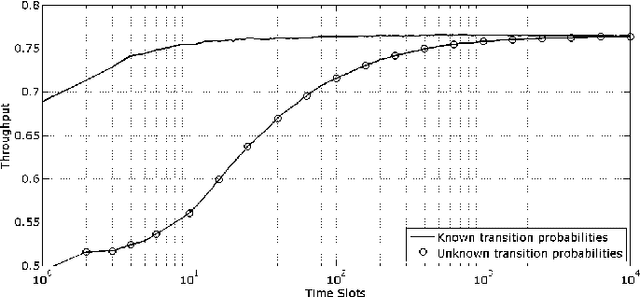
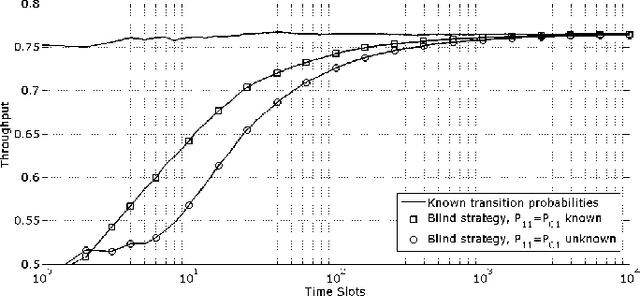
We consider the design of cognitive Medium Access Control (MAC) protocols enabling an unlicensed (secondary) transmitter-receiver pair to communicate over the idle periods of a set of licensed channels, i.e., the primary network. The objective is to maximize data throughput while maintaining the synchronization between secondary users and avoiding interference with licensed (primary) users. No statistical information about the primary traffic is assumed to be available a-priori to the secondary user. We investigate two distinct sensing scenarios. In the first, the secondary transmitter is capable of sensing all the primary channels, whereas it senses one channel only in the second scenario. In both cases, we propose MAC protocols that efficiently learn the statistics of the primary traffic online. Our simulation results demonstrate that the proposed blind protocols asymptotically achieve the throughput obtained when prior knowledge of primary traffic statistics is available.