 Add to Chrome
 Add to Firefox
 Add to Edge
Hybrid ResNet-1D-BiGRU with Multi-Head Attention for Cyberattack Detection in Industrial IoT Environments
Apr 07, 2026
This study introduces a hybrid deep learning model for intrusion detection in Industrial IoT (IIoT) systems, combining ResNet-1D, BiGRU, and Multi-Head Attention (MHA) for effective spatial-temporal feature extraction and attention-based feature weighting. To address class imbalance, SMOTE was applied during training on the EdgeHoTset dataset. The model achieved 98.71% accuracy, a loss of 0.0417%, and low inference latency (0.0001 sec /instance), demonstrating strong real-time capability. To assess generalizability, the model was also tested on the CICIoV2024 dataset, where it reached 99.99% accuracy and F1-score, with a loss of 0.0028, 0 % FPR, and 0.00014 sec/instance inference time. Across all metrics and datasets, the proposed model outperformed existing methods, confirming its robustness and effectiveness for real-time IoT intrusion detection.

SE-Enhanced ViT and BiLSTM-Based Intrusion Detection for Secure IIoT and IoMT Environments
Apr 06, 2026With the rapid growth of interconnected devices in Industrial and Medical Internet of Things (IIoT and MIoT) ecosystems, ensuring timely and accurate detection of cyber threats has become a critical challenge. This study presents an advanced intrusion detection framework based on a hybrid Squeeze-and-Excitation Attention Vision Transformer-Bidirectional Long Short-Term Memory (SE ViT-BiLSTM) architecture. In this design, the traditional multi-head attention mechanism of the Vision Transformer is replaced with Squeeze-and-Excitation attention, and integrated with BiLSTM layers to enhance detection accuracy and computational efficiency. The proposed model was trained and evaluated on two real-world benchmark datasets; EdgeIIoT and CICIoMT2024; both before and after data balancing using the Synthetic Minority Over-sampling Technique (SMOTE) and RandomOverSampler. Experimental results demonstrate that the SE ViT-BiLSTM model outperforms existing approaches across multiple metrics. Before balancing, the model achieved accuracies of 99.11% (FPR: 0.0013%, latency: 0.00032 sec/inst) on EdgeIIoT and 96.10% (FPR: 0.0036%, latency: 0.00053 sec/inst) on CICIoMT2024. After balancing, performance further improved, reaching 99.33% accuracy with 0.00035 sec/inst latency on EdgeIIoT and 98.16% accuracy with 0.00014 sec/inst latency on CICIoMT2024.
A Robust Cross-Domain IDS using BiGRU-LSTM-Attention for Medical and Industrial IoT Security
Aug 17, 2025The increased Internet of Medical Things IoMT and the Industrial Internet of Things IIoT interconnectivity has introduced complex cybersecurity challenges, exposing sensitive data, patient safety, and industrial operations to advanced cyber threats. To mitigate these risks, this paper introduces a novel transformer-based intrusion detection system IDS, termed BiGAT-ID a hybrid model that combines bidirectional gated recurrent units BiGRU, long short-term memory LSTM networks, and multi-head attention MHA. The proposed architecture is designed to effectively capture bidirectional temporal dependencies, model sequential patterns, and enhance contextual feature representation. Extensive experiments on two benchmark datasets, CICIoMT2024 medical IoT and EdgeIIoTset industrial IoT demonstrate the model's cross-domain robustness, achieving detection accuracies of 99.13 percent and 99.34 percent, respectively. Additionally, the model exhibits exceptional runtime efficiency, with inference times as low as 0.0002 seconds per instance in IoMT and 0.0001 seconds in IIoT scenarios. Coupled with a low false positive rate, BiGAT-ID proves to be a reliable and efficient IDS for deployment in real-world heterogeneous IoT environments
Automatic Speech Recognition with BERT and CTC Transformers: A Review
Oct 12, 2024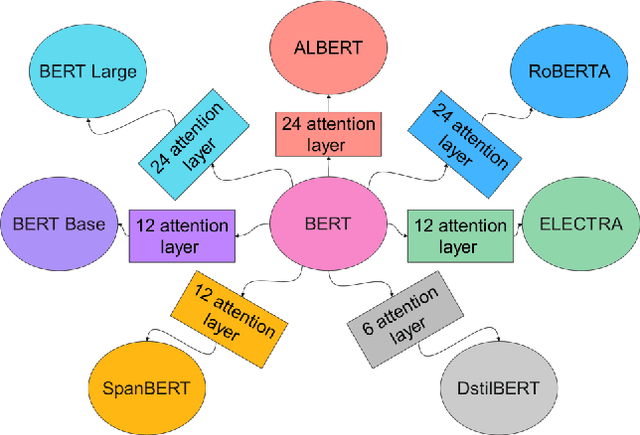
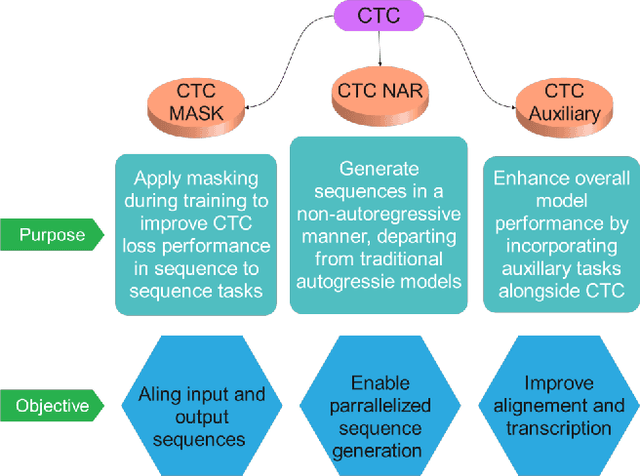

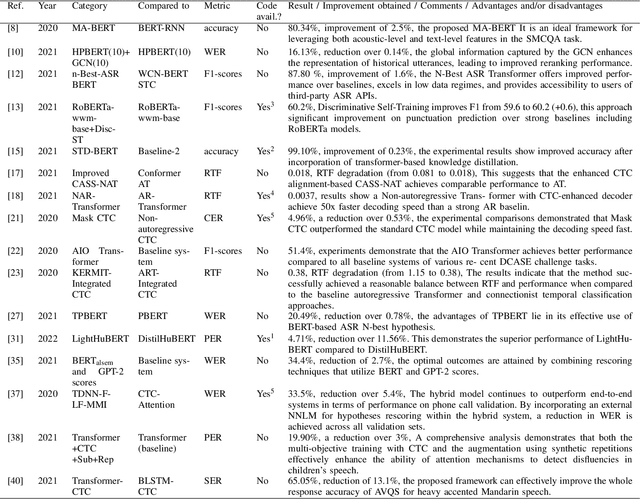
This review paper provides a comprehensive analysis of recent advances in automatic speech recognition (ASR) with bidirectional encoder representations from transformers BERT and connectionist temporal classification (CTC) transformers. The paper first introduces the fundamental concepts of ASR and discusses the challenges associated with it. It then explains the architecture of BERT and CTC transformers and their potential applications in ASR. The paper reviews several studies that have used these models for speech recognition tasks and discusses the results obtained. Additionally, the paper highlights the limitations of these models and outlines potential areas for further research. All in all, this review provides valuable insights for researchers and practitioners who are interested in ASR with BERT and CTC transformers.
Enhancing IoT Security with CNN and LSTM-Based Intrusion Detection Systems
May 28, 2024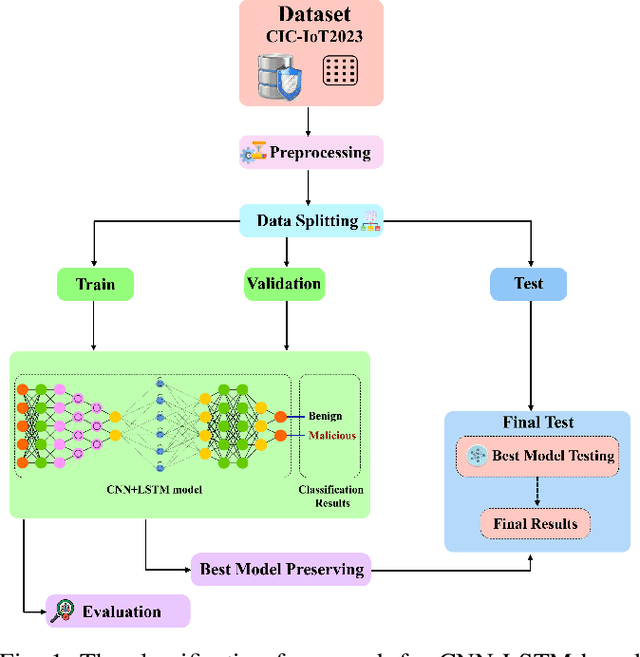
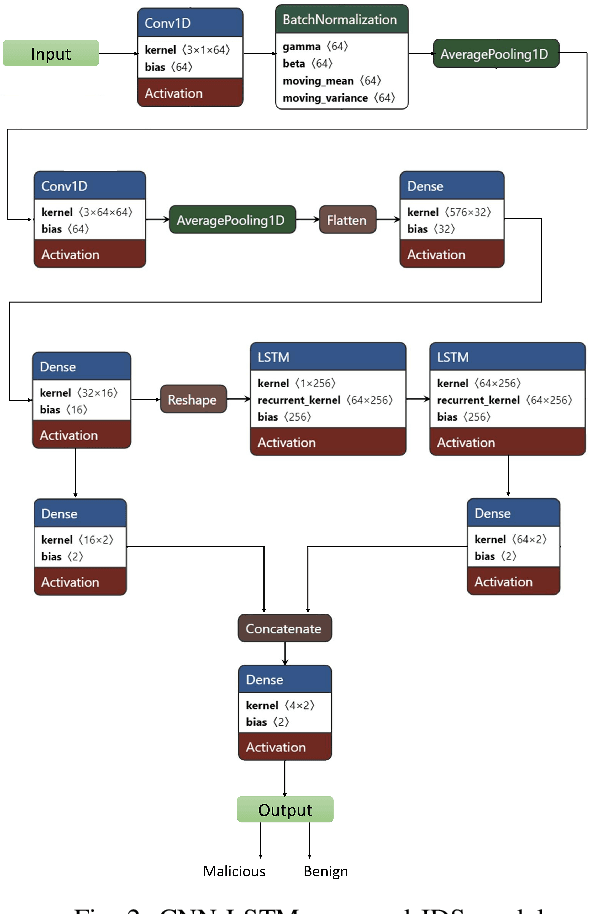
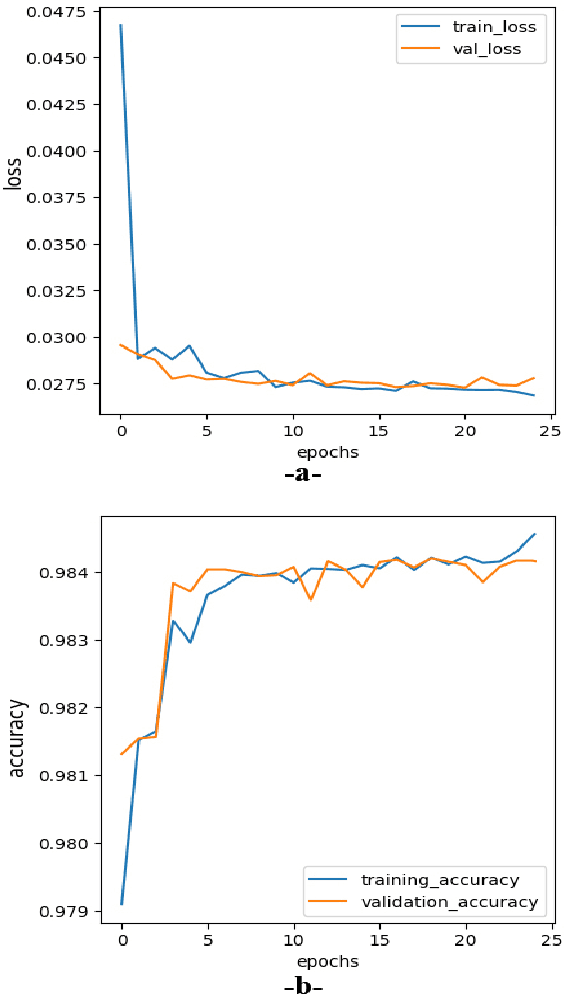

Protecting Internet of things (IoT) devices against cyber attacks is imperative owing to inherent security vulnerabilities. These vulnerabilities can include a spectrum of sophisticated attacks that pose significant damage to both individuals and organizations. Employing robust security measures like intrusion detection systems (IDSs) is essential to solve these problems and protect IoT systems from such attacks. In this context, our proposed IDS model consists on a combination of convolutional neural network (CNN) and long short-term memory (LSTM) deep learning (DL) models. This fusion facilitates the detection and classification of IoT traffic into binary categories, benign and malicious activities by leveraging the spatial feature extraction capabilities of CNN for pattern recognition and the sequential memory retention of LSTM for discerning complex temporal dependencies in achieving enhanced accuracy and efficiency. In assessing the performance of our proposed model, the authors employed the new CICIoT2023 dataset for both training and final testing, while further validating the model's performance through a conclusive testing phase utilizing the CICIDS2017 dataset. Our proposed model achieves an accuracy rate of 98.42%, accompanied by a minimal loss of 0.0275. False positive rate(FPR) is equally important, reaching 9.17% with an F1-score of 98.57%. These results demonstrate the effectiveness of our proposed CNN-LSTM IDS model in fortifying IoT environments against potential cyber threats.