 Add to Chrome
 Add to Firefox
 Add to Edge
SE-Enhanced ViT and BiLSTM-Based Intrusion Detection for Secure IIoT and IoMT Environments
Apr 06, 2026
With the rapid growth of interconnected devices in Industrial and Medical Internet of Things (IIoT and MIoT) ecosystems, ensuring timely and accurate detection of cyber threats has become a critical challenge. This study presents an advanced intrusion detection framework based on a hybrid Squeeze-and-Excitation Attention Vision Transformer-Bidirectional Long Short-Term Memory (SE ViT-BiLSTM) architecture. In this design, the traditional multi-head attention mechanism of the Vision Transformer is replaced with Squeeze-and-Excitation attention, and integrated with BiLSTM layers to enhance detection accuracy and computational efficiency. The proposed model was trained and evaluated on two real-world benchmark datasets; EdgeIIoT and CICIoMT2024; both before and after data balancing using the Synthetic Minority Over-sampling Technique (SMOTE) and RandomOverSampler. Experimental results demonstrate that the SE ViT-BiLSTM model outperforms existing approaches across multiple metrics. Before balancing, the model achieved accuracies of 99.11% (FPR: 0.0013%, latency: 0.00032 sec/inst) on EdgeIIoT and 96.10% (FPR: 0.0036%, latency: 0.00053 sec/inst) on CICIoMT2024. After balancing, performance further improved, reaching 99.33% accuracy with 0.00035 sec/inst latency on EdgeIIoT and 98.16% accuracy with 0.00014 sec/inst latency on CICIoMT2024.

Improving Performance of Federated Learning based Medical Image Analysis in Non-IID Settings using Image Augmentation
Dec 14, 2021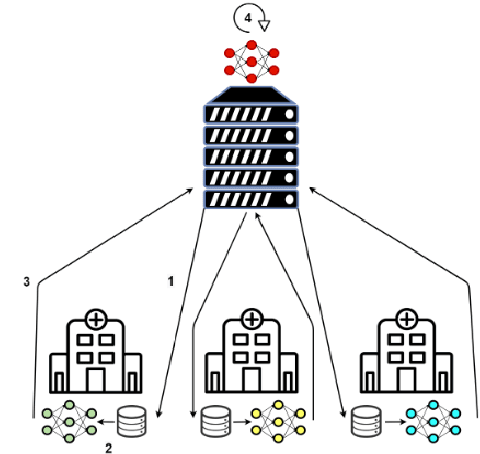
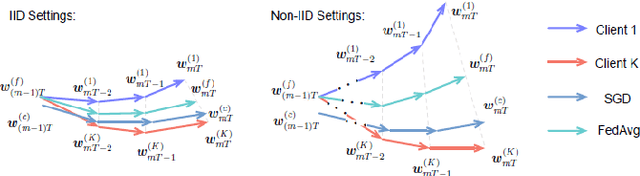
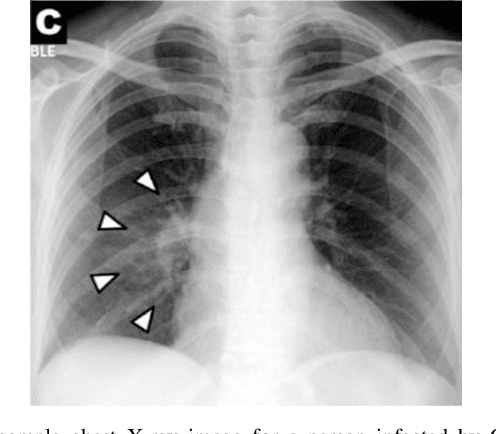
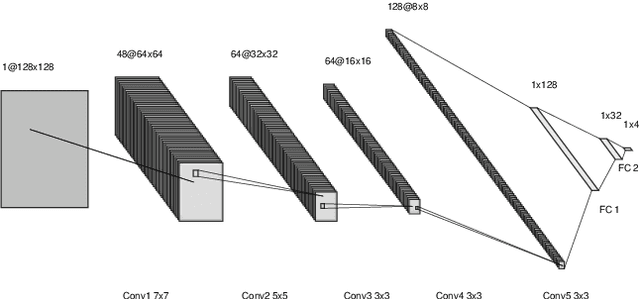
Federated Learning (FL) is a suitable solution for making use of sensitive data belonging to patients, people, companies, or industries that are obligatory to work under rigid privacy constraints. FL mainly or partially supports data privacy and security issues and provides an alternative to model problems facilitating multiple edge devices or organizations to contribute a training of a global model using a number of local data without having them. Non-IID data of FL caused from its distributed nature presents a significant performance degradation and stabilization skews. This paper introduces a novel method dynamically balancing the data distributions of clients by augmenting images to address the non-IID data problem of FL. The introduced method remarkably stabilizes the model training and improves the model's test accuracy from 83.22% to 89.43% for multi-chest diseases detection of chest X-ray images in highly non-IID FL setting. The results of IID, non-IID and non-IID with proposed method federated trainings demonstrated that the proposed method might help to encourage organizations or researchers in developing better systems to get values from data with respect to data privacy not only for healthcare but also other fields.