 Add to Chrome
 Add to Firefox
 Add to Edge
PeTeR: Post-Training Robustification of Probabilistic Circuits
Jul 08, 2026
Probabilistic circuits (PCs) can model complex joint distributions while supporting exact and efficient computation of many inference queries. However, standard likelihood-based PC learning is vulnerable to overfitting and fragile generalization when confronted with data noise, small sample sizes, or distribution shifts. This can be mitigated using distributionally-robust optimization which consider worst-case distributions within a Wasserstein ball of the empirical distribution, but current methods are limited to training a model from scratch in this framework. Instead, we propose PeTeR: a novel, data-free post-training framework designed to robustify pre-trained PCs against distribution shifts without retraining from scratch. Empirical evaluations across multiple density estimation benchmarks demonstrate that PeTeR effectively robustifies baseline models against both random and adversarial perturbations, achieving competitive or superior performance to data-dependent robust learning baselines.

Discovering and Learning Probabilistic Models of Black-Box AI Capabilities
Dec 20, 2025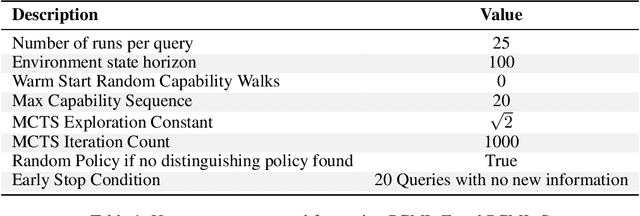
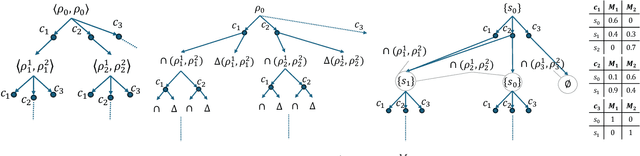
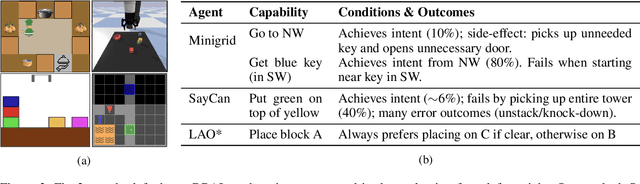
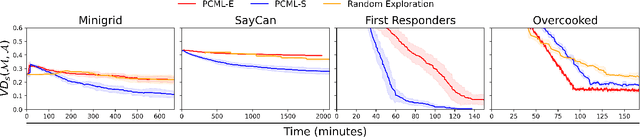
Black-box AI (BBAI) systems such as foundational models are increasingly being used for sequential decision making. To ensure that such systems are safe to operate and deploy, it is imperative to develop efficient methods that can provide a sound and interpretable representation of the BBAI's capabilities. This paper shows that PDDL-style representations can be used to efficiently learn and model an input BBAI's planning capabilities. It uses the Monte-Carlo tree search paradigm to systematically create test tasks, acquire data, and prune the hypothesis space of possible symbolic models. Learned models describe a BBAI's capabilities, the conditions under which they can be executed, and the possible outcomes of executing them along with their associated probabilities. Theoretical results show soundness, completeness and convergence of the learned models. Empirical results with multiple BBAI systems illustrate the scope, efficiency, and accuracy of the presented methods.
Optimal Transport for Probabilistic Circuits
Oct 16, 2024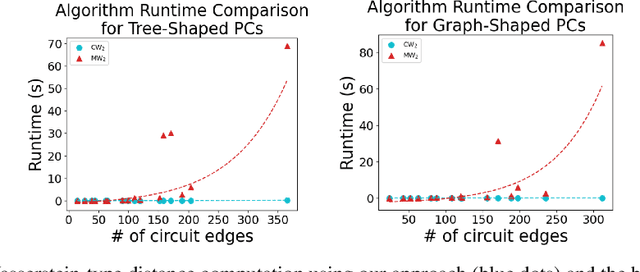
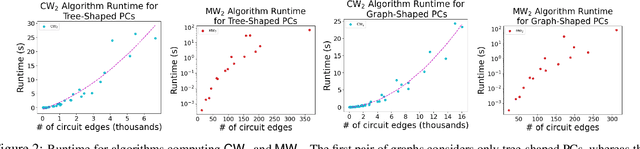
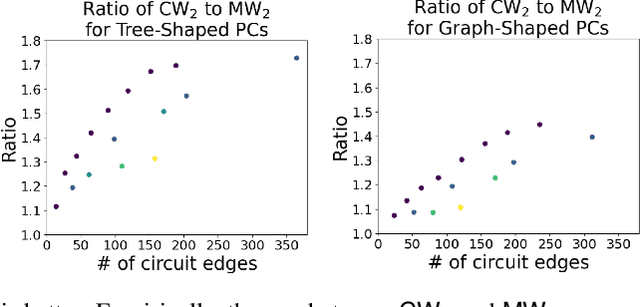
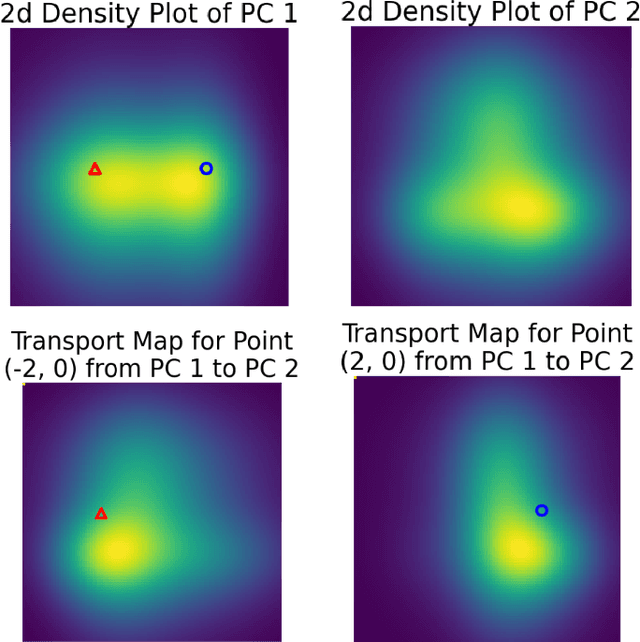
We introduce a novel optimal transport framework for probabilistic circuits (PCs). While it has been shown recently that divergences between distributions represented as certain classes of PCs can be computed tractably, to the best of our knowledge, there is no existing approach to compute the Wasserstein distance between probability distributions given by PCs. We consider a Wasserstein-type distance that restricts the coupling measure of the associated optimal transport problem to be a probabilistic circuit. We then develop an algorithm for computing this distance by solving a series of small linear programs and derive the circuit conditions under which this is tractable. Furthermore, we show that we can also retrieve the optimal transport plan between the PCs from the solutions to these linear programming problems. We then consider the empirical Wasserstein distance between a PC and a dataset, and show that we can estimate the PC parameters to minimize this distance through an efficient iterative algorithm.