 Add to Chrome
 Add to Firefox
 Add to Edge
Isolation Forest
Papers and Code
Semantic-Aware Advanced Persistent Threat Detection Using Autoencoders on LLM-Encoded System Logs
Jan 30, 2026
Advanced Persistent Threats (APTs) are among the most challenging cyberattacks to detect. They are carried out by highly skilled attackers who carefully study their targets and operate in a stealthy, long-term manner. Because APTs exhibit "low-and-slow" behavior, traditional statistical methods and shallow machine learning techniques often fail to detect them. Previous research on APT detection has explored machine learning approaches and provenance graph analysis. However, provenance-based methods often fail to capture the semantic intent behind system activities. This paper proposes a novel anomaly detection approach that leverages semantic embeddings generated by Large Language Models (LLMs). The method enhances APT detection by extracting meaningful semantic representations from unstructured system log data. First, raw system logs are transformed into high-dimensional semantic embeddings using a pre-trained transformer model. These embeddings are then analyzed using an Autoencoder (AE) to identify anomalous and potentially malicious patterns. The proposed method is evaluated using the DARPA Transparent Computing (TC) dataset, which contains realistic APT attack scenarios generated by red teams in live environments. Experimental results show that the AE trained on LLM-derived embeddings outperforms widely used unsupervised baseline methods, including Isolation Forest (IForest), One-Class Support Vector Machine (OC-SVM), and Principal Component Analysis (PCA). Performance is measured using the Area Under the Receiver Operating Characteristic Curve (AUC-ROC), where the proposed approach consistently achieves superior results, even in complex threat scenarios. These findings highlight the importance of semantic understanding in detecting non-linear and stealthy attack behaviors that are often missed by conventional detection techniques.

JAF: Judge Agent Forest
Jan 29, 2026Judge agents are fundamental to agentic AI frameworks: they provide automated evaluation, and enable iterative self-refinement of reasoning processes. We introduce JAF: Judge Agent Forest, a framework in which the judge agent conducts joint inference across a cohort of query--response pairs generated by a primary agent, rather than evaluating each in isolation. This paradigm elevates the judge from a local evaluator to a holistic learner: by simultaneously assessing related responses, the judge discerns cross-instance patterns and inconsistencies, whose aggregate feedback enables the primary agent to improve by viewing its own outputs through the judge's collective perspective. Conceptually, JAF bridges belief propagation and ensemble-learning principles: overlapping in-context neighborhoods induce a knowledge-graph structure that facilitates propagation of critique, and repeated, randomized evaluations yield a robust ensemble of context-sensitive judgments. JAF can be instantiated entirely via ICL, with the judge prompted for each query using its associated primary-agent response plus a small, possibly noisy set of peer exemplars. While kNN in embedding space is a natural starting point for exemplars, this approach overlooks categorical structure, domain metadata, or nuanced distinctions accessible to modern LLMs. To overcome these limitations, we develop a flexible locality-sensitive hashing (LSH) algorithm that learns informative binary codes by integrating semantic embeddings, LLM-driven hash predicates, supervision from categorical labels, and relevant side information. These hash codes support efficient, interpretable, and relation-aware selection of diverse exemplars, and further optimize exploration of CoT reasoning paths. We validate JAF with an empirical study on the demanding task of cloud misconfigs triage in large-scale cloud environments.
Automatic Adjustment of HPA Parameters and Attack Prevention in Kubernetes Using Random Forests
Jan 20, 2026In this paper, HTTP status codes are used as custom metrics within the HPA as the experimental scenario. By integrating the Random Forest classification algorithm from machine learning, attacks are assessed and predicted, dynamically adjusting the maximum pod parameter in the HPA to manage attack traffic. This approach enables the adjustment of HPA parameters using machine learning scripts in targeted attack scenarios while effectively managing attack traffic. All access from attacking IPs is redirected to honeypot pods, achieving a lower incidence of 5XX status codes through HPA pod adjustments under high load conditions. This method also ensures effective isolation of attack traffic, preventing excessive HPA expansion due to attacks. Additionally, experiments conducted under various conditions demonstrate the importance of setting appropriate thresholds for HPA adjustments.
TreeDGS: Aerial Gaussian Splatting for Distant DBH Measurement
Jan 19, 2026Aerial remote sensing enables efficient large-area surveying, but accurate direct object-level measurement remains difficult in complex natural scenes. Recent advancements in 3D vision, particularly learned radiance-field representations such as NeRF and 3D Gaussian Splatting, have begun to raise the ceiling on reconstruction fidelity and densifiable geometry from posed imagery. Nevertheless, direct aerial measurement of important natural attributes such as tree diameter at breast height (DBH) remains challenging. Trunks in aerial forest scans are distant and sparsely observed in image views: at typical operating altitudes, stems may span only a few pixels. With these constraints, conventional reconstruction methods leave breast-height trunk geometry weakly constrained. We present TreeDGS, an aerial image reconstruction method that leverages 3D Gaussian Splatting as a continuous, densifiable scene representation for trunk measurement. After SfM-MVS initialization and Gaussian optimization, we extract a dense point set from the Gaussian field using RaDe-GS's depth-aware cumulative-opacity integration and associate each sample with a multi-view opacity reliability score. We then estimate DBH from trunk-isolated points using opacity-weighted solid-circle fitting. Evaluated on 10 plots with field-measured DBH, TreeDGS reaches 4.79,cm RMSE (about 2.6 pixels at this GSD) and outperforms a state-of-the-art LiDAR baseline (7.91,cm RMSE), demonstrating that densified splat-based geometry can enable accurate, low-cost aerial DBH measurement.
PatchBlock: A Lightweight Defense Against Adversarial Patches for Embedded EdgeAI Devices
Jan 01, 2026Adversarial attacks pose a significant challenge to the reliable deployment of machine learning models in EdgeAI applications, such as autonomous driving and surveillance, which rely on resource-constrained devices for real-time inference. Among these, patch-based adversarial attacks, where small malicious patches (e.g., stickers) are applied to objects, can deceive neural networks into making incorrect predictions with potentially severe consequences. In this paper, we present PatchBlock, a lightweight framework designed to detect and neutralize adversarial patches in images. Leveraging outlier detection and dimensionality reduction, PatchBlock identifies regions affected by adversarial noise and suppresses their impact. It operates as a pre-processing module at the sensor level, efficiently running on CPUs in parallel with GPU inference, thus preserving system throughput while avoiding additional GPU overhead. The framework follows a three-stage pipeline: splitting the input into chunks (Chunking), detecting anomalous regions via a redesigned isolation forest with targeted cuts for faster convergence (Separating), and applying dimensionality reduction on the identified outliers (Mitigating). PatchBlock is both model- and patch-agnostic, can be retrofitted to existing pipelines, and integrates seamlessly between sensor inputs and downstream models. Evaluations across multiple neural architectures, benchmark datasets, attack types, and diverse edge devices demonstrate that PatchBlock consistently improves robustness, recovering up to 77% of model accuracy under strong patch attacks such as the Google Adversarial Patch, while maintaining high portability and minimal clean accuracy loss. Additionally, PatchBlock outperforms the state-of-the-art defenses in efficiency, in terms of computation time and energy consumption per sample, making it suitable for EdgeAI applications.
Unsupervised Learning for Detection of Rare Driving Scenarios
Dec 29, 2025The detection of rare and hazardous driving scenarios is a critical challenge for ensuring the safety and reliability of autonomous systems. This research explores an unsupervised learning framework for detecting rare and extreme driving scenarios using naturalistic driving data (NDD). We leverage the recently proposed Deep Isolation Forest (DIF), an anomaly detection algorithm that combines neural network-based feature representations with Isolation Forests (IFs), to identify non-linear and complex anomalies. Data from perception modules, capturing vehicle dynamics and environmental conditions, is preprocessed into structured statistical features extracted from sliding windows. The framework incorporates t-distributed stochastic neighbor embedding (t-SNE) for dimensionality reduction and visualization, enabling better interpretability of detected anomalies. Evaluation is conducted using a proxy ground truth, combining quantitative metrics with qualitative video frame inspection. Our results demonstrate that the proposed approach effectively identifies rare and hazardous driving scenarios, providing a scalable solution for anomaly detection in autonomous driving systems. Given the study's methodology, it was unavoidable to depend on proxy ground truth and manually defined feature combinations, which do not encompass the full range of real-world driving anomalies or their nuanced contextual dependencies.
Towards eco friendly cybersecurity: machine learning based anomaly detection with carbon and energy metrics
Dec 31, 2025The rising energy footprint of artificial intelligence has become a measurable component of US data center emissions, yet cybersecurity research seldom considers its environmental cost. This study introduces an eco aware anomaly detection framework that unifies machine learning based network monitoring with real time carbon and energy tracking. Using the publicly available Carbon Aware Cybersecurity Traffic Dataset comprising 2300 flow level observations, we benchmark Logistic Regression, Random Forest, Support Vector Machine, Isolation Forest, and XGBoost models across energy, carbon, and performance dimensions. Each experiment is executed in a controlled Colab environment instrumented with the CodeCarbon toolkit to quantify power draw and equivalent CO2 output during both training and inference. We construct an Eco Efficiency Index that expresses F1 score per kilowatt hour to capture the trade off between detection quality and environmental impact. Results reveal that optimized Random Forest and lightweight Logistic Regression models achieve the highest eco efficiency, reducing energy consumption by more than forty percent compared to XGBoost while sustaining competitive detection accuracy. Principal Component Analysis further decreases computational load with negligible loss in recall. Collectively, these findings establish that integrating carbon and energy metrics into cybersecurity workflows enables environmentally responsible machine learning without compromising operational protection. The proposed framework offers a reproducible path toward sustainable carbon accountable cybersecurity aligned with emerging US green computing and federal energy efficiency initiatives.
Building Envelope Inversion by Data-driven Interpretation of Ground Penetrating Radar
Jan 09, 2026Ground-penetrating radar (GPR) combines depth resolution, non-destructive operation, and broad material sensitivity, yet it has seen limited use in diagnosing building envelopes. The compact geometry of wall assemblies, where reflections from closely spaced studs, sheathing, and cladding strongly overlap, has made systematic inversion difficult. Recent advances in data-driven interpretation provide an opportunity to revisit this challenge and assess whether machine learning can reliably extract structural information from such complex signals. Here, we develop a GPR-based inversion framework that decomposes wall diagnostics into classification tasks addressing vertical (stud presence) and lateral (wall-type) variations. Alongside model development, we implement multiple feature minimization strategies - including recursive elimination, agglomerative clustering, and L0-based sparsity - to promote fidelity and interpretability. Among these approaches, the L0-based sparse neural network (SparseNN) emerges as particularly effective: it exceeds Random Forest accuracy while relying on only a fraction of the input features, each linked to identifiable dielectric interfaces. SHAP analysis further confirms that the SparseNN learns reflection patterns consistent with physical layer boundaries. In summary, this framework establishes a foundation for physically interpretable and data-efficient inversion of wall assemblies using GPR radargrams. Although defect detection is not addressed here, the ability to reconstruct intact envelope structure and isolate features tied to key elements provides a necessary baseline for future inversion and anomaly-analysis tasks.
A Data-Driven Multi-Objective Approach for Predicting Mechanical Performance, Flowability, and Porosity in Ultra-High-Performance Concrete (UHPC)
Dec 25, 2025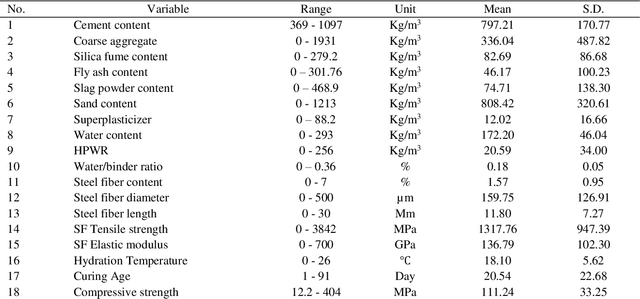
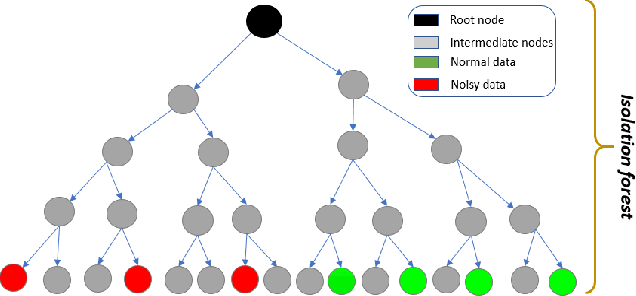
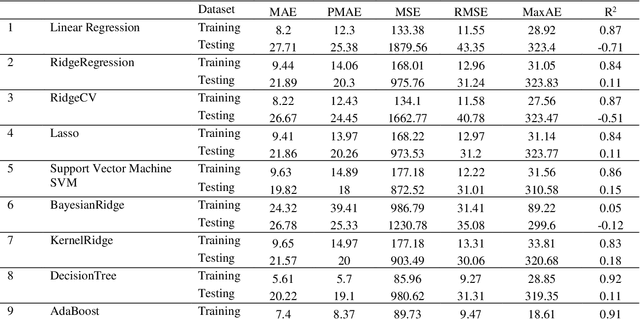
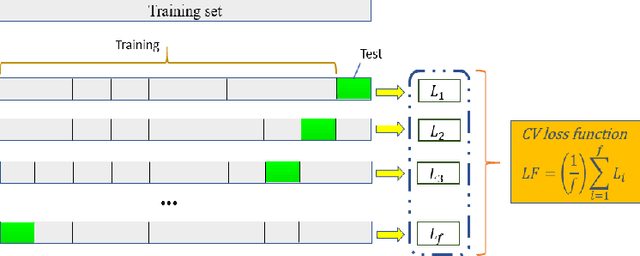
This study presents a data-driven, multi-objective approach to predict the mechanical performance, flow ability, and porosity of Ultra-High-Performance Concrete (UHPC). Out of 21 machine learning algorithms tested, five high-performing models are selected, with XGBoost showing the best accuracy after hyperparameter tuning using Random Search and K-Fold Cross-Validation. The framework follows a two-stage process: the initial XGBoost model is built using raw data, and once selected as the final model, the dataset is cleaned by (1) removing multicollinear features, (2) identifying outliers with Isolation Forest, and (3) selecting important features using SHAP analysis. The refined dataset as model 2 is then used to retrain XGBoost, which achieves high prediction accuracy across all outputs. A graphical user interface (GUI) is also developed to support material designers. Overall, the proposed framework significantly improves the prediction accuracy and minimizes the need for extensive experimental testing in UHPC mix design.
Real-Time Machine Learning for Embedded Anomaly Detection
Dec 22, 2025The spread of a resource-constrained Internet of Things (IoT) environment and embedded devices has put pressure on the real-time detection of anomalies occurring at the edge. This survey presents an overview of machine-learning methods aimed specifically at on-device anomaly detection with extremely strict constraints for latency, memory, and power consumption. Lightweight algorithms such as Isolation Forest, One-Class SVM, recurrent architectures, and statistical techniques are compared here according to the realities of embedded implementation. Our survey brings out significant trade-offs of accuracy and computational efficiency of detection, as well as how hardware constraints end up fundamentally redefining algorithm choice. The survey is completed with a set of practical recommendations on the choice of the algorithm depending on the equipment profiles and new trends in TinyML, which can help close the gap between detection capabilities and embedded reality. The paper serves as a strategic roadmap for engineers deploying anomaly detection in edge environments that are constrained by bandwidth and may be safety-critical.