 Add to Chrome
 Add to Firefox
 Add to Edge
Adadelta
Papers and Code
Exploring the Relationship between Brain Hemisphere States and Frequency Bands through Deep Learning Optimization Techniques
Sep 17, 2025
This study investigates classifier performance across EEG frequency bands using various optimizers and evaluates efficient class prediction for the left and right hemispheres. Three neural network architectures - a deep dense network, a shallow three-layer network, and a convolutional neural network (CNN) - are implemented and compared using the TensorFlow and PyTorch frameworks. Results indicate that the Adagrad and RMSprop optimizers consistently perform well across different frequency bands, with Adadelta exhibiting robust performance in cross-model evaluations. Specifically, Adagrad excels in the beta band, while RMSprop achieves superior performance in the gamma band. Conversely, SGD and FTRL exhibit inconsistent performance. Among the models, the CNN demonstrates the second highest accuracy, particularly in capturing spatial features of EEG data. The deep dense network shows competitive performance in learning complex patterns, whereas the shallow three-layer network, sometimes being less accurate, provides computational efficiency. SHAP (Shapley Additive Explanations) plots are employed to identify efficient class prediction, revealing nuanced contributions of EEG frequency bands to model accuracy. Overall, the study highlights the importance of optimizer selection, model architecture, and EEG frequency band analysis in enhancing classifier performance and understanding feature importance in neuroimaging-based classification tasks.

Heart Disease Prediction: A Comparative Study of Optimisers Performance in Deep Neural Networks
Sep 10, 2025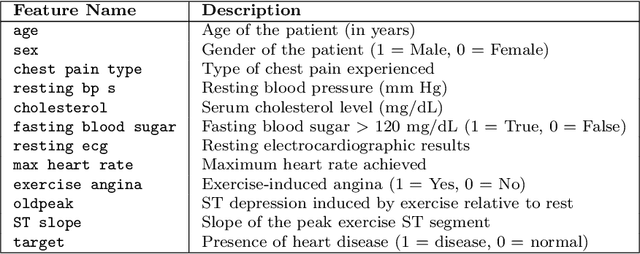
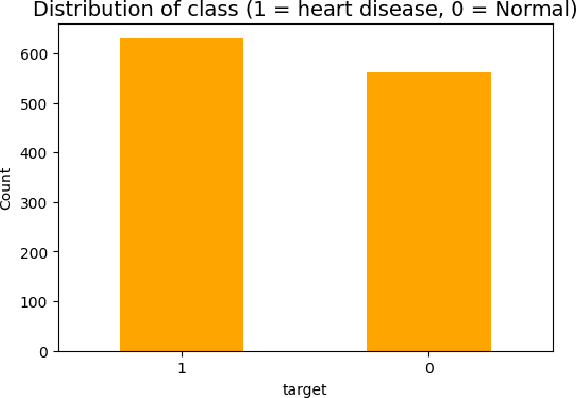
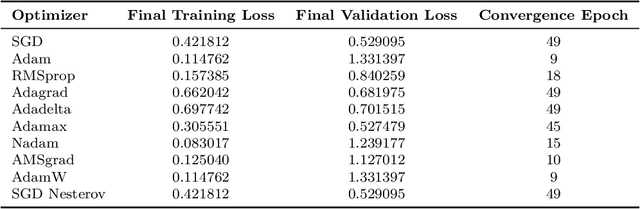
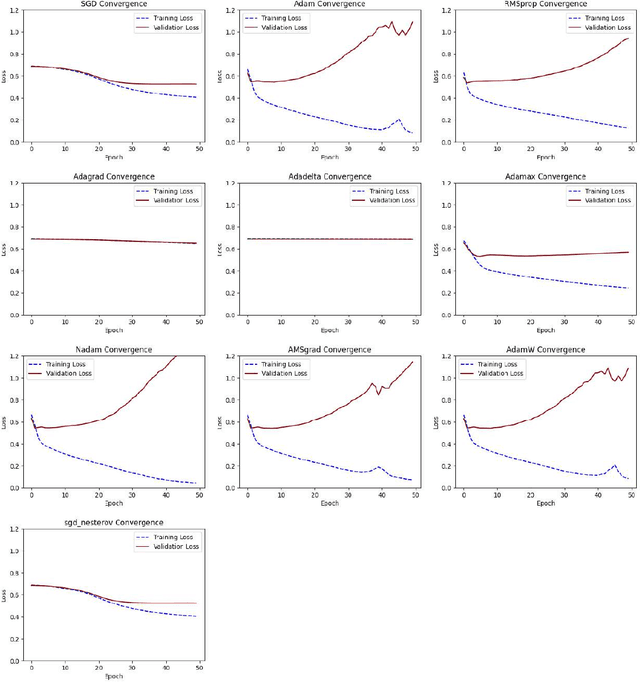
Optimization has been an important factor and topic of interest in training deep learning models, yet less attention has been given to how we select the optimizers we use to train these models. Hence, there is a need to dive deeper into how we select the optimizers we use for training and the metrics that determine this selection. In this work, we compare the performance of 10 different optimizers in training a simple Multi-layer Perceptron model using a heart disease dataset from Kaggle. We set up a consistent training paradigm and evaluate the optimizers based on metrics such as convergence speed and stability. We also include some other Machine Learning Evaluation metrics such as AUC, Precision, and Recall, which are central metrics to classification problems. Our results show that there are trade-offs between convergence speed and stability, as optimizers like Adagrad and Adadelta, which are more stable, took longer time to converge. Across all our metrics, we chose RMSProp to be the most effective optimizer for this heart disease prediction task because it offered a balanced performance across key metrics. It achieved a precision of 0.765, a recall of 0.827, and an AUC of 0.841, along with faster training time. However, it was not the most stable. We recommend that, in less compute-constrained environments, this method of choosing optimizers through a thorough evaluation should be adopted to increase the scientific nature and performance in training deep learning models.
Non-convergence to the optimal risk for Adam and stochastic gradient descent optimization in the training of deep neural networks
Mar 03, 2025Despite the omnipresent use of stochastic gradient descent (SGD) optimization methods in the training of deep neural networks (DNNs), it remains, in basically all practically relevant scenarios, a fundamental open problem to provide a rigorous theoretical explanation for the success (and the limitations) of SGD optimization methods in deep learning. In particular, it remains an open question to prove or disprove convergence of the true risk of SGD optimization methods to the optimal true risk value in the training of DNNs. In one of the main results of this work we reveal for a general class of activations, loss functions, random initializations, and SGD optimization methods (including, for example, standard SGD, momentum SGD, Nesterov accelerated SGD, Adagrad, RMSprop, Adadelta, Adam, Adamax, Nadam, Nadamax, and AMSGrad) that in the training of any arbitrary fully-connected feedforward DNN it does not hold that the true risk of the considered optimizer converges in probability to the optimal true risk value. Nonetheless, the true risk of the considered SGD optimization method may very well converge to a strictly suboptimal true risk value.
Accelerating Energy-Efficient Federated Learning in Cell-Free Networks with Adaptive Quantization
Dec 30, 2024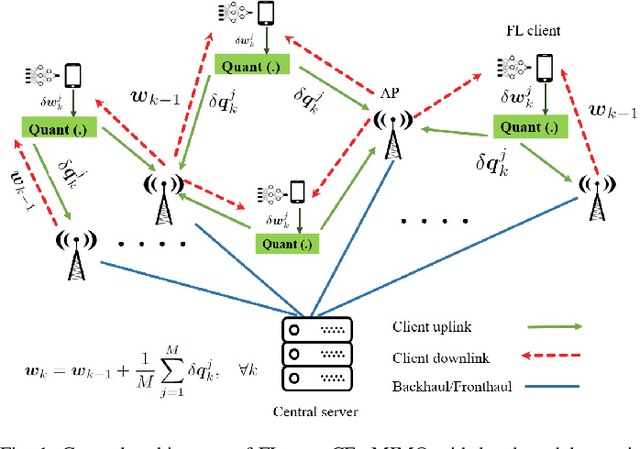

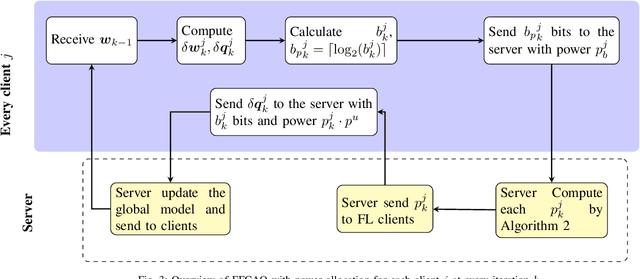
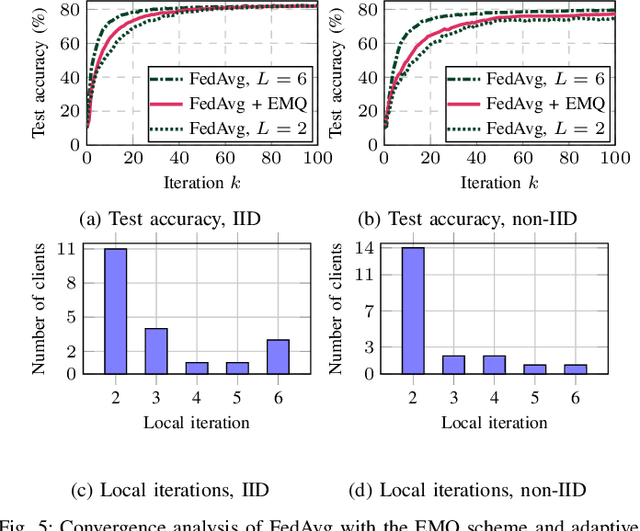
Federated Learning (FL) enables clients to share learning parameters instead of local data, reducing communication overhead. Traditional wireless networks face latency challenges with FL. In contrast, Cell-Free Massive MIMO (CFmMIMO) can serve multiple clients on shared resources, boosting spectral efficiency and reducing latency for large-scale FL. However, clients' communication resource limitations can hinder the completion of the FL training. To address this challenge, we propose an energy-efficient, low-latency FL framework featuring optimized uplink power allocation for seamless client-server collaboration. Our framework employs an adaptive quantization scheme, dynamically adjusting bit allocation for local gradient updates to reduce communication costs. We formulate a joint optimization problem covering FL model updates, local iterations, and power allocation, solved using sequential quadratic programming (SQP) to balance energy and latency. Additionally, clients use the AdaDelta method for local FL model updates, enhancing local model convergence compared to standard SGD, and we provide a comprehensive analysis of FL convergence with AdaDelta local updates. Numerical results show that, within the same energy and latency budgets, our power allocation scheme outperforms the Dinkelbach and max-sum rate methods by increasing the test accuracy up to $7$\% and $19$\%, respectively. Moreover, for the three power allocation methods, our proposed quantization scheme outperforms AQUILA and LAQ by increasing test accuracy by up to $36$\% and $35$\%, respectively.
New Insight in Cervical Cancer Diagnosis Using Convolution Neural Network Architecture
Oct 23, 2024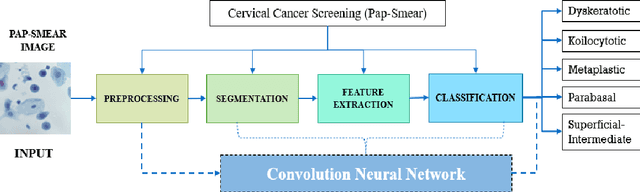

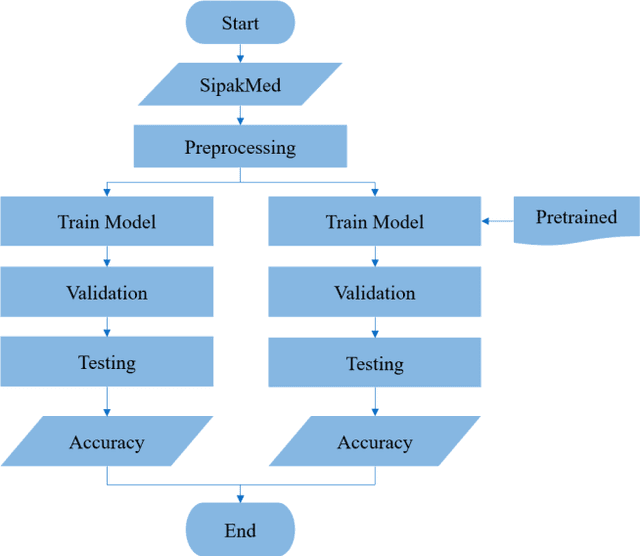

The Pap smear is a screening method for early cervical cancer diagnosis. The selection of the right optimizer in the convolutional neural network (CNN) model is key to the success of the CNN in image classification, including the classification of cervical cancer Pap smear images. In this study, stochastic gradient descent (SGD), RMSprop, Adam, AdaGrad, AdaDelta, Adamax, and Nadam optimizers were used to classify cervical cancer Pap smear images from the SipakMed dataset. Resnet-18, Resnet-34, and VGG-16 are the CNN architectures used in this study, and each architecture uses a transfer-learning model. Based on the test results, we conclude that the transfer learning model performs better on all CNNs and optimization techniques and that in the transfer learning model, the optimization has little influence on the training of the model. Adamax, with accuracy values of 72.8% and 66.8%, had the best accuracy for the VGG-16 and Resnet-18 architectures, respectively. Resnet-34 had 54.0%. This is 0.034% lower than Nadam. Overall, Adamax is a suitable optimizer for CNN in cervical cancer classification on Resnet-18, Resnet-34, and VGG-16 architectures. This study provides new insights into the configuration of CNN models for Pap smear image analysis.
Exploring transfer learning for Deep NLP systems on rarely annotated languages
Oct 15, 2024Natural language processing (NLP) has experienced rapid advancements with the rise of deep learning, significantly outperforming traditional rule-based methods. By capturing hidden patterns and underlying structures within data, deep learning has improved performance across various NLP tasks, overcoming the limitations of rule-based systems. However, most research and development in NLP has been concentrated on a select few languages, primarily those with large numbers of speakers or financial significance, leaving many others underexplored. This lack of research is often attributed to the scarcity of adequately annotated datasets essential for training deep learning models. Despite this challenge, there is potential in leveraging the linguistic similarities between unexplored and well-studied languages, particularly those in close geographic and linguistic proximity. This thesis investigates the application of transfer learning for Part-of-Speech (POS) tagging between Hindi and Nepali, two highly similar languages belonging to the Indo-Aryan language family. Specifically, the work explores whether joint training of a POS tagging model for both languages enhances performance. Additionally, we assess whether multitask learning in Hindi, with auxiliary tasks such as gender and singular/plural tagging, can contribute to improved POS tagging accuracy. The deep learning architecture employed is the BLSTM-CNN-CRF model, trained under different conditions: monolingual word embeddings, vector-mapped embeddings, and jointly trained Hindi-Nepali word embeddings. Varying dropout rates (0.25 to 0.5) and optimizers (ADAM and AdaDelta) are also evaluated. Results indicate that jointly trained Hindi-Nepali word embeddings improve performance across all models compared to monolingual and vector-mapped embeddings.
Detection of Object Throwing Behavior in Surveillance Videos
Mar 11, 2024
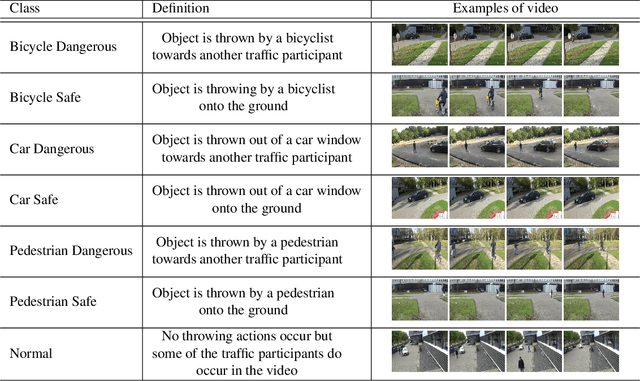
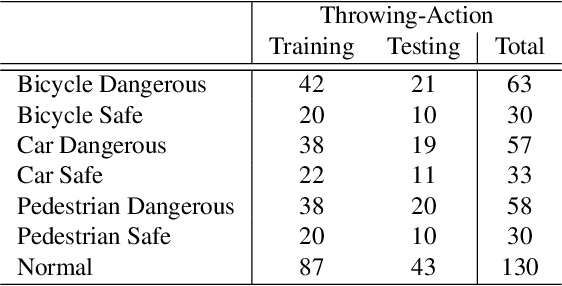
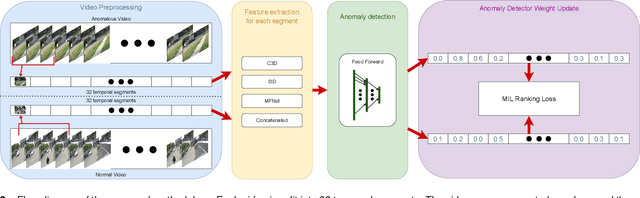
Anomalous behavior detection is a challenging research area within computer vision. Progress in this area enables automated detection of dangerous behavior using surveillance camera feeds. A dangerous behavior that is often overlooked in other research is the throwing action in traffic flow, which is one of the unique requirements of our Smart City project to enhance public safety. This paper proposes a solution for throwing action detection in surveillance videos using deep learning. At present, datasets for throwing actions are not publicly available. To address the use-case of our Smart City project, we first generate the novel public 'Throwing Action' dataset, consisting of 271 videos of throwing actions performed by traffic participants, such as pedestrians, bicyclists, and car drivers, and 130 normal videos without throwing actions. Second, we compare the performance of different feature extractors for our anomaly detection method on the UCF-Crime and Throwing-Action datasets. The explored feature extractors are the Convolutional 3D (C3D) network, the Inflated 3D ConvNet (I3D) network, and the Multi-Fiber Network (MFNet). Finally, the performance of the anomaly detection algorithm is improved by applying the Adam optimizer instead of Adadelta, and proposing a mean normal loss function that covers the multitude of normal situations in traffic. Both aspects yield better anomaly detection performance. Besides this, the proposed mean normal loss function lowers the false alarm rate on the combined dataset. The experimental results reach an area under the ROC curve of 86.10 for the Throwing-Action dataset, and 80.13 on the combined dataset, respectively.
A model for multi-attack classification to improve intrusion detection performance using deep learning approaches
Oct 25, 2023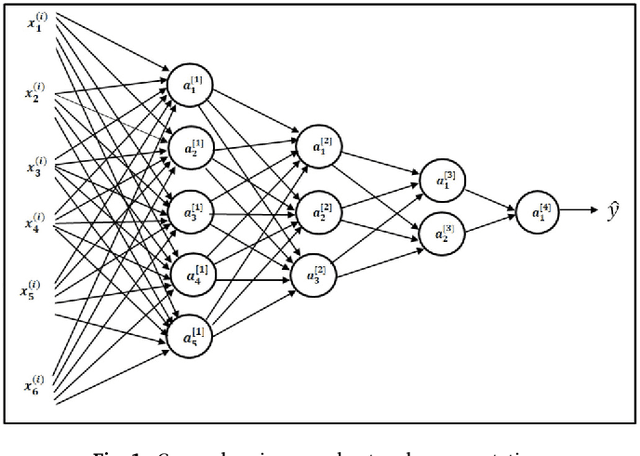
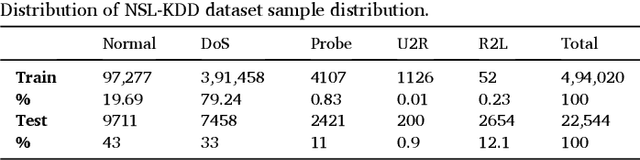
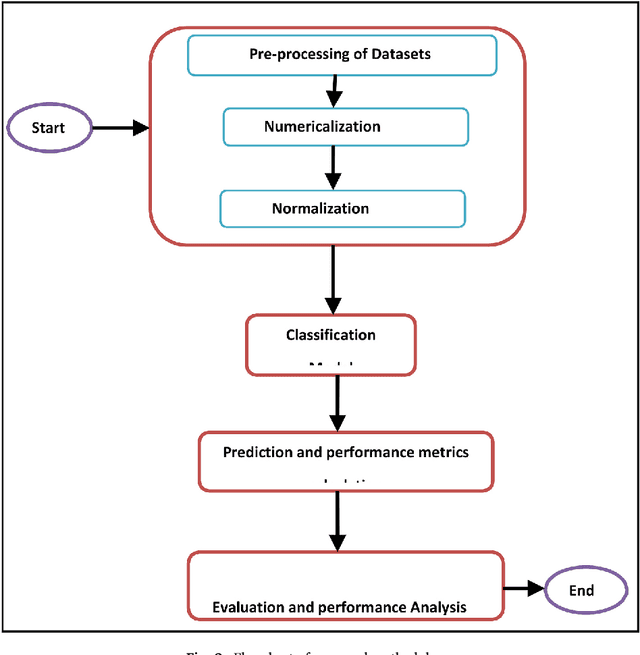

This proposed model introduces novel deep learning methodologies. The objective here is to create a reliable intrusion detection mechanism to help identify malicious attacks. Deep learning based solution framework is developed consisting of three approaches. The first approach is Long-Short Term Memory Recurrent Neural Network (LSTM-RNN) with seven optimizer functions such as adamax, SGD, adagrad, adam, RMSprop, nadam and adadelta. The model is evaluated on NSL-KDD dataset and classified multi attack classification. The model has outperformed with adamax optimizer in terms of accuracy, detection rate and low false alarm rate. The results of LSTM-RNN with adamax optimizer is compared with existing shallow machine and deep learning models in terms of accuracy, detection rate and low false alarm rate. The multi model methodology consisting of Recurrent Neural Network (RNN), Long-Short Term Memory Recurrent Neural Network (LSTM-RNN), and Deep Neural Network (DNN). The multi models are evaluated on bench mark datasets such as KDD99, NSL-KDD, and UNSWNB15 datasets. The models self-learnt the features and classifies the attack classes as multi-attack classification. The models RNN, and LSTM-RNN provide considerable performance compared to other existing methods on KDD99 and NSL-KDD dataset
ELRA: Exponential learning rate adaption gradient descent optimization method
Sep 12, 2023We present a novel, fast (exponential rate adaption), ab initio (hyper-parameter-free) gradient based optimizer algorithm. The main idea of the method is to adapt the learning rate $\alpha$ by situational awareness, mainly striving for orthogonal neighboring gradients. The method has a high success and fast convergence rate and does not rely on hand-tuned parameters giving it greater universality. It can be applied to problems of any dimensions n and scales only linearly (of order O(n)) with the dimension of the problem. It optimizes convex and non-convex continuous landscapes providing some kind of gradient. In contrast to the Ada-family (AdaGrad, AdaMax, AdaDelta, Adam, etc.) the method is rotation invariant: optimization path and performance are independent of coordinate choices. The impressive performance is demonstrated by extensive experiments on the MNIST benchmark data-set against state-of-the-art optimizers. We name this new class of optimizers after its core idea Exponential Learning Rate Adaption - ELRA. We present it in two variants c2min and p2min with slightly different control. The authors strongly believe that ELRA will open a completely new research direction for gradient descent optimize.
NODDLE: Node2vec based deep learning model for link prediction
May 25, 2023Computing the probability of an edge's existence in a graph network is known as link prediction. While traditional methods calculate the similarity between two given nodes in a static network, recent research has focused on evaluating networks that evolve dynamically. Although deep learning techniques and network representation learning algorithms, such as node2vec, show remarkable improvements in prediction accuracy, the Stochastic Gradient Descent (SGD) method of node2vec tends to fall into a mediocre local optimum value due to a shortage of prior network information, resulting in failure to capture the global structure of the network. To tackle this problem, we propose NODDLE (integration of NOde2vec anD Deep Learning mEthod), a deep learning model which incorporates the features extracted by node2vec and feeds them into a four layer hidden neural network. NODDLE takes advantage of adaptive learning optimizers such as Adam, Adamax, Adadelta, and Adagrad to improve the performance of link prediction. Experimental results show that this method yields better results than the traditional methods on various social network datasets.