 Add to Chrome
 Add to Firefox
 Add to Edge
Designing Beyond Language: Sociotechnical Barriers in AI Health Technologies for Limited English Proficiency
Paper and Code
Nov 10, 2025
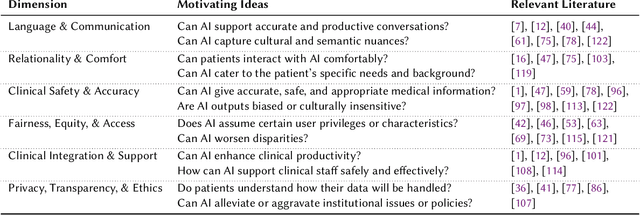
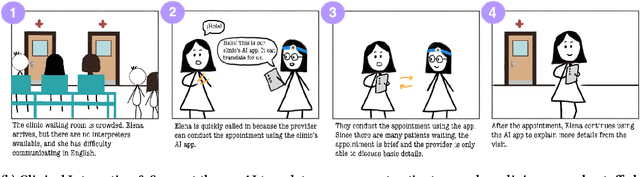
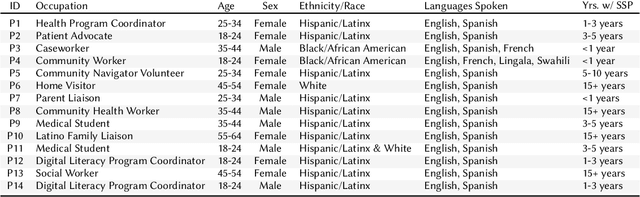
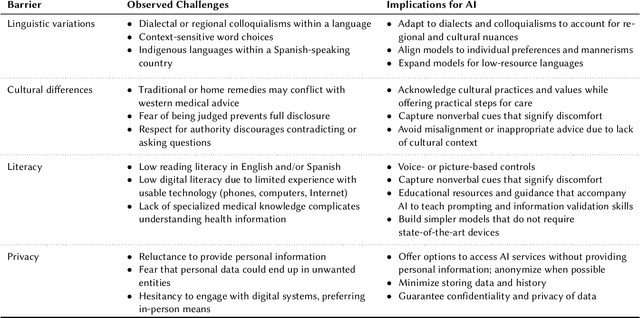
Limited English proficiency (LEP) patients in the U.S. face systemic barriers to healthcare beyond language and interpreter access, encompassing procedural and institutional constraints. AI advances may support communication and care through on-demand translation and visit preparation, but also risk exacerbating existing inequalities. We conducted storyboard-driven interviews with 14 patient navigators to explore how AI could shape care experiences for Spanish-speaking LEP individuals. We identified tensions around linguistic and cultural misunderstandings, privacy concerns, and opportunities and risks for AI to augment care workflows. Participants highlighted structural factors that can undermine trust in AI systems, including sensitive information disclosure, unstable technology access, and low digital literacy. While AI tools can potentially alleviate social barriers and institutional constraints, there are risks of misinformation and uprooting human camaraderie. Our findings contribute design considerations for AI that support LEP patients and care teams via rapport-building, education, and language support, and minimizing disruptions to existing practices.
