 Add to Chrome
 Add to Firefox
 Add to Edge
Neuro-Cognitive Reward Modeling for Human-Centered Autonomous Vehicle Control
Mar 26, 2026
Recent advancements in computer vision have accelerated the development of autonomous driving. Despite these advancements, training machines to drive in a way that aligns with human expectations remains a significant challenge. Human factors are still essential, as humans possess a sophisticated cognitive system capable of rapidly interpreting scene information and making accurate decisions. Aligning machine with human intent has been explored with Reinforcement Learning with Human Feedback (RLHF). Conventional RLHF methods rely on collecting human preference data by manually ranking generated outputs, which is time-consuming and indirect. In this work, we propose an electroencephalography (EEG)-guided decision-making framework to incorporate human cognitive insights without behaviour response interruption into reinforcement learning (RL) for autonomous driving. We collected EEG signals from 20 participants in a realistic driving simulator and analyzed event-related potentials (ERP) in response to sudden environmental changes. Our proposed framework employs a neural network to predict the strength of ERP based on the cognitive information from visual scene information. Moreover, we explore the integration of such cognitive information into the reward signal of the RL algorithm. Experimental results show that our framework can improve the collision avoidance ability of the RL algorithm, highlighting the potential of neuro-cognitive feedback in enhancing autonomous driving systems. Our project page is: https://alex95gogo.github.io/Cognitive-Reward/.

AEGIS: Human Attention-based Explainable Guidance for Intelligent Vehicle Systems
Apr 08, 2025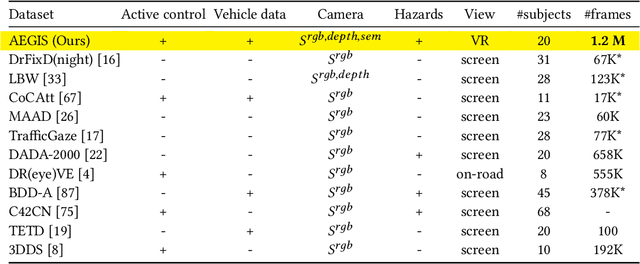
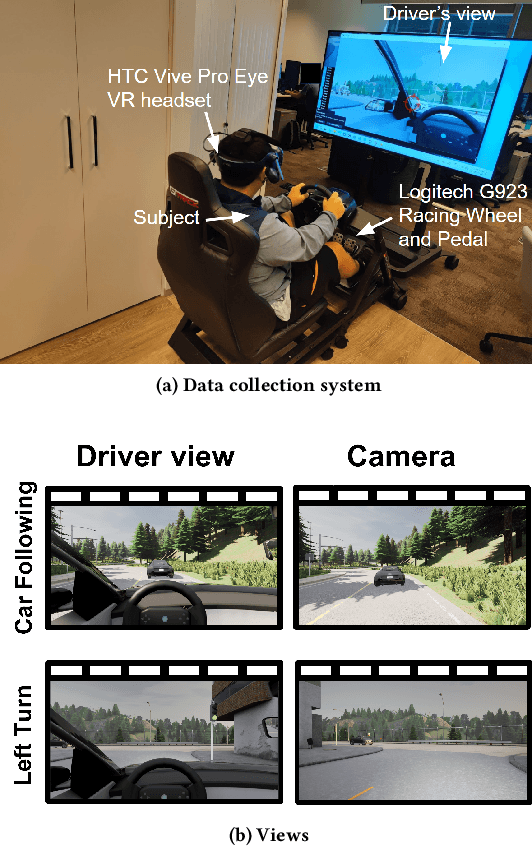


Improving decision-making capabilities in Autonomous Intelligent Vehicles (AIVs) has been a heated topic in recent years. Despite advancements, training machines to capture regions of interest for comprehensive scene understanding, like human perception and reasoning, remains a significant challenge. This study introduces a novel framework, Human Attention-based Explainable Guidance for Intelligent Vehicle Systems (AEGIS). AEGIS utilizes human attention, converted from eye-tracking, to guide reinforcement learning (RL) models to identify critical regions of interest for decision-making. AEGIS uses a pre-trained human attention model to guide RL models to identify critical regions of interest for decision-making. By collecting 1.2 million frames from 20 participants across six scenarios, AEGIS pre-trains a model to predict human attention patterns.
Enhancing End-to-End Autonomous Driving Systems Through Synchronized Human Behavior Data
Aug 20, 2024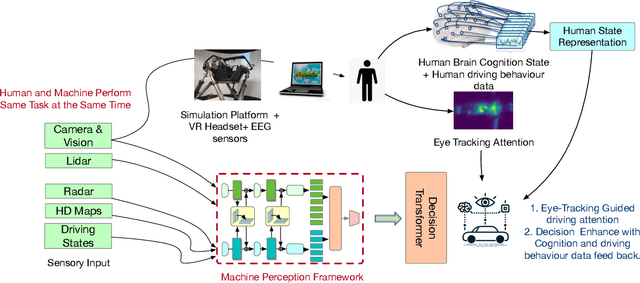
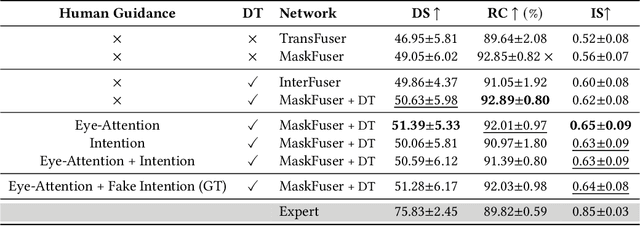
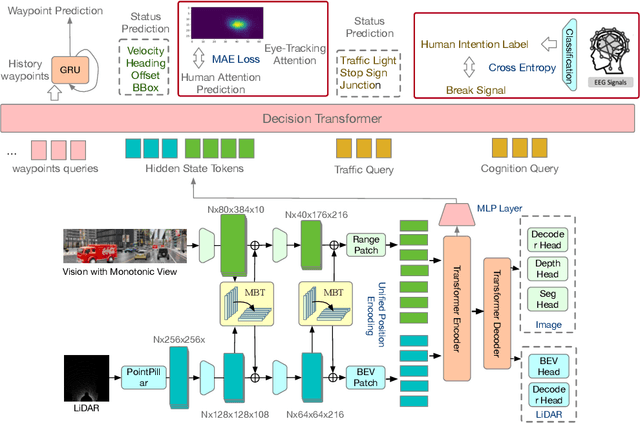
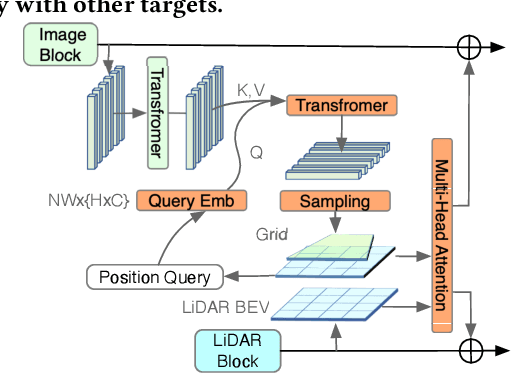
This paper presents a pioneering exploration into the integration of fine-grained human supervision within the autonomous driving domain to enhance system performance. The current advances in End-to-End autonomous driving normally are data-driven and rely on given expert trials. However, this reliance limits the systems' generalizability and their ability to earn human trust. Addressing this gap, our research introduces a novel approach by synchronously collecting data from human and machine drivers under identical driving scenarios, focusing on eye-tracking and brainwave data to guide machine perception and decision-making processes. This paper utilizes the Carla simulation to evaluate the impact brought by human behavior guidance. Experimental results show that using human attention to guide machine attention could bring a significant improvement in driving performance. However, guidance by human intention still remains a challenge. This paper pioneers a promising direction and potential for utilizing human behavior guidance to enhance autonomous systems.