 Add to Chrome
 Add to Firefox
 Add to Edge
Bricker to BRACE: A Bracket Exposure RAW Dataset and Restoration Model for Flicker-Banding
Jun 29, 2026
Flicker-banding (FB), arises from temporal aliasing between a camera's rolling shutter and a display's brightness modulation, degrading screen-captured image readability with color shifts and jagged patterns. Existing single-frame methods with simplified parametric stripe models cannot reliably distinguish these artifacts from genuine texture. To address this, we conduct a systematic analysis of complex FB morphologies and reveal their significant variation across exposure settings, motivating a multi-frame bracketed RAW restoration paradigm. We construct Bricker, a synthetic-real bracketed RAW dataset built via ray-tracing-based physical simulation and automated multi-exposure capture tool. We further propose BRACE: Bracketed RAW Flicker-Banding Removal, a multi-frame restoration model that utilizes frequency-aware banding prior and a multi-scale spatial cross-attention modulator (MSCAM) for cross-exposure spatial fusion. We also introduce the Stripe Frequency Consistency (SFC) metric to evaluate banding removal. Experiments demonstrate state-of-the-art performance on both synthetic and real benchmarks. Our dataset and code are available at: https://github.com/ZZH-qwq/BRACE.

VDFP: Video Deflickering with Flicker-banding Priors
May 21, 2026Capturing digital screens with smartphones frequently induces severe banding due to hardware synchronization mismatches. Existing video restoration methods struggle with these structured, periodic luminance fluctuations, often resulting in residual artifacts or over-smoothed textures. We firstly construct DeViD, a real-world dataset in various scenes to deal with the lack of available datasets. Then we propose VDFP (Video Deflickering with Flicker-banding Priors), a novel perception-guided generation framework. First, we introduce a Degradation Field Modeling Based on Rolling Shutter Mechanism (DFM) capable of synthesizing complex multi-banding scenarios. Second, we present a spatial-temporal continuous prior perception (CPP). Unlike traditional binary segmentation, this module is optimized via a Flicker-Aware Mean Squared Error (FA-MSE) to capture the luminance transitions. By zero-initializing an augmented input layer, our model preserves pre-trained generative priors as well as spatial-temporal prior perception. Extensive experiments demonstrate that VDFP significantly outperforms other methods, eliminating complex banding with high-fidelity spatial details and temporal consistency. Our dataset and code will be released at https://github.com/ZhiyiZZhou/VDFP.
Combined Flicker-banding and Moire Removal for Screen-Captured Images
Feb 02, 2026Capturing display screens with mobile devices has become increasingly common, yet the resulting images often suffer from severe degradations caused by the coexistence of moiré patterns and flicker-banding, leading to significant visual quality degradation. Due to the strong coupling of these two artifacts in real imaging processes, existing methods designed for single degradations fail to generalize to such compound scenarios. In this paper, we present the first systematic study on joint removal of moiré patterns and flicker-banding in screen-captured images, and propose a unified restoration framework, named CLEAR. To support this task, we construct a large-scale dataset containing both moiré patterns and flicker-banding, and introduce an ISP-based flicker simulation pipeline to stabilize model training and expand the degradation distribution. Furthermore, we design a frequency-domain decomposition and re-composition module together with a trajectory alignment loss to enhance the modeling of compound artifacts. Extensive experiments demonstrate that the proposed method consistently. outperforms existing image restoration approaches across multiple evaluation metrics, validating its effectiveness in complex real-world scenarios.
Conformal Prediction for Indoor Positioning with Correctness Coverage Guarantees
May 03, 2025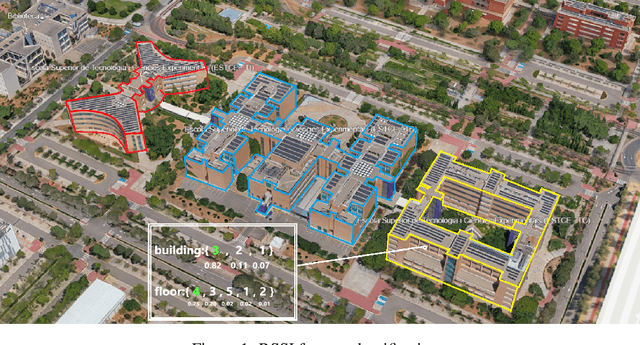
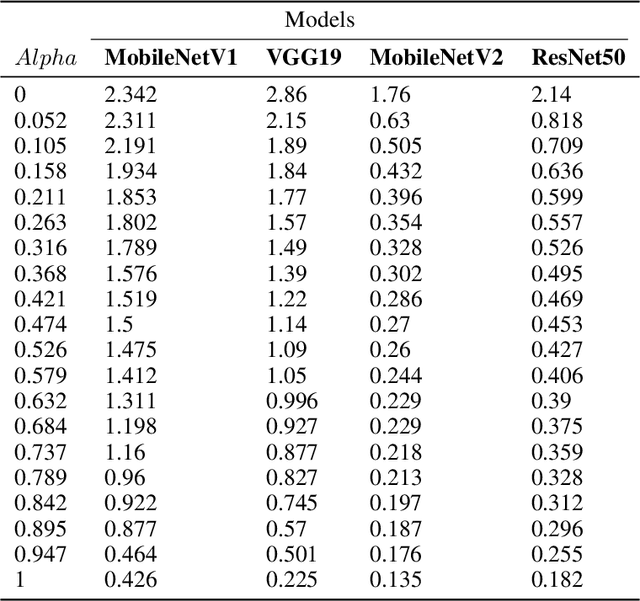

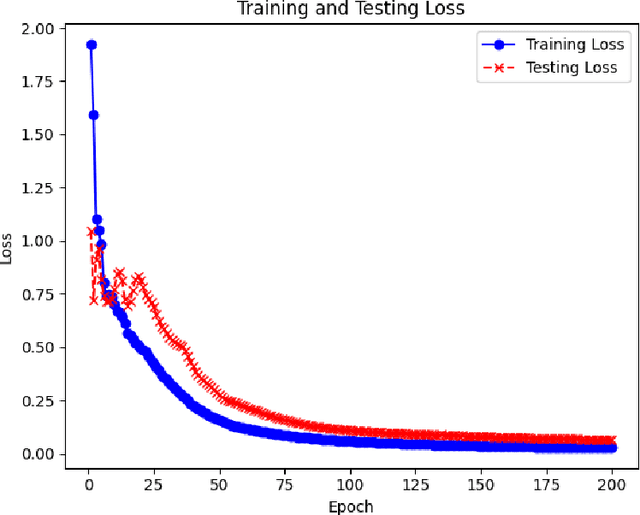
With the advancement of Internet of Things (IoT) technologies, high-precision indoor positioning has become essential for Location-Based Services (LBS) in complex indoor environments. Fingerprint-based localization is popular, but traditional algorithms and deep learning-based methods face challenges such as poor generalization, overfitting, and lack of interpretability. This paper applies conformal prediction (CP) to deep learning-based indoor positioning. CP transforms the uncertainty of the model into a non-conformity score, constructs prediction sets to ensure correctness coverage, and provides statistical guarantees. We also introduce conformal risk control for path navigation tasks to manage the false discovery rate (FDR) and the false negative rate (FNR).The model achieved an accuracy of approximately 100% on the training dataset and 85% on the testing dataset, effectively demonstrating its performance and generalization capability. Furthermore, we also develop a conformal p-value framework to control the proportion of position-error points. Experiments on the UJIIndoLoc dataset using lightweight models such as MobileNetV1, VGG19, MobileNetV2, ResNet50, and EfficientNet show that the conformal prediction technique can effectively approximate the target coverage, and different models have different performance in terms of prediction set size and uncertainty quantification.