 Add to Chrome
 Add to Firefox
 Add to Edge
A Boltzmann-machine-enhanced Transformer For DNA Sequence Classification
Mar 27, 2026
DNA sequence classification requires not only high predictive accuracy but also the ability to uncover latent site interactions, combinatorial regulation, and epistasis-like higher-order dependencies. Although the standard Transformer provides strong global modeling capacity, its softmax attention is continuous, dense, and weakly constrained, making it better suited for information routing than explicit structure discovery. In this paper, we propose a Boltzmann-machine-enhanced Transformer for DNA sequence classification. Built on multi-head attention, the model introduces structured binary gating variables to represent latent query-key connections and constrains them with a Boltzmann-style energy function. Query-key similarity defines local bias terms, learnable pairwise interactions capture synergy and competition between edges, and latent hidden units model higher-order combinatorial dependencies. Since exact posterior inference over discrete gating graphs is intractable, we use mean-field variational inference to estimate edge activation probabilities and combine it with Gumbel-Softmax to progressively compress continuous probabilities into near-discrete gates while preserving end-to-end differentiability. During training, we jointly optimize classification and energy losses, encouraging the model to achieve accurate prediction while favoring low-energy, stable, and interpretable structures. We further derive the framework from the energy function and variational free energy to the mean-field fixed-point equations, Gumbel-Softmax relaxation, and the final joint objective. The proposed framework provides a unified view of integrating Boltzmann machines, differentiable discrete optimization, and Transformers for structured learning on biological sequences.

CarbonChat: Large Language Model-Based Corporate Carbon Emission Analysis and Climate Knowledge Q&A System
Jan 03, 2025
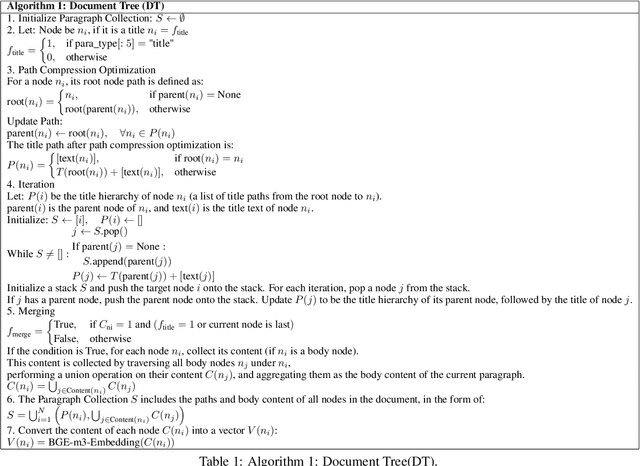

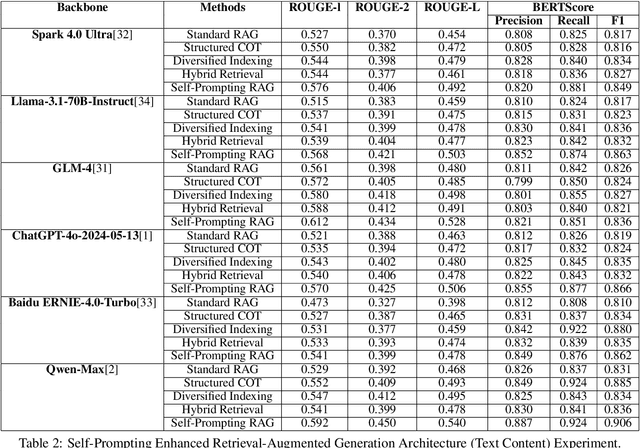
As the impact of global climate change intensifies, corporate carbon emissions have become a focal point of global attention. In response to issues such as the lag in climate change knowledge updates within large language models, the lack of specialization and accuracy in traditional augmented generation architectures for complex problems, and the high cost and time consumption of sustainability report analysis, this paper proposes CarbonChat: Large Language Model-based corporate carbon emission analysis and climate knowledge Q&A system, aimed at achieving precise carbon emission analysis and policy understanding.First, a diversified index module construction method is proposed to handle the segmentation of rule-based and long-text documents, as well as the extraction of structured data, thereby optimizing the parsing of key information.Second, an enhanced self-prompt retrieval-augmented generation architecture is designed, integrating intent recognition, structured reasoning chains, hybrid retrieval, and Text2SQL, improving the efficiency of semantic understanding and query conversion.Next, based on the greenhouse gas accounting framework, 14 dimensions are established for carbon emission analysis, enabling report summarization, relevance evaluation, and customized responses.Finally, through a multi-layer chunking mechanism, timestamps, and hallucination detection features, the accuracy and verifiability of the analysis results are ensured, reducing hallucination rates and enhancing the precision of the responses.