 Add to Chrome
 Add to Firefox
 Add to Edge
AutoScreen-FW: An LLM-based Framework for Resume Screening
Mar 19, 2026
Corporate recruiters often need to screen many resumes within a limited time, which increases their burden and may cause suitable candidates to be overlooked. To address these challenges, prior work has explored LLM-based automated resume screening. However, some methods rely on commercial LLMs, which may pose data privacy risks. Moreover, since companies typically do not make resumes with evaluation results publicly available, it remains unclear which resume samples should be used during learning to improve an LLM's judgment performance. To address these problems, we propose AutoScreen-FW, an LLM-based locally and automatically resume screening framework. AutoScreen-FW uses several methods to select a small set of representative resume samples. These samples are used for in-context learning together with a persona description and evaluation criteria, enabling open-source LLMs to act as a career advisor and evaluate unseen resumes. Experiments with multiple ground truths show that the open-source LLM judges consistently outperform GPT-5-nano. Under one ground truth setting, it also surpass GPT-5-mini. Although it is slightly weaker than GPT-5-mini under other ground-truth settings, it runs substantially faster per resume than commercial GPT models. These findings indicate the potential for deploying AutoScreen-FW locally in companies to support efficient screening while reducing recruiters' burden.

A Serendipitous Recommendation System Considering User Curiosity
Apr 09, 2025To address the problem of narrow recommendation ranges caused by an emphasis on prediction accuracy, serendipitous recommendations, which consider both usefulness and unexpectedness, have attracted attention. However, realizing serendipitous recommendations is challenging due to the varying proportions of usefulness and unexpectedness preferred by different users, which is influenced by their differing desires for knowledge. In this paper, we propose a method to estimate the proportion of usefulness and unexpectedness that each user desires based on their curiosity, and make recommendations that match this preference. The proposed method estimates a user's curiosity by considering both their long-term and short-term interests. Offline experiments were conducted using the MovieLens-1M dataset to evaluate the effectiveness of the proposed method. The experimental results demonstrate that our method achieves the same level of performance as state-of-the-art method while successfully providing serendipitous recommendations.
Research Paper Recommender System by Considering Users' Information Seeking Behaviors
Apr 03, 2025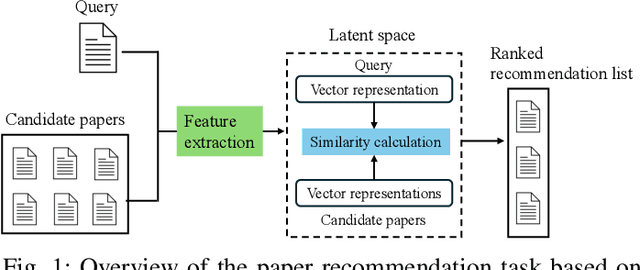
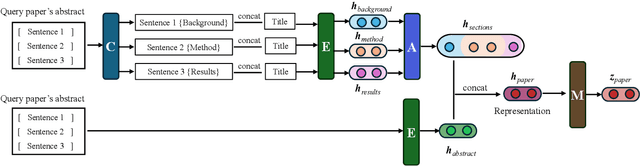
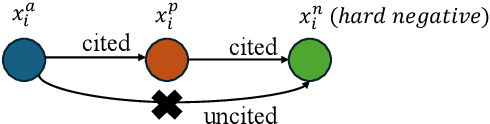
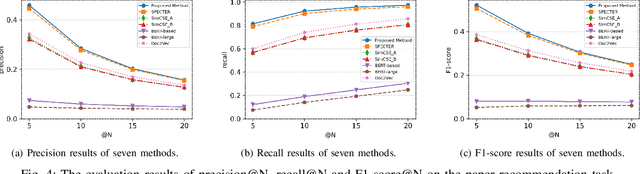
With the rapid growth of scientific publications, researchers need to spend more time and effort searching for papers that align with their research interests. To address this challenge, paper recommendation systems have been developed to help researchers in effectively identifying relevant paper. One of the leading approaches to paper recommendation is content-based filtering method. Traditional content-based filtering methods recommend relevant papers to users based on the overall similarity of papers. However, these approaches do not take into account the information seeking behaviors that users commonly employ when searching for literature. Such behaviors include not only evaluating the overall similarity among papers, but also focusing on specific sections, such as the method section, to ensure that the approach aligns with the user's interests. In this paper, we propose a content-based filtering recommendation method that takes this information seeking behavior into account. Specifically, in addition to considering the overall content of a paper, our approach also takes into account three specific sections (background, method, and results) and assigns weights to them to better reflect user preferences. We conduct offline evaluations on the publicly available DBLP dataset, and the results demonstrate that the proposed method outperforms six baseline methods in terms of precision, recall, F1-score, MRR, and MAP.