 Add to Chrome
 Add to Firefox
 Add to Edge
Amortized Reasoning Tree Search: Decoupling Proposal and Decision in Large Language Models
Feb 13, 2026
Reinforcement Learning with Verifiable Rewards (RLVR) has established itself as the dominant paradigm for instilling rigorous reasoning capabilities in Large Language Models. While effective at amplifying dominant behaviors, we identify a critical pathology in this alignment process: the systematic suppression of valid but rare (low-likelihood under the base model distribution) reasoning paths. We theoretically characterize this phenomenon as a "Normalization Squeeze," where the interplay between mode-seeking policy gradients and finite sampling acts as a high-pass likelihood filter, driving the probability of rare correct traces to statistical extinction. To counteract this collapse without discarding the base model's latent diversity, we propose Amortized Reasoning Tree Search (ARTS). Unlike standard approaches that force internalization via parameter updates, ARTS prioritizes deliberation by decoupling generation from verification. We introduce a Flow Matching objective that repurposes the verifier to estimate the conservation of probability flow, enabling robust navigation through sparse, high-entropy search spaces where traditional discriminative objectives fail. Extensive experiments on the MATH-500 benchmark demonstrate that ARTS achieves a performance of 74.6% (BoN@16), effectively matching fully fine-tuned policies (74.7%) without modifying the generative backbone. Crucially, on the long-tail subset where coupled RL optimization collapses to 0% pass@k, ARTS uniquely recovers significant performance, suggesting that disentangling verification from generation offers a more robust pathway for solving complex reasoning tasks.

Out-of-distribution Detection in Medical Image Analysis: A survey
Apr 28, 2024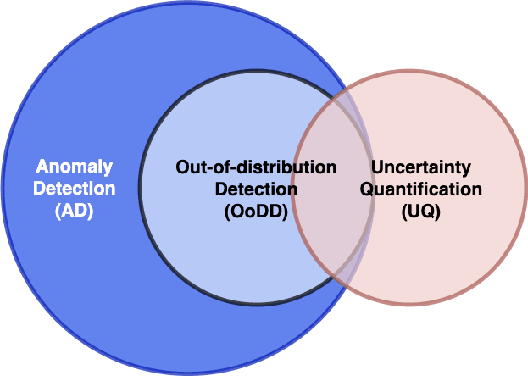
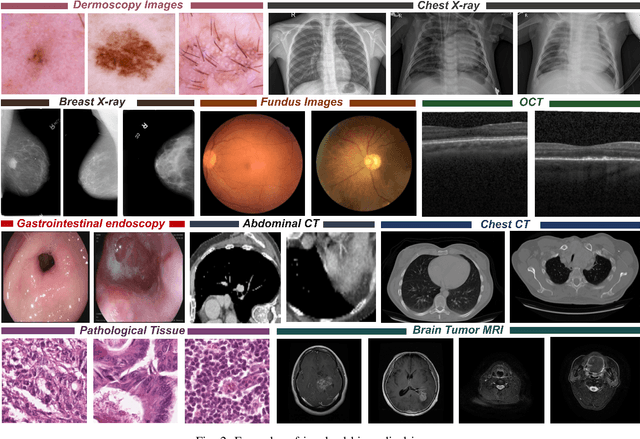


Computer-aided diagnostics has benefited from the development of deep learning-based computer vision techniques in these years. Traditional supervised deep learning methods assume that the test sample is drawn from the identical distribution as the training data. However, it is possible to encounter out-of-distribution samples in real-world clinical scenarios, which may cause silent failure in deep learning-based medical image analysis tasks. Recently, research has explored various out-of-distribution (OOD) detection situations and techniques to enable a trustworthy medical AI system. In this survey, we systematically review the recent advances in OOD detection in medical image analysis. We first explore several factors that may cause a distributional shift when using a deep-learning-based model in clinic scenarios, with three different types of distributional shift well defined on top of these factors. Then a framework is suggested to categorize and feature existing solutions, while the previous studies are reviewed based on the methodology taxonomy. Our discussion also includes evaluation protocols and metrics, as well as the challenge and a research direction lack of exploration.