 Add to Chrome
 Add to Firefox
 Add to Edge
Small Language Model enabled Autonomous agent for Language-Conditioned Cognitive Radar
Aug 12, 2026
Modern radar systems require adapting their processing strategies in response to changing interference, clutter, and data availability. This paper introduces a framework for a small language model (SLM)-driven autonomous agent designed for language-conditioned cognitive radar, functioning as an intelligent controller for a suite of array signal processing tools. Given a natural-language command, the agent extracts radar-operation-related cues, selects an appropriate sequence of signal-processing methods, configures parameters, and invokes executable tools for numerical computation. Experiments with a synthetic uniform linear array (ULA) radar demonstrate that, given a natural-language command, the agent performs meaningful algorithm selection across diverse scenarios for sidelobe control, jammer suppression, multiple-null beamforming, coherent-source handling, and low-snapshot direction-of-arrival (DOA) estimation. Ablation results show that radar-specific prompting and physics-grounded tool execution are both required for reliable decisions and hallucination-free numerical results.

Privacy-Preserving Machine Learning for IoT: A Cross-Paradigm Survey and Future Roadmap
Mar 13, 2026The rapid proliferation of the Internet of Things has intensified demand for robust privacy-preserving machine learning mechanisms to safeguard sensitive data generated by large-scale, heterogeneous, and resource-constrained devices. Unlike centralized environments, IoT ecosystems are inherently decentralized, bandwidth-limited, and latency-sensitive, exposing privacy risks across sensing, communication, and distributed training pipelines. These characteristics render conventional anonymization and centralized protection strategies insufficient for practical deployments. This survey presents a comprehensive IoT-centric, cross-paradigm analysis of privacy-preserving machine learning. We introduce a structured taxonomy spanning perturbation-based mechanisms such as differential privacy, distributed paradigms such as federated learning, cryptographic approaches including homomorphic encryption and secure multiparty computation, and generative synthesis techniques based on generative adversarial networks. For each paradigm, we examine formal privacy guarantees, computational and communication complexity, scalability under heterogeneous device participation, and resilience against threats including membership inference, model inversion, gradient leakage, and adversarial manipulation. We further analyze deployment constraints in wireless IoT environments, highlighting trade-offs between privacy, communication overhead, model convergence, and system efficiency within next-generation mobile architectures. We also consolidate evaluation methodologies, summarize representative datasets and open-source frameworks, and identify open challenges including hybrid privacy integration, energy-aware learning, privacy-preserving large language models, and quantum-resilient machine learning.
Fake Hilsa Fish Detection Using Machine Vision
Jan 08, 2022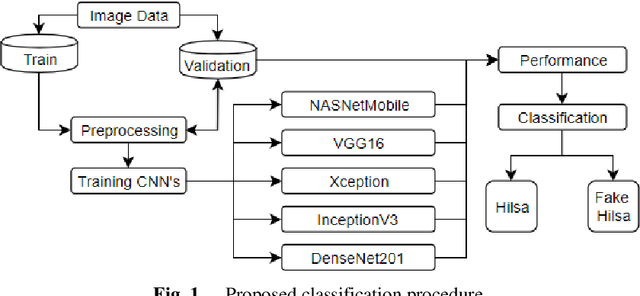
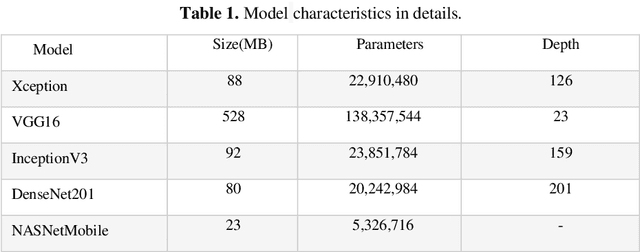
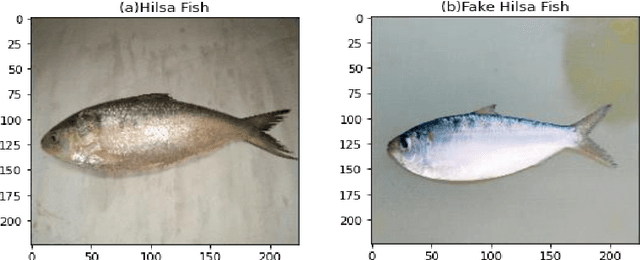
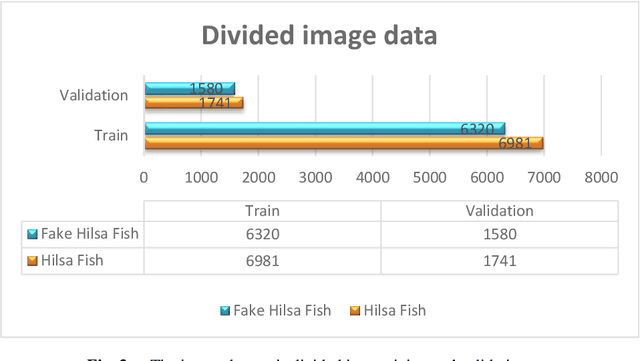
Hilsa is the national fish of Bangladesh. Bangladesh is earning a lot of foreign currency by exporting this fish. Unfortunately, in recent days, some unscrupulous businessmen are selling fake Hilsa fishes to gain profit. The Sardines and Sardinella are the most sold in the market as Hilsa. The government agency of Bangladesh, namely Bangladesh Food Safety Authority said that these fake Hilsa fish contain high levels of cadmium and lead which are detrimental for humans. In this research, we have proposed a method that can readily identify original Hilsa fish and fake Hilsa fish. Based on the research available on online literature, we are the first to do research on identifying original Hilsa fish. We have collected more than 16,000 images of original and counterfeit Hilsa fish. To classify these images, we have used several deep learning-based models. Then, the performance has been compared between them. Among those models, DenseNet201 achieved the highest accuracy of 97.02%.