 Add to Chrome
 Add to Firefox
 Add to Edge
CoFEE: Reasoning Control for LLM-Based Feature Discovery
Apr 23, 2026
Feature discovery from complex unstructured data is fundamentally a reasoning problem: it requires identifying abstractions that are predictive of a target outcome while avoiding leakage, proxies, and post-outcome signals. With the introduction of ever-improving Large Language Models (LLMs), our method provides a structured method for addressing this challenge. LLMs are well suited for this task by being able to process large amounts of information, but unconstrained feature generation can lead to weak features. In this work, we study reasoning control in LLMs by inducing cognitive behaviors for improving feature discovery. We introduce CoFEE (Cognitive Feature Engineering Engine), a reasoning control framework that enforces cognitive behaviors in how the LLM reasons during feature discovery. From a machine learning perspective, these cognitive behaviors act as structured inductive biases over the space of candidate features generated by the model. These behaviors have been exploited with success in ML models, and include backward chaining from outcomes, subgoal decomposition, verification against observability and leakage criteria, and explicit backtracking of rejected reasoning paths. In a controlled comparison, we show that enforcing cognitive behaviors yields features with higher empirical predictability than those under unconstrained vanilla LLM prompts. CoFEE achieves an average Success Rate Score that is 15.2% higher than the vanilla approach, while generating 29% fewer features and reducing costs by 53.3%. Using held-out feature evaluation, we assess whether cognitively induced features generalize beyond the data used for discovery. Our results indicate that, in our evaluated setting, reasoning control is associated with improvements in quality and efficiency of LLM-based feature discovery.

VCBench: Benchmarking LLMs in Venture Capital
Sep 17, 2025
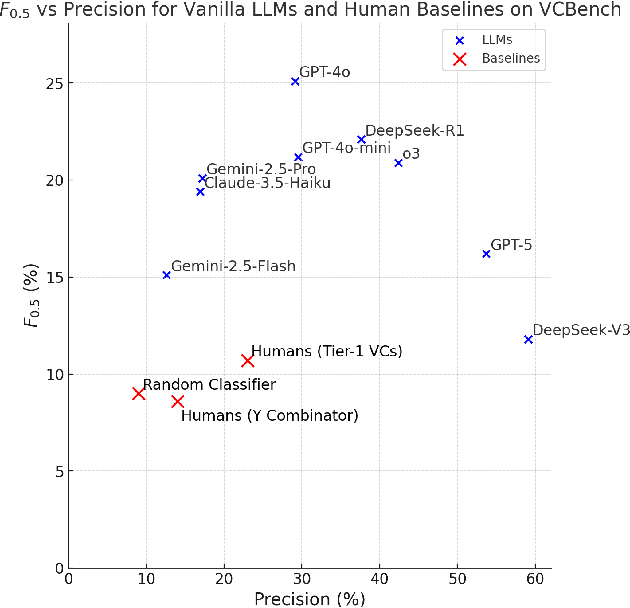
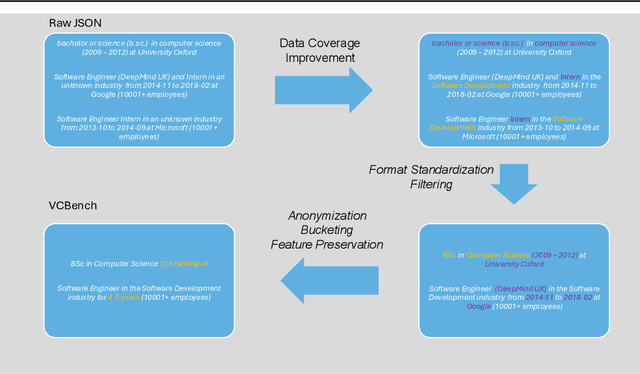
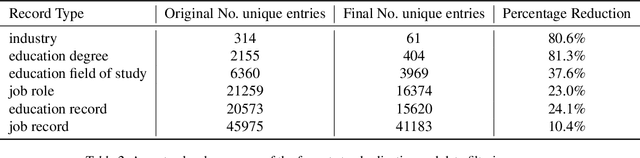
Benchmarks such as SWE-bench and ARC-AGI demonstrate how shared datasets accelerate progress toward artificial general intelligence (AGI). We introduce VCBench, the first benchmark for predicting founder success in venture capital (VC), a domain where signals are sparse, outcomes are uncertain, and even top investors perform modestly. At inception, the market index achieves a precision of 1.9%. Y Combinator outperforms the index by a factor of 1.7x, while tier-1 firms are 2.9x better. VCBench provides 9,000 anonymized founder profiles, standardized to preserve predictive features while resisting identity leakage, with adversarial tests showing more than 90% reduction in re-identification risk. We evaluate nine state-of-the-art large language models (LLMs). DeepSeek-V3 delivers over six times the baseline precision, GPT-4o achieves the highest F0.5, and most models surpass human benchmarks. Designed as a public and evolving resource available at vcbench.com, VCBench establishes a community-driven standard for reproducible and privacy-preserving evaluation of AGI in early-stage venture forecasting.
From Limited Data to Rare-event Prediction: LLM-powered Feature Engineering and Multi-model Learning in Venture Capital
Sep 09, 2025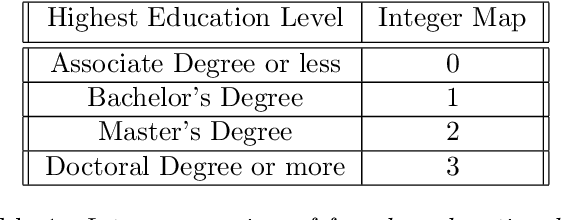
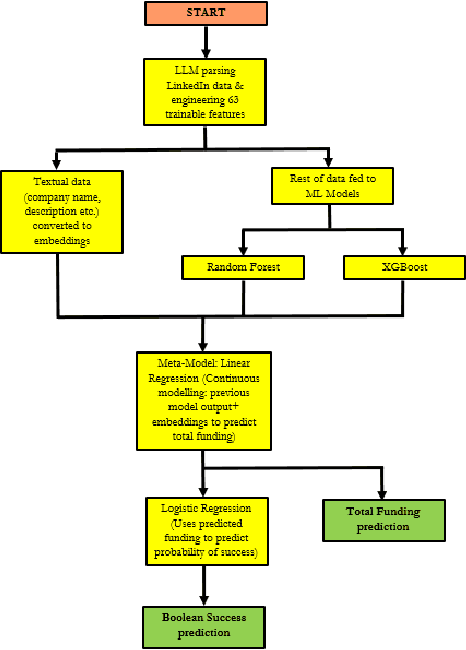
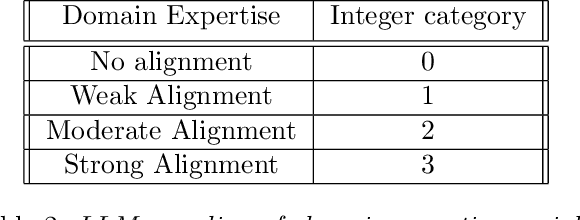
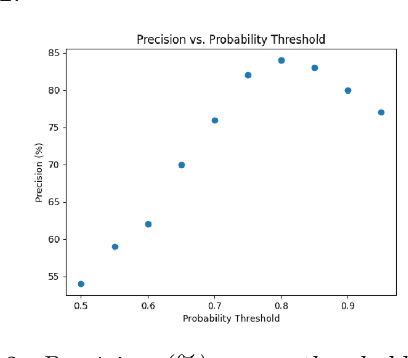
This paper presents a framework for predicting rare, high-impact outcomes by integrating large language models (LLMs) with a multi-model machine learning (ML) architecture. The approach combines the predictive strength of black-box models with the interpretability required for reliable decision-making. We use LLM-powered feature engineering to extract and synthesize complex signals from unstructured data, which are then processed within a layered ensemble of models including XGBoost, Random Forest, and Linear Regression. The ensemble first produces a continuous estimate of success likelihood, which is then thresholded to produce a binary rare-event prediction. We apply this framework to the domain of Venture Capital (VC), where investors must evaluate startups with limited and noisy early-stage data. The empirical results show strong performance: the model achieves precision between 9.8X and 11.1X the random classifier baseline in three independent test subsets. Feature sensitivity analysis further reveals interpretable success drivers: the startup's category list accounts for 15.6% of predictive influence, followed by the number of founders, while education level and domain expertise contribute smaller yet consistent effects.