 Add to Chrome
 Add to Firefox
 Add to Edge
Institutional Equity Holdings Prediction Using Node Affinities of Dynamic Graphs
Jul 13, 2026
Institutional equity holdings disclosed in SEC Form 13F filings provide a rich temporal record of portfolio decisions by large investment managers. However, forecasting future allocations and modeling future demand remains challenging due to disclosure lags, reporting noise, and strong persistence in institutional behavior. We introduce the first benchmark for these tasks using temporal graph machine learning, framing holdings prediction as node affinity prediction -- i.e., forecasting portfolio weights -- on a discrete-time temporal bipartite graph of managers and securities extracted from preprocessed filings. On a sampled dataset comprising 99 managers and the S\&P 500 index (503 securities, 209,351 temporal edges across 48 quarters from 2013--2025), Node Affinity prediction model using Virtual State (NAVIS) achieves a state-of-the-art test Normalized Discounted Cumulative Gain (NDCG) of 0.9127 with features (0.9121 without), outperforming all dynamic graph representation learning competitors by a substantial margin, and outperforming all heuristic methods. Remarkably, a simple Exponential Moving Average baseline achieves 0.8882, surpassing all dynamic graph models except NAVIS and all heuristics except Persistent Forecast (0.8891), highlighting the strong smoothness and persistence of institutional portfolios. Domain-specific node features provide only marginal gains (<1.2\%), indicating that temporal and structural signals in the 13F ownership graph already capture most of the predictable information. By benchmarking a suite of Temporal Graph Benchmark (TGB) models under the node affinity prediction setting, both with and without features, on real-world 13F data, this work provides a reproducible foundation for temporal graph machine learning in holdings prediction and portfolio allocation.

Enhancing Graph Neural Networks Using Proximity Graphs for Dust Source Emission Forecasting
Jun 18, 2026Accurate prediction of dust source emissions is critical for mitigating the significant environmental and health hazards posed by dust storms. Traditional forecasting methods often struggle to capture the complex spatiotemporal dynamics of these phenomena. In this paper, we demonstrate that proximity graphs enable Graph Neural Networks (GNNs) to effectively model the intricate spatial and temporal relationships between data points. Specifically, we use proximity graphs--such as Delaunay triangulation, Gabriel graph, k-Nearest Neighbor graph, and Yao graph--as the input for GNNs (including GraphSAGE, Graph Convolutional Networks, and Graph Attention Networks) to perform message passing. Our approach highlights the effectiveness of integrating proximity graphs with GNNs for robust and accurate dust source forecasting. To emphasize the importance of proximity graph representations, we compare our method against GNNs using random graphs for message passing. The results show that GNNs with proximity graphs significantly outperform those with random graphs and are also far superior to Long Short-Term Memory (LSTM) model in dust source emission forecasting.
Semantic Reasoning in Medicine: The Role of Knowledge Graphs Across Five Key Domains
Jun 13, 2026Knowledge graphs (KGs) have emerged as a promising solution for integrating and reasoning over complex biomedical and clinical data in healthcare. By representing structured relationships among entities such as diseases, drugs, symptoms, and patient records, KGs provide a semantic backbone for decision-making, prediction, recommendation, and personalized care. Recent advances have demonstrated their utility across diverse medical applications--including clinical decision support systems, disease and treatment outcome prediction, health recommender systems, precision medicine, and medical question answering--where KGs often enhance interpretability, semantic coherence, and patient-specific reasoning. In parallel, a growing body of work focuses on medical KG generation itself, proposing frameworks that construct graphs from EHRs, clinical narratives, biomedical literature, and web resources using ontologies, semantic web technologies, deep-learning-based information extraction, and hybrid neuro-symbolic pipelines. Despite this progress, significant challenges remain, including limited and fragmented knowledge coverage, difficulties in aligning heterogeneous data sources, the fragility of current reasoning and representation-learning methods on dense multi-relational graphs, and unresolved issues related to privacy, bias, and accountability. This survey reviews and categorizes current research on KGs in medicine along both application-oriented and methodology-oriented dimensions, discusses their benefits and technical foundations, and outlines key limitations and open research directions. By analyzing trends, architectures, and evaluation practices, this work aims to guide future developments in KG-driven medical AI systems and support their safe and effective integration into healthcare environments.
Where Black-box Drug-Target Interaction Prediction Models Look: Cross-Method Explainability
Jun 12, 2026Drug-target interaction (DTI) and affinity (DTA) predictors increasingly achieve strong benchmark scores, yet their internal use of sequence, fingerprint, and graph features often remains opaque. We present an interpretability audit of BridgeDPI architecture on three different datasets including Gao, Human, and C.elegans. This study combines gradient-based attributions -- integrated gradients, saliency, layer-wise relevance propagation, SmoothGrad, and SmoothGrad-IG -- with feature-wise occlusion ablation and strict intersection consensus across methods to reduce single-explainer bias. We summarize sensitivity and signed effects at raw inputs, at the bridge similarity scaffold, and through the graph convolution, including edge-level sensitivities and targeted edge removals. The results show that explainability is most informative when treated as model criticism: it reveals modality dominance, padding and special-token artifacts, dataset-dependent cooperative versus suppressive effects across layers, and chemistry-consistent fragment and composition motifs where methods agree. These analyses do not substitute for structural or experimental ground truth, yet they can provide testable hypotheses for downstream validation in computational drug discovery pipelines. More broadly, applying modern XAI to contemporary DTI/DTA models is still an early pass over the rich structure implicit in trained weights and data -- yet even this first layer of scrutiny already helps researchers relate predictions to drug- and target-side representations and to prioritize external validation.
Drug-Target Interaction/Affinity Prediction: Deep Learning Models and Advances Review
Feb 21, 2025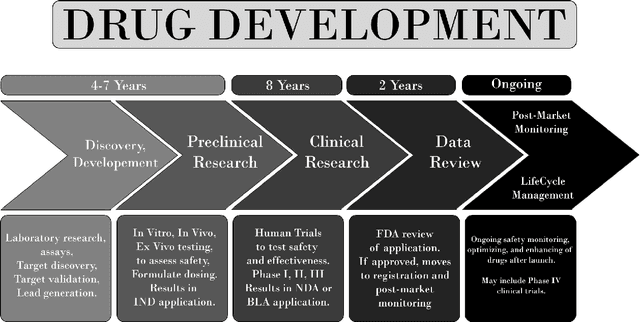
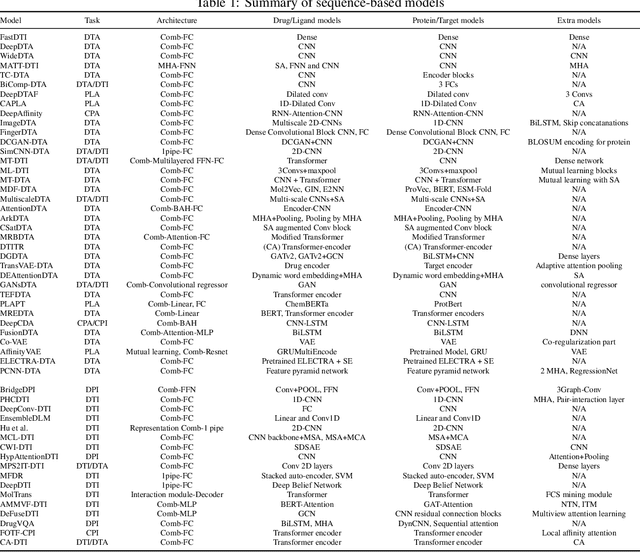
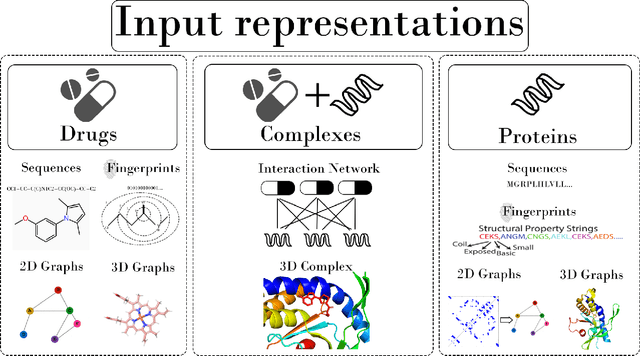
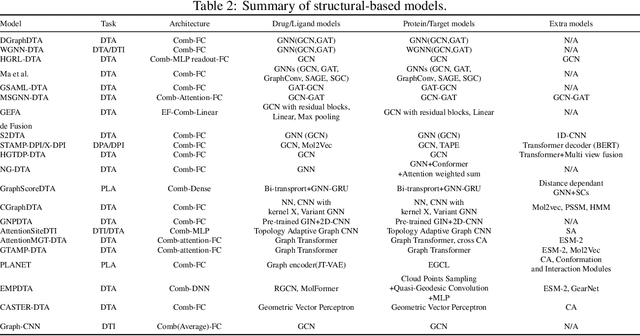
Drug discovery remains a slow and expensive process that involves many steps, from detecting the target structure to obtaining approval from the Food and Drug Administration (FDA), and is often riddled with safety concerns. Accurate prediction of how drugs interact with their targets and the development of new drugs by using better methods and technologies have immense potential to speed up this process, ultimately leading to faster delivery of life-saving medications. Traditional methods used for drug-target interaction prediction show limitations, particularly in capturing complex relationships between drugs and their targets. As an outcome, deep learning models have been presented to overcome the challenges of interaction prediction through their precise and efficient end results. By outlining promising research avenues and models, each with a different solution but similar to the problem, this paper aims to give researchers a better idea of methods for even more accurate and efficient prediction of drug-target interaction, ultimately accelerating the development of more effective drugs. A total of 180 prediction methods for drug-target interactions were analyzed throughout the period spanning 2016 to 2025 using different frameworks based on machine learning, mainly deep learning and graph neural networks. Additionally, this paper discusses the novelty, architecture, and input representation of these models.
Edge2Node: Reducing Edge Prediction to Node Classification
Nov 13, 2023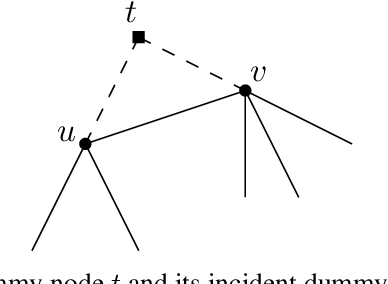
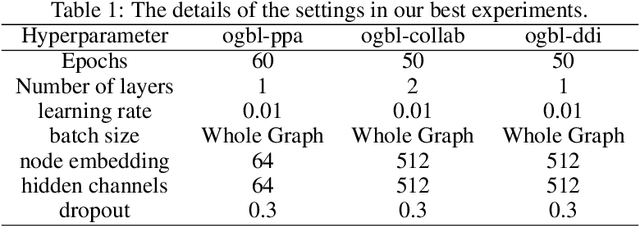
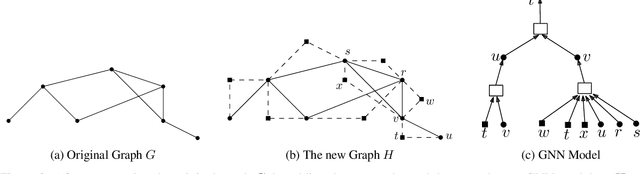
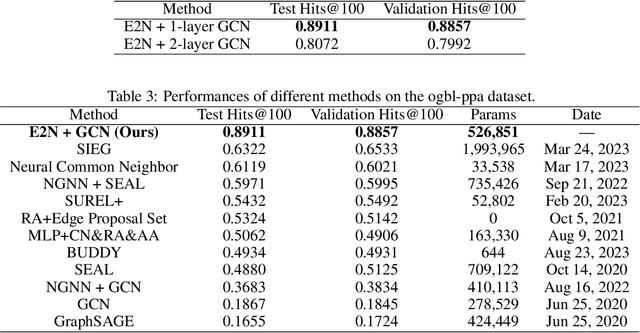
Despite the success of graph neural network models in node classification, edge prediction (the task of predicting missing or potential links between nodes in a graph) remains a challenging problem for these models. A common approach for edge prediction is to first obtain the embeddings of two nodes, and then a predefined scoring function is used to predict the existence of an edge between the two nodes. In this paper, we introduce a new approach called Edge2Node (E2N) which directly obtains an embedding for each edge, without the need for a scoring function. To do this, we create a new graph H based on the graph G given for the edge prediction task, and then reduce the edge prediction task on G to a node classification task on H. Our E2N method can be easily applied to any edge prediction task with superior performance and lower computational costs. Our E2N method beats the best-known methods on the leaderboards for ogbl-ppa, ogbl-collab, and ogbl-ddi datasets by 25.89%, 24.19%, and 0.34% improvements, respectively.
BERT-DRE: BERT with Deep Recursive Encoder for Natural Language Sentence Matching
Nov 04, 2021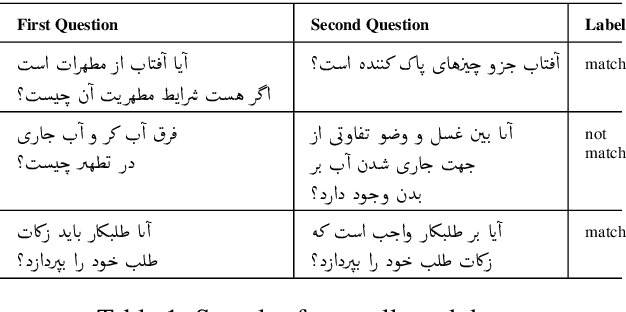
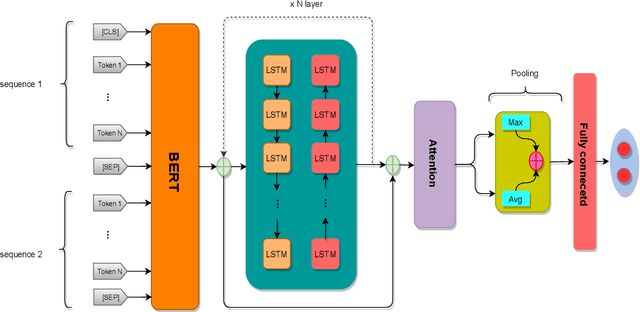
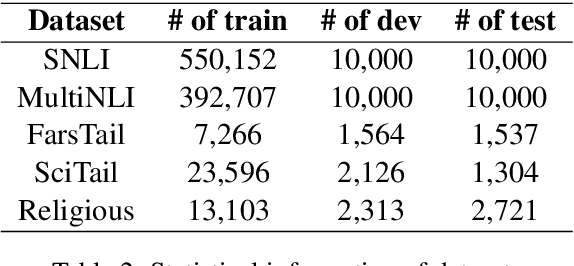
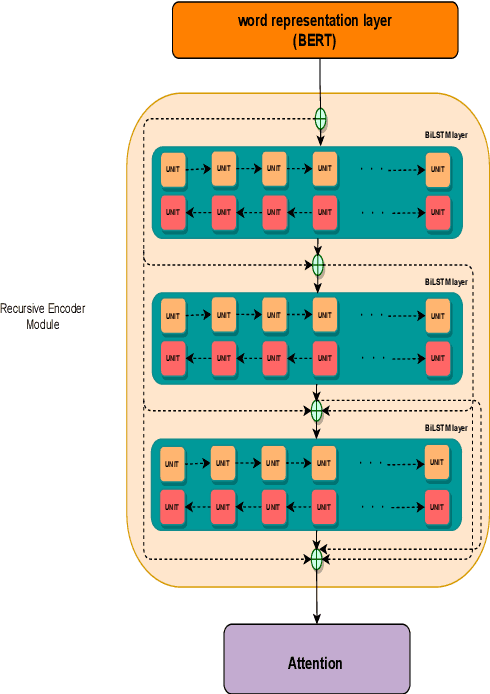
This paper presents a deep neural architecture, for Natural Language Sentence Matching (NLSM) by adding a deep recursive encoder to BERT so called BERT with Deep Recursive Encoder (BERT-DRE). Our analysis of model behavior shows that BERT still does not capture the full complexity of text, so a deep recursive encoder is applied on top of BERT. Three Bi-LSTM layers with residual connection are used to design a recursive encoder and an attention module is used on top of this encoder. To obtain the final vector, a pooling layer consisting of average and maximum pooling is used. We experiment our model on four benchmarks, SNLI, FarsTail, MultiNLI, SciTail, and a novel Persian religious questions dataset. This paper focuses on improving the BERT results in the NLSM task. In this regard, comparisons between BERT-DRE and BERT are conducted, and it is shown that in all cases, BERT-DRE outperforms BERT. The BERT algorithm on the religious dataset achieved an accuracy of 89.70%, and BERT-DRE architectures improved to 90.29% using the same dataset.