 Add to Chrome
 Add to Firefox
 Add to Edge
Enhancing Graph Neural Networks Using Proximity Graphs for Dust Source Emission Forecasting
Jun 18, 2026
Accurate prediction of dust source emissions is critical for mitigating the significant environmental and health hazards posed by dust storms. Traditional forecasting methods often struggle to capture the complex spatiotemporal dynamics of these phenomena. In this paper, we demonstrate that proximity graphs enable Graph Neural Networks (GNNs) to effectively model the intricate spatial and temporal relationships between data points. Specifically, we use proximity graphs--such as Delaunay triangulation, Gabriel graph, k-Nearest Neighbor graph, and Yao graph--as the input for GNNs (including GraphSAGE, Graph Convolutional Networks, and Graph Attention Networks) to perform message passing. Our approach highlights the effectiveness of integrating proximity graphs with GNNs for robust and accurate dust source forecasting. To emphasize the importance of proximity graph representations, we compare our method against GNNs using random graphs for message passing. The results show that GNNs with proximity graphs significantly outperform those with random graphs and are also far superior to Long Short-Term Memory (LSTM) model in dust source emission forecasting.

Where Black-box Drug-Target Interaction Prediction Models Look: Cross-Method Explainability
Jun 12, 2026Drug-target interaction (DTI) and affinity (DTA) predictors increasingly achieve strong benchmark scores, yet their internal use of sequence, fingerprint, and graph features often remains opaque. We present an interpretability audit of BridgeDPI architecture on three different datasets including Gao, Human, and C.elegans. This study combines gradient-based attributions -- integrated gradients, saliency, layer-wise relevance propagation, SmoothGrad, and SmoothGrad-IG -- with feature-wise occlusion ablation and strict intersection consensus across methods to reduce single-explainer bias. We summarize sensitivity and signed effects at raw inputs, at the bridge similarity scaffold, and through the graph convolution, including edge-level sensitivities and targeted edge removals. The results show that explainability is most informative when treated as model criticism: it reveals modality dominance, padding and special-token artifacts, dataset-dependent cooperative versus suppressive effects across layers, and chemistry-consistent fragment and composition motifs where methods agree. These analyses do not substitute for structural or experimental ground truth, yet they can provide testable hypotheses for downstream validation in computational drug discovery pipelines. More broadly, applying modern XAI to contemporary DTI/DTA models is still an early pass over the rich structure implicit in trained weights and data -- yet even this first layer of scrutiny already helps researchers relate predictions to drug- and target-side representations and to prioritize external validation.
Drug-Target Interaction/Affinity Prediction: Deep Learning Models and Advances Review
Feb 21, 2025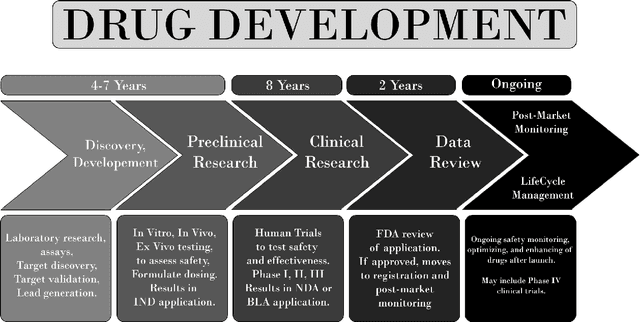
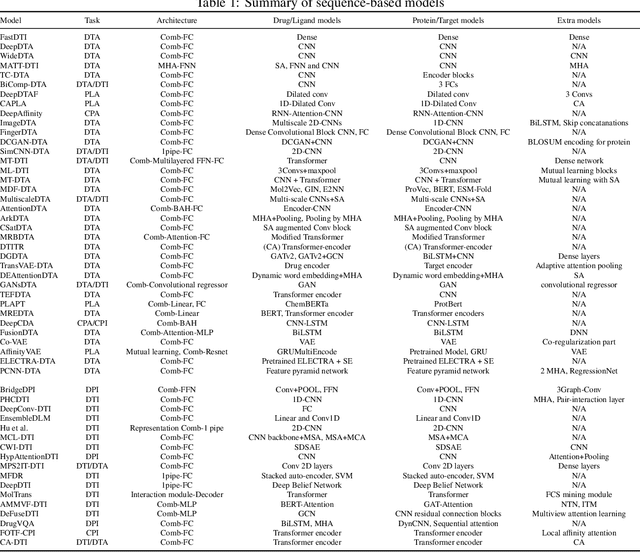
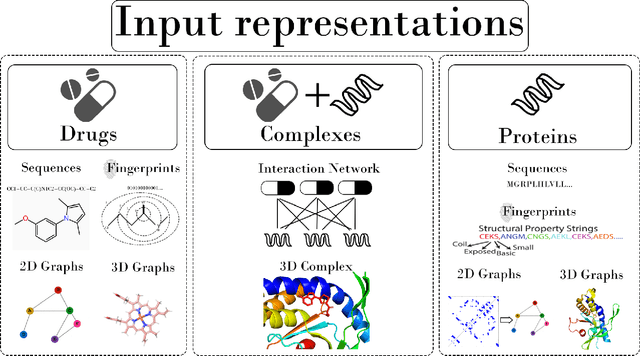
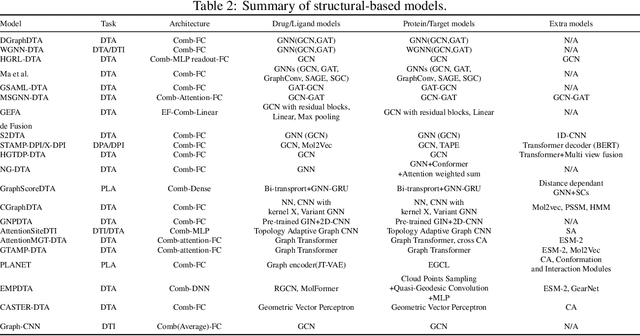
Drug discovery remains a slow and expensive process that involves many steps, from detecting the target structure to obtaining approval from the Food and Drug Administration (FDA), and is often riddled with safety concerns. Accurate prediction of how drugs interact with their targets and the development of new drugs by using better methods and technologies have immense potential to speed up this process, ultimately leading to faster delivery of life-saving medications. Traditional methods used for drug-target interaction prediction show limitations, particularly in capturing complex relationships between drugs and their targets. As an outcome, deep learning models have been presented to overcome the challenges of interaction prediction through their precise and efficient end results. By outlining promising research avenues and models, each with a different solution but similar to the problem, this paper aims to give researchers a better idea of methods for even more accurate and efficient prediction of drug-target interaction, ultimately accelerating the development of more effective drugs. A total of 180 prediction methods for drug-target interactions were analyzed throughout the period spanning 2016 to 2025 using different frameworks based on machine learning, mainly deep learning and graph neural networks. Additionally, this paper discusses the novelty, architecture, and input representation of these models.