 Add to Chrome
 Add to Firefox
 Add to Edge
LLM-Assisted Causal Structure Disambiguation and Factor Extraction for Legal Judgment Prediction
Mar 12, 2026
Mainstream methods for Legal Judgment Prediction (LJP) based on Pre-trained Language Models (PLMs) heavily rely on the statistical correlation between case facts and judgment results. This paradigm lacks explicit modeling of legal constituent elements and underlying causal logic, making models prone to learning spurious correlations and suffering from poor robustness. While introducing causal inference can mitigate this issue, existing causal LJP methods face two critical bottlenecks in real-world legal texts: inaccurate legal factor extraction with severe noise, and significant uncertainty in causal structure discovery due to Markov equivalence under sparse features. To address these challenges, we propose an enhanced causal inference framework that integrates Large Language Model (LLM) priors with statistical causal discovery. First, we design a coarse-to-fine hybrid extraction mechanism combining statistical sampling and LLM semantic reasoning to accurately identify and purify standard legal constituent elements. Second, to resolve structural uncertainty, we introduce an LLM-assisted causal structure disambiguation mechanism. By utilizing the LLM as a constrained prior knowledge base, we conduct probabilistic evaluation and pruning on ambiguous causal directions to generate legally compliant candidate causal graphs. Finally, a causal-aware judgment prediction model is constructed by explicitly constraining text attention intensity via the generated causal graphs. Extensive experiments on multiple benchmark datasets, including LEVEN , QA, and CAIL, demonstrate that our proposed method significantly outperforms state-of-the-art baselines in both predictive accuracy and robustness, particularly in distinguishing confusing charges.

PivotAttack: Rethinking the Search Trajectory in Hard-Label Text Attacks via Pivot Words
Mar 11, 2026Existing hard-label text attacks often rely on inefficient "outside-in" strategies that traverse vast search spaces. We propose PivotAttack, a query-efficient "inside-out" framework. It employs a Multi-Armed Bandit algorithm to identify Pivot Sets-combinatorial token groups acting as prediction anchors-and strategically perturbs them to induce label flips. This approach captures inter-word dependencies and minimizes query costs. Extensive experiments across traditional models and Large Language Models demonstrate that PivotAttack consistently outperforms state-of-the-art baselines in both Attack Success Rate and query efficiency.
GPFL: A Gradient Projection-Based Client Selection Framework for Efficient Federated Learning
Mar 26, 2024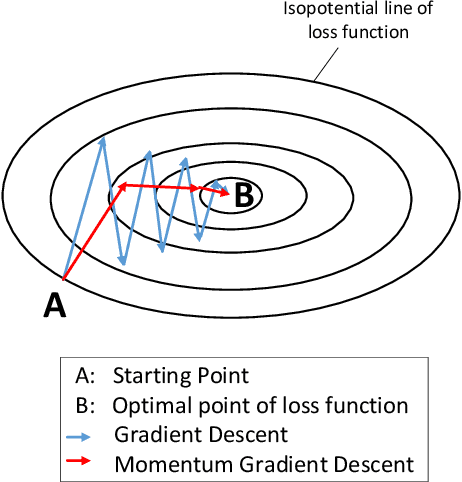
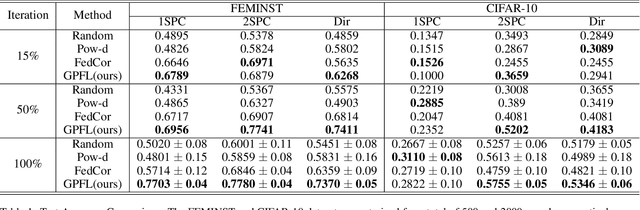
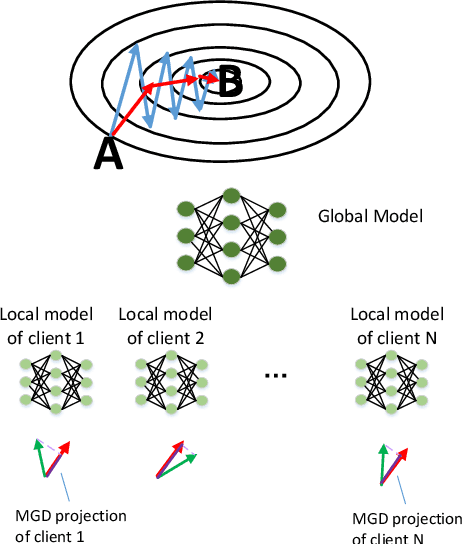

Federated learning client selection is crucial for determining participant clients while balancing model accuracy and communication efficiency. Existing methods have limitations in handling data heterogeneity, computational burdens, and independent client treatment. To address these challenges, we propose GPFL, which measures client value by comparing local and global descent directions. We also employ an Exploit-Explore mechanism to enhance performance. Experimental results on FEMINST and CIFAR-10 datasets demonstrate that GPFL outperforms baselines in Non-IID scenarios, achieving over 9\% improvement in FEMINST test accuracy. Moreover, GPFL exhibits shorter computation times through pre-selection and parameter reuse in federated learning.
DVFL: A Vertical Federated Learning Method for Dynamic Data
Nov 05, 2021Federated learning, which solves the problem of data island by connecting multiple computational devices into a decentralized system, has become a promising paradigm for privacy-preserving machine learning. This paper studies vertical federated learning (VFL), which tackles the scenarios where collaborating organizations share the same set of users but disjoint features. Contemporary VFL methods are mainly used in static scenarios where the active party and the passive party have all the data from the beginning and will not change. However, the data in real life often changes dynamically. To alleviate this problem, we propose a new vertical federation learning method, DVFL, which adapts to dynamic data distribution changes through knowledge distillation. In DVFL, most of the computations are held locally to improve data security and model efficiency. Our extensive experimental results show that DVFL can not only obtain results close to existing VFL methods in static scenes, but also adapt to changes in data distribution in dynamic scenarios.
Data-driven Smart Ponzi Scheme Detection
Aug 20, 2021A smart Ponzi scheme is a new form of economic crime that uses Ethereum smart contract account and cryptocurrency to implement Ponzi scheme. The smart Ponzi scheme has harmed the interests of many investors, but researches on smart Ponzi scheme detection is still very limited. The existing smart Ponzi scheme detection methods have the problems of requiring many human resources in feature engineering and poor model portability. To solve these problems, we propose a data-driven smart Ponzi scheme detection system in this paper. The system uses dynamic graph embedding technology to automatically learn the representation of an account based on multi-source and multi-modal data related to account transactions. Compared with traditional methods, the proposed system requires very limited human-computer interaction. To the best of our knowledge, this is the first work to implement smart Ponzi scheme detection through dynamic graph embedding. Experimental results show that this method is significantly better than the existing smart Ponzi scheme detection methods.