 Add to Chrome
 Add to Firefox
 Add to Edge
Demystifying Oversmoothing in Sheaf Neural Networks: An Index-Theoretic Criterion
Aug 17, 2026
To combat oversmoothing in Graph Convolutional Networks, Sheaf Neural Networks (SNNs) were proposed as a generalization by equipping the graph with a sheaf structure and replacing the graph Laplacian with a sheaf Laplacian $\mathcal{L}$. Existing analyses connect sheaf diffusion to oversmoothing via the harmonic space ($\ker\mathcal{L}$), taking its absolute dimension as an indicator of anti-oversmoothing capacity. However, absolute dimension alone is not a reliable measure: certain sheaf configurations inflate $\dim \ker \mathcal{L}$ while their harmonic sections remain entirely constant, without enriching discriminative capacity. We instead introduce the first relative, geometric approach, yielding a precise characterisation of anti-oversmoothing capacity. Under natural conditions on stalk transportation and global sheaf structure, we establish an index-theoretic comparison criterion showing that one sheaf's harmonic space genuinely contains another's beyond trivial inflation. We illustrate this with a concrete instance and further introduce \textit{GyroSheaf}, a sheaf with curved gyrovector-space stalks, extending the criterion to the non-linear setting via local tangent-space linearization. Experiments across ten models confirm the theoretical criterion: sheaf models violating the criterion collapse despite possessing index jumps, while compliant models maintain depth-stable representations.

Sheaf Neural Networks on SPD Manifolds: Second-Order Geometric Representation Learning
Apr 22, 2026Graph neural networks face two fundamental challenges rooted in the linear structure of Euclidean vector spaces: (1) Current architectures represent geometry through vectors (directions, gradients), yet many tasks require matrix-valued representations that capture relationships between directions-such as how atomic orientations covary in a molecule. These second-order representations are naturally captured by points on the symmetric positive definite matrices (SPD) manifold; (2) Standard message passing applies shared transformations across edges. Sheaf neural networks address this via edge-specific transformations, but existing formulations remain confined to vector spaces and therefore cannot propagate matrix-valued features. We address both challenges by developing the first sheaf neural network operates natively on the SPD manifold. Our key insight is that the SPD manifold admits a Lie group structure, enabling well-posed analogs of sheaf operators without projecting to Euclidean space. Theoretically, we prove that SPD-valued sheaves are strictly more expressive than Euclidean sheaves: they admit consistent configurations (global sections) that vector-valued sheaves cannot represent, directly translating to richer learned representations. Empirically, our sheaf convolution transforms effectively rank-1 directional inputs into full-rank matrices encoding local geometric structure. Our dual-stream architecture achieves SOTA on 6/7 MoleculeNet benchmarks, with the sheaf framework providing consistent depth robustness.
3D Medical Imaging Segmentation on Non-Contrast CT
Mar 11, 2025
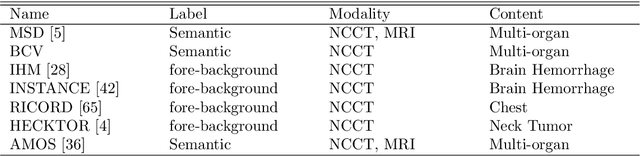
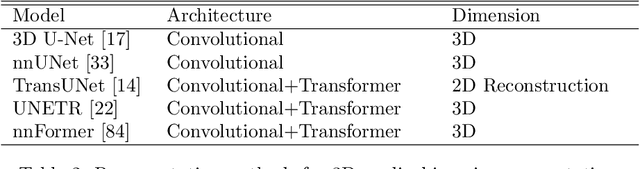
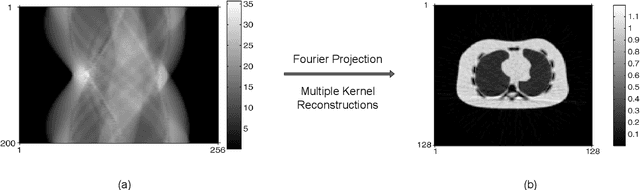
This technical report analyzes non-contrast CT image segmentation in computer vision. It revisits a proposed method, examines the background of non-contrast CT imaging, and highlights the significance of segmentation. The study reviews representative methods, including convolutional-based and CNN-Transformer hybrid approaches, discussing their contributions, advantages, and limitations. The nnUNet stands out as the state-of-the-art method across various segmentation tasks. The report explores the relationship between the proposed method and existing approaches, emphasizing the role of global context modeling in semantic labeling and mask generation. Future directions include addressing the long-tail problem, utilizing pre-trained models for medical imaging, and exploring self-supervised or contrastive pre-training techniques. This report offers insights into non-contrast CT image segmentation and potential advancements in the field.