 Add to Chrome
 Add to Firefox
 Add to Edge
Agentic MIP Research: Accelerated Constraint Handler Generation
May 09, 2026
Mixed-integer programming (MIP) research is both mathematically sophisticated and engineering-intensive: testing an algorithmic hypothesis within a branch-and-cut solver requires substantial implementation, debugging, tuning, and large-scale benchmarking. We propose an agentic MIP research framework that shortens this feedback loop by embedding LLM agents into a solver-aware harness for generating, verifying, and evaluating plugins for the open-source solver SCIP. Propagation methods play a central role in accelerating MIP solving by exploiting global constraints. We instantiate our framework on the semantic lifting of MIP formulations into global constraints and the automatic construction of propagation-only SCIP constraint handlers. On the MIPLIB 2017 benchmark set, the framework successfully recovers global constraint structures from constraint programming and generates executable constraint detectors and propagation-only constraint handlers. Furthermore, the framework naturally extends to in-context learning within a sandboxed environment, enabling agents not only to tune and debug generated constraint handlers on real instances, but also to explore global constraint patterns in MIP problems and discover novel propagation strategies not yet implemented in SCIP. This framework allows us to systematically distinguish meaningful algorithmic improvements from low-value or overly costly candidates: the novel propagation methods successfully solved five additional instances within the explored benchmark. Overall, this framework demonstrates that LLM agents can autonomously navigate the complex MIP research loop, paving the way for a more automated solver development process.

Learning to Prune in Training via Dynamic Channel Propagation
Jul 03, 2020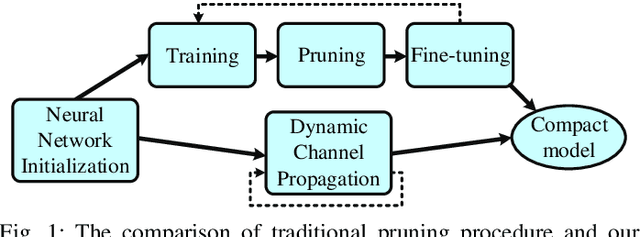
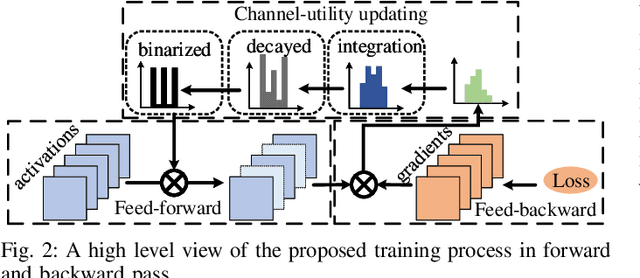
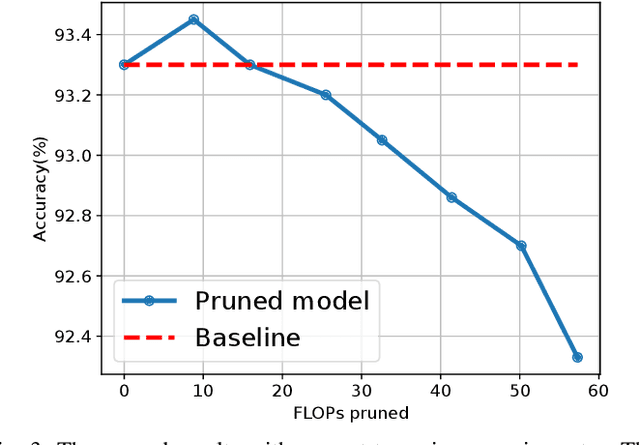
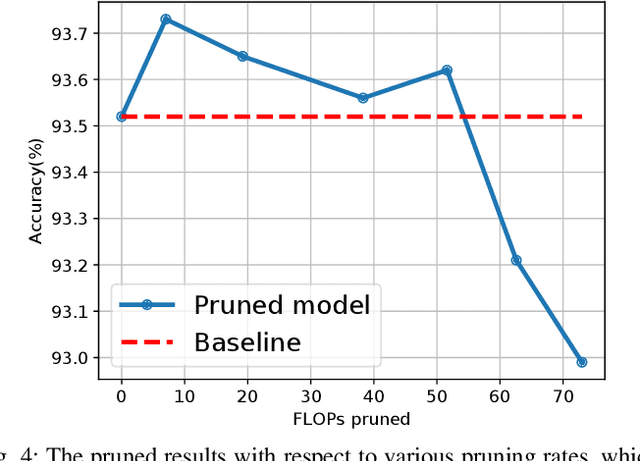
In this paper, we propose a novel network training mechanism called "dynamic channel propagation" to prune the neural networks during the training period. In particular, we pick up a specific group of channels in each convolutional layer to participate in the forward propagation in training time according to the significance level of channel, which is defined as channel utility. The utility values with respect to all selected channels are updated simultaneously with the error back-propagation process and will adaptively change. Furthermore, when the training ends, channels with high utility values are retained whereas those with low utility values are discarded. Hence, our proposed scheme trains and prunes neural networks simultaneously. We empirically evaluate our novel training scheme on various representative benchmark datasets and advanced convolutional neural network (CNN) architectures, including VGGNet and ResNet. The experiment results verify the superior performance and robust effectiveness of our approach.
Evaluation Mechanism of Collective Intelligence for Heterogeneous Agents Group
Mar 01, 2019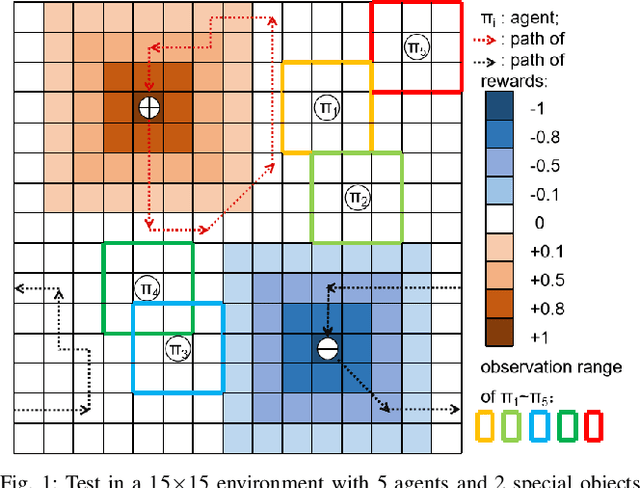
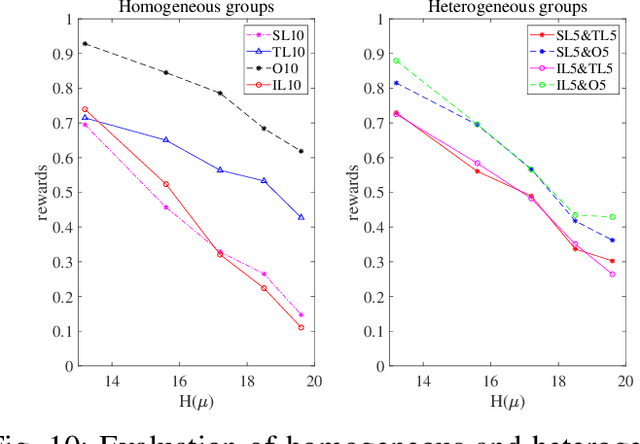
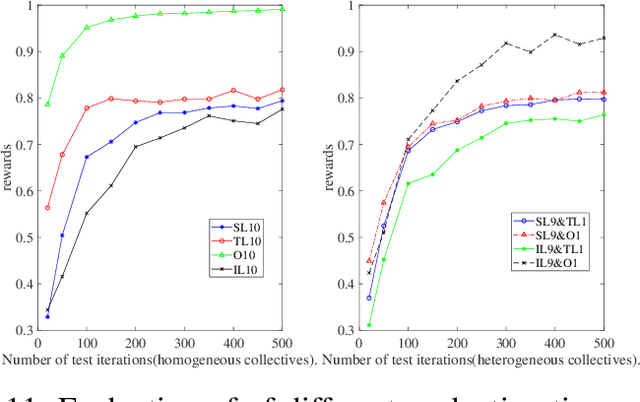
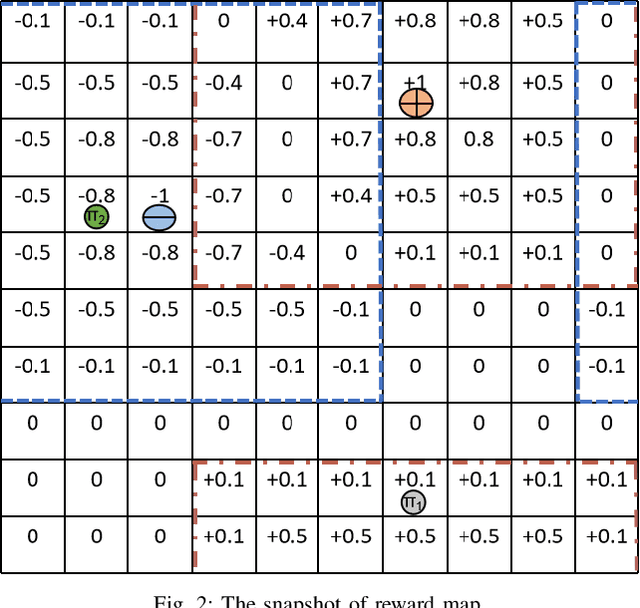
Collective intelligence is manifested when multiple agents coherently work in observation, interaction, decision-making and action. In this paper, we define and quantify the intelligence level of heterogeneous agents group with the improved Anytime Universal Intelligence Test(AUIT), based on an extension of the existing evaluation of homogeneous agents group. The relationship of intelligence level with agents composition, group size, spatial complexity and testing time is analyzed. The intelligence level of heterogeneous agents groups is compared with the homogeneous ones to analyze the effects of heterogeneity on collective intelligence. Our work will help to understand the essence of collective intelligence more deeply and reveal the effect of various key factors on group intelligence level.