 Add to Chrome
 Add to Firefox
 Add to Edge
Non-Archimedean Polydisc Spaces and Applications to Optimisation
Jun 05, 2026
We propose a new framework for optimisation over non-Archimedean spaces inspired by Berkovich geometry. Specifically, we introduce polydisc spaces, which consists of products of closed balls over a non-Archimedean field. These spaces retain the rigid hierarchical structure of the non-Archimedean field whilst acquiring many desirable geometric features absent from it. We show that metric trees embed naturally into these spaces, demonstrating their capacity to represent hierarchical data. We study their metric geometry, establishing properties such as geodesic uniqueness, confirming their comaptibility with classical optimisation techniques. We further propose a class of real-valued functions given by linear combinations of absolute values of polynomials. These functions admit a piecewise polynomial description along geodesics and satisfy a universal approximation property. We formulate a theory of optimisation on polydisc spaces: we prove existence of minimisers and explore algorithms for finding them. We provide an accompanying open-source Julia library implementing the core objects and optimisation procedures introduced.

CardioLens: Revealing the Clinical Reality Gap of MLLMs via Multi-Sequence Cardiac MRI Evaluations
May 28, 2026Multimodal Large Language Models (MLLMs) have shown strong performance on public medical benchmarks, yet existing evaluations often remain weak proxies for clinical use, relying on isolated inputs and simplified recognition-style tasks. We introduce CardioLens, a leakage-resistant evaluation testbed for multi-sequence Cardiovascular Magnetic Resonance (CMR), constructed from private hospital archives through a rigorous report-to-QA construction and verification pipeline. CardioLens contains 473,896 slices and 13,494 verified QA pairs across 4D Cine, LGE, perfusion, and T2-weighted imaging, and evaluates three stages of CMR interpretation: image understanding, report generation, and disease diagnosis. Across 24 state-of-the-art MLLMs, CardioLens reveals a substantial clinical reality gap: models perform poorly overall, with performance degrading along the real CMR workflow. Confusion analysis further shows a category-collapse failure mode, where models default to frequent abnormal categories rather than distinguishing clinically distinct findings. To rule out MLLM-compatible input construction as the primary cause, we compare random, clinically motivated, and data-driven slice selection protocols under different slice budgets; performance changes only marginally, typically by about 1%. Explicit reasoning prompts also fail to rescue performance, often making models more conservative rather than improving visual evidence use. These results show that current MLLMs remain far from reliable CMR interpretation, where clinical decisions require integrating distributed evidence across sequences, views, and temporal phases. CardioLens provides a clinically grounded testbed for developing next-generation MLLMs toward real-world clinical deployment.
Sharp bounds for the number of regions of maxout networks and vertices of Minkowski sums
Apr 16, 2021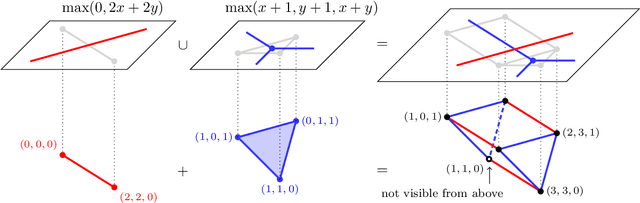
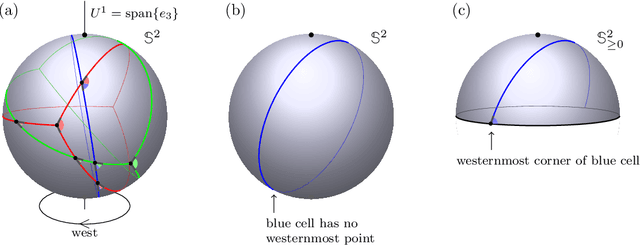
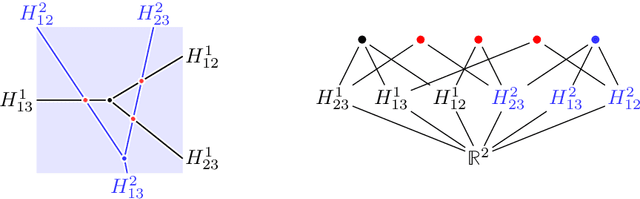
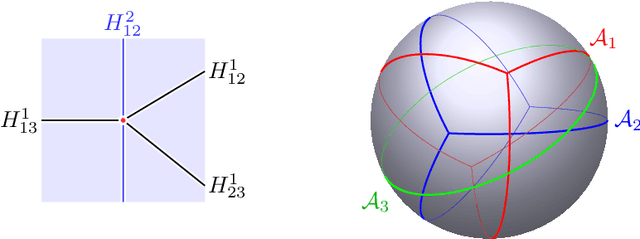
We present results on the number of linear regions of the functions that can be represented by artificial feedforward neural networks with maxout units. A rank-k maxout unit is a function computing the maximum of $k$ linear functions. For networks with a single layer of maxout units, the linear regions correspond to the upper vertices of a Minkowski sum of polytopes. We obtain face counting formulas in terms of the intersection posets of tropical hypersurfaces or the number of upper faces of partial Minkowski sums, along with explicit sharp upper bounds for the number of regions for any input dimension, any number of units, and any ranks, in the cases with and without biases. Based on these results we also obtain asymptotically sharp upper bounds for networks with multiple layers.