 Add to Chrome
 Add to Firefox
 Add to Edge
Geometric Reconstruction of Extrinsic Contact Trajectories using Tactile Sensing and Proprioception for Tool Manipulation
Jun 20, 2026
Tactile sensing enables robots to perceive rich contact information at the grasp, supporting tasks such as object recognition, in-hand pose estimation, and slip detection. However, in many tool-mediated manipulation tasks, the interaction that determines task success occurs at the tool tip, away from the tactile sensor, making direct sensing of tool-environment contact difficult, particularly when the contact moves during interaction. In this work, we reconstruct the trajectory of extrinsic tool-tip contact using tactile sensing and robot proprioception. We formulate tool-tip trajectory reconstruction as a geometric inference problem under a single-point contact assumption. Our method first estimates the global tool-tip contact location from a calibration segment designed to approximate fixed-point behavior, and then reconstructs the full trajectory by composing relative tool motion estimated from tactile marker observations under continuous contact. Across n=51 trials with multiple trajectories, tools, wrist poses, and grasp configurations, the proposed pipeline achieves a trajectory RMSE of 8.59 +/- 2.41 mm in the world frame and a shape RMSE of 5.96 +/- 1.16 mm, while operating online at 14.00 +/- 4.11 Hz. Overall, the results show that extrinsic tool-tip trajectory geometry can be recovered consistently from grasp-level tactile sensing, with trajectory shape remaining stable across variations in tools, wrist poses, and grasp configurations.

Deepfake Text Detection: Limitations and Opportunities
Oct 17, 2022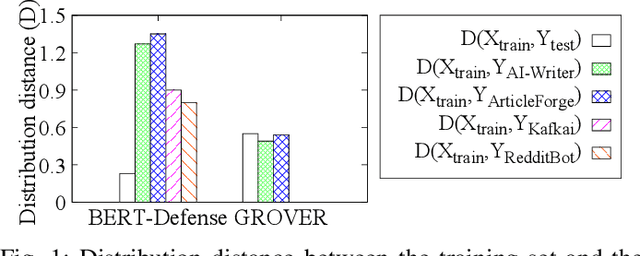
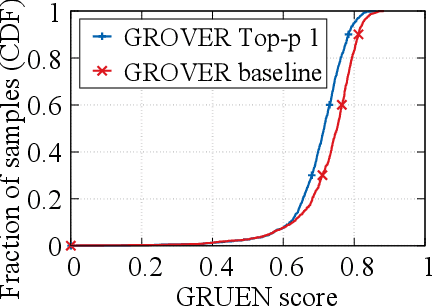
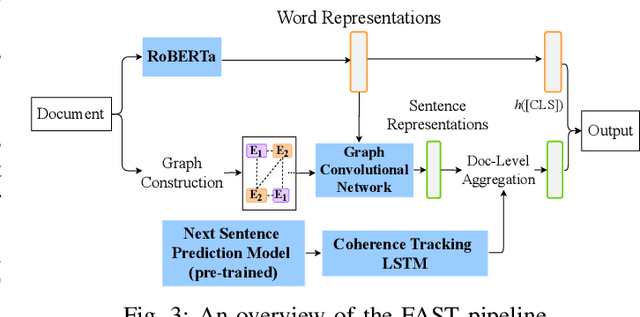
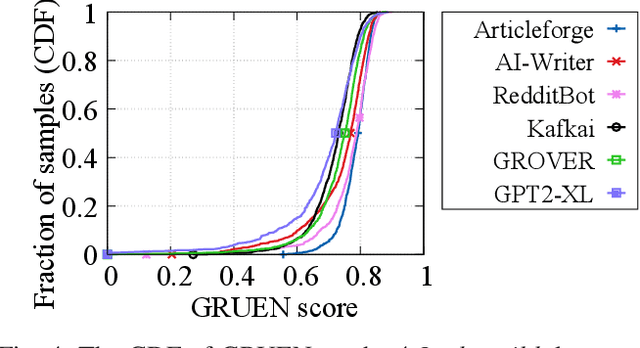
Recent advances in generative models for language have enabled the creation of convincing synthetic text or deepfake text. Prior work has demonstrated the potential for misuse of deepfake text to mislead content consumers. Therefore, deepfake text detection, the task of discriminating between human and machine-generated text, is becoming increasingly critical. Several defenses have been proposed for deepfake text detection. However, we lack a thorough understanding of their real-world applicability. In this paper, we collect deepfake text from 4 online services powered by Transformer-based tools to evaluate the generalization ability of the defenses on content in the wild. We develop several low-cost adversarial attacks, and investigate the robustness of existing defenses against an adaptive attacker. We find that many defenses show significant degradation in performance under our evaluation scenarios compared to their original claimed performance. Our evaluation shows that tapping into the semantic information in the text content is a promising approach for improving the robustness and generalization performance of deepfake text detection schemes.