 Add to Chrome
 Add to Firefox
 Add to Edge
Reducing Redundancy in Retrieval-Augmented Generation through Chunk Filtering
Apr 27, 2026
Standard Retrieval-Augmented Generation (RAG) chunking methods often create excessive redundancy, increasing storage costs and slowing retrieval. This study explores chunk filtering strategies, such as semantic, topic-based, and named-entity-based methods in order to reduce the indexed corpus while preserving retrieval quality. Experiments are conducted on multiple corpora. Retrieval performance is evaluated using a token-based framework based on precision, recall, and intersection-over-union metrics. Results indicate that entity-based filtering can reduce vector index size by approximately 25% to 36% while maintaining high retrieval quality close to the baseline. These findings suggest that redundancy introduced during chunking can be effectively reduced through lightweight filtering, improving the efficiency of retrieval-oriented components in RAG pipelines.

Design and Comparison of Reward Functions in Reinforcement Learning for Energy Management of Sensor Nodes
Jun 02, 2021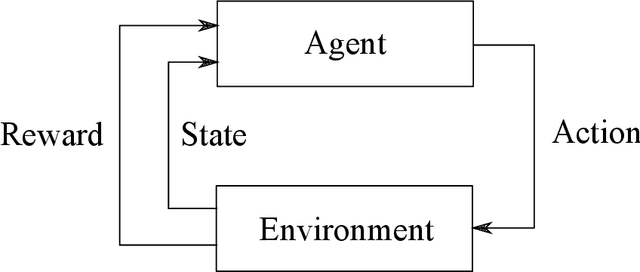
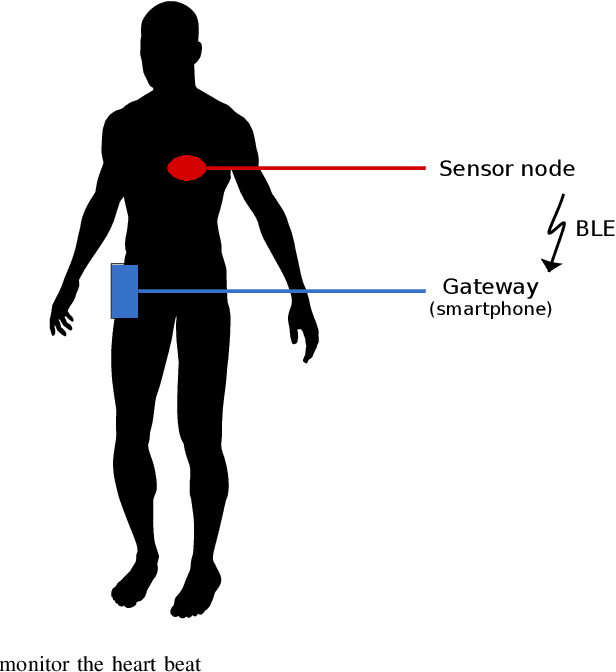
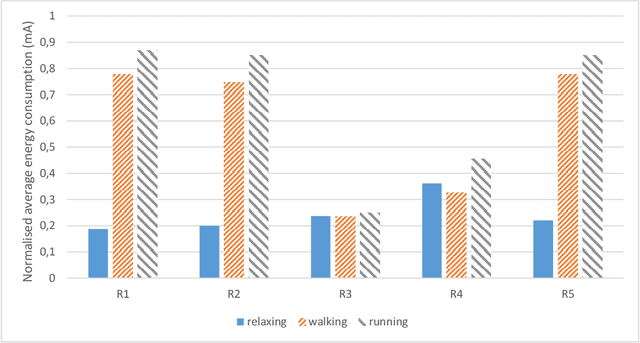
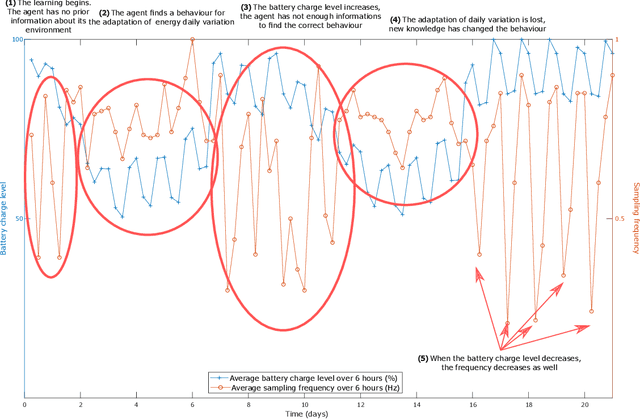
Interest in remote monitoring has grown thanks to recent advancements in Internet-of-Things (IoT) paradigms. New applications have emerged, using small devices called sensor nodes capable of collecting data from the environment and processing it. However, more and more data are processed and transmitted with longer operational periods. At the same, the battery technologies have not improved fast enough to cope with these increasing needs. This makes the energy consumption issue increasingly challenging and thus, miniaturized energy harvesting devices have emerged to complement traditional energy sources. Nevertheless, the harvested energy fluctuates significantly during the node operation, increasing uncertainty in actually available energy resources. Recently, approaches in energy management have been developed, in particular using reinforcement learning approaches. However, in reinforcement learning, the algorithm's performance relies greatly on the reward function. In this paper, we present two contributions. First, we explore five different reward functions to identify the most suitable variables to use in such functions to obtain the desired behaviour. Experiments were conducted using the Q-learning algorithm to adjust the energy consumption depending on the energy harvested. Results with the five reward functions illustrate how the choice thereof impacts the energy consumption of the node. Secondly, we propose two additional reward functions able to find the compromise between energy consumption and a node performance using a non-fixed balancing parameter. Our simulation results show that the proposed reward functions adjust the node's performance depending on the battery level and reduce the learning time.