 Add to Chrome
 Add to Firefox
 Add to Edge
RAGas: Retrieval-Augmented Gas Optimization for Smart Contracts with Continuous Knowledge Integration
Aug 16, 2026
Ethereum is now integral to mission-critical sectors, including finance, healthcare, and supply chain management. Execution fees, commonly referred to as Gas, scale with the computational complexity of their functions. Smart contracts on Ethereum incur execution fees, known as Gas, which increase with computational complexity. Thus, optimizing Gas-intensive code while preserving functional equivalence significantly lowers deployment costs. No existing system continuously exploits evolving Gas usage patterns. We systematically analyze syntactic and semantic constructs that drive excessive Gas use. This yields six high-level categories covering twelve fine-grained antipatterns underpinning a curated knowledge base. We operationalize these insights with RAGas, a three-stage retrieval-augmented generation framework that uses a large language model to pinpoint and automatically fix Gas inefficiencies. Experiments on deployed contracts demonstrate that RAGas reduces Gas usage by up to 11% and achieves high precision and recall in detecting code snippets exhibiting Gas wastage.

Towards Understanding Deep Learning Model in Image Recognition via Coverage Test
May 12, 2025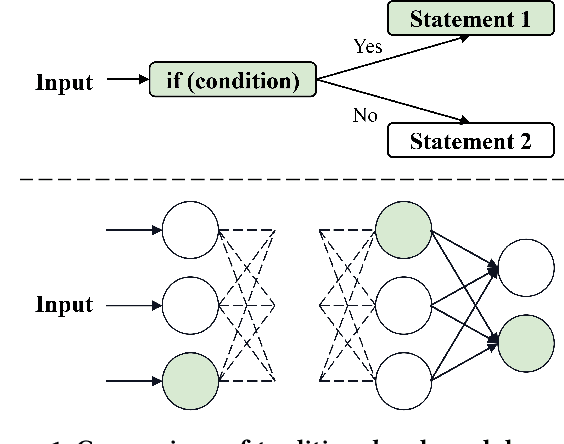
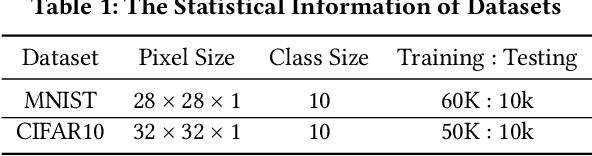
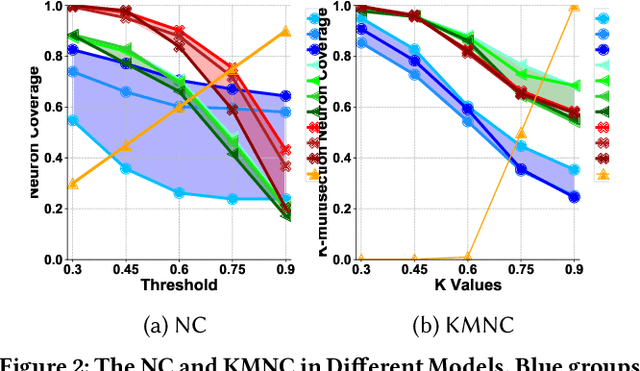
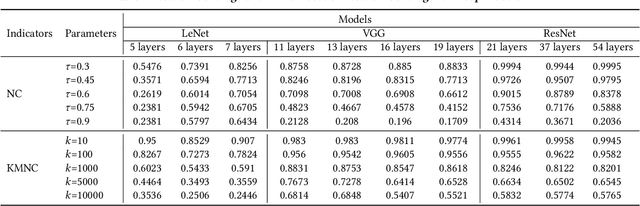
Deep neural networks (DNNs) play a crucial role in the field of artificial intelligence, and their security-related testing has been a prominent research focus. By inputting test cases, the behavior of models is examined for anomalies, and coverage metrics are utilized to determine the extent of neurons covered by these test cases. With the widespread application and advancement of DNNs, different types of neural behaviors have garnered attention, leading to the emergence of various coverage metrics for neural networks. However, there is currently a lack of empirical research on these coverage metrics, specifically in analyzing the relationships and patterns between model depth, configuration information, and neural network coverage. This paper aims to investigate the relationships and patterns of four coverage metrics: primary functionality, boundary, hierarchy, and structural coverage. A series of empirical experiments were conducted, selecting LeNet, VGG, and ResNet as different DNN architectures, along with 10 models of varying depths ranging from 5 to 54 layers, to compare and study the relationships between different depths, configuration information, and various neural network coverage metrics. Additionally, an investigation was carried out on the relationships between modified decision/condition coverage and dataset size. Finally, three potential future directions are proposed to further contribute to the security testing of DNN Models.