 Add to Chrome
 Add to Firefox
 Add to Edge
HarvestPoint-ACT: Explicit Target Selection and Harvest-Point Conditioning for Robotic Fruit Harvesting under Occlusion
Aug 19, 2026
End-to-end imitation learning avoids hand-made robot motion for approaching and grasping, but the policy must still decide which fruit to pick and where to close the gripper. Occlusion can make the policy lose the selected fruit during harvesting, and the correct closing point is difficult to infer from pixels alone. This paper presents HarvestPoint-ACT, which makes both decisions explicit in perception and provides them to the policy. An instance segmentation front end with a keypoint branch predicts a mask and a harvest point for each visible fruit, where the harvest point specifies the location to close the gripper. A scheduler ranks detected candidates by occlusion and travel distance and selects one target. After each attempt, it redetects and reranks the candidates because the canopy may have changed. The selected fruit is encoded for an action chunking transformer as an eight-dimensional state, containing the absolute harvest point, the vector from the gripper to that point, a validity flag, and a confidence score. When the selected fruit is temporarily undetected, the system retains the last harvest point estimate in the robot base frame and marks it as stale, and aborts the attempt if the loss persists. On a canopy mock-up, HarvestPoint-ACT achieves a success rate of 88%, and of 75% under heavy occlusion.

Scalable End-to-End RF Classification: A Case Study on Undersized Dataset Regularization by Convolutional-MST
May 13, 2021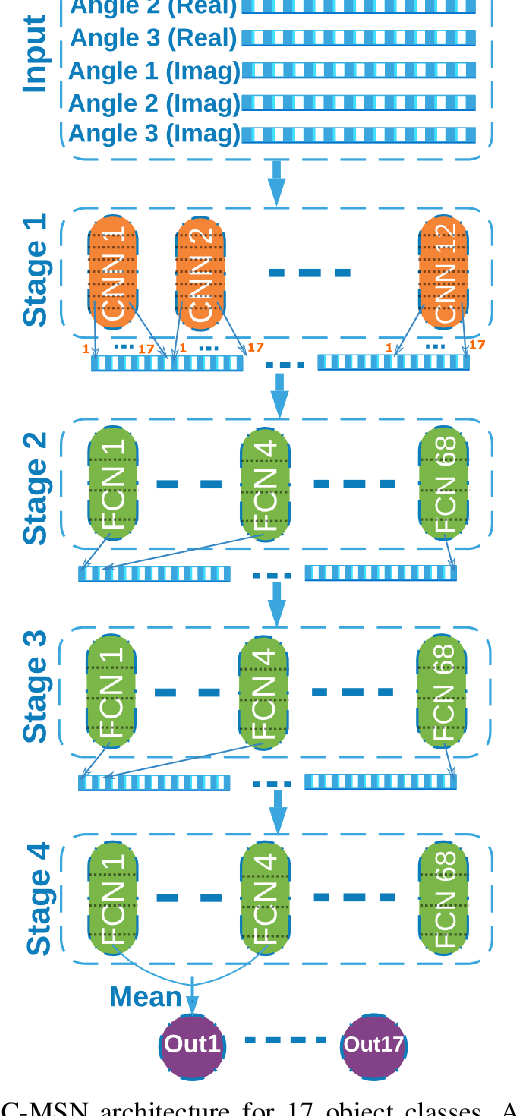
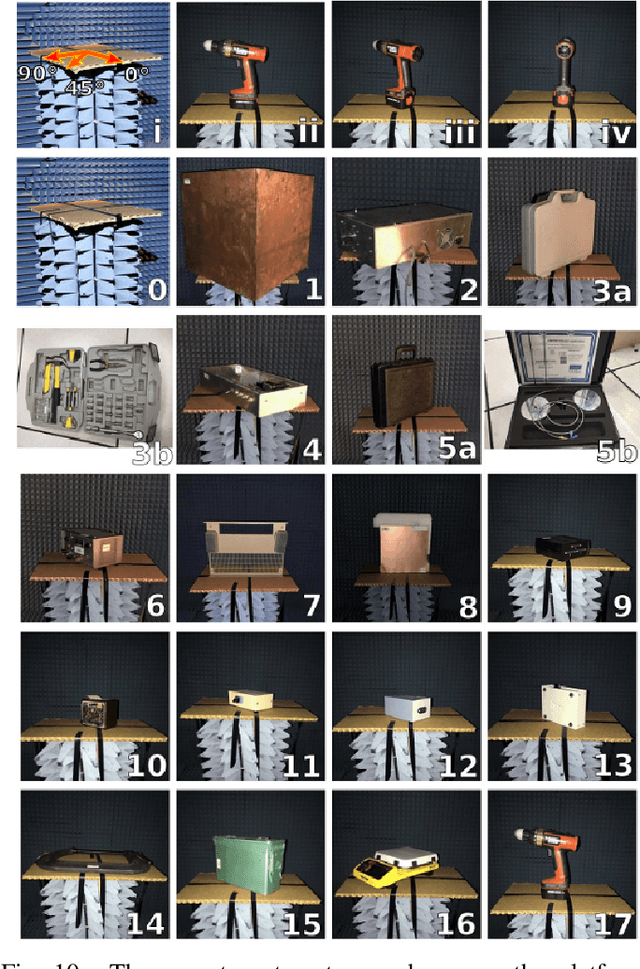
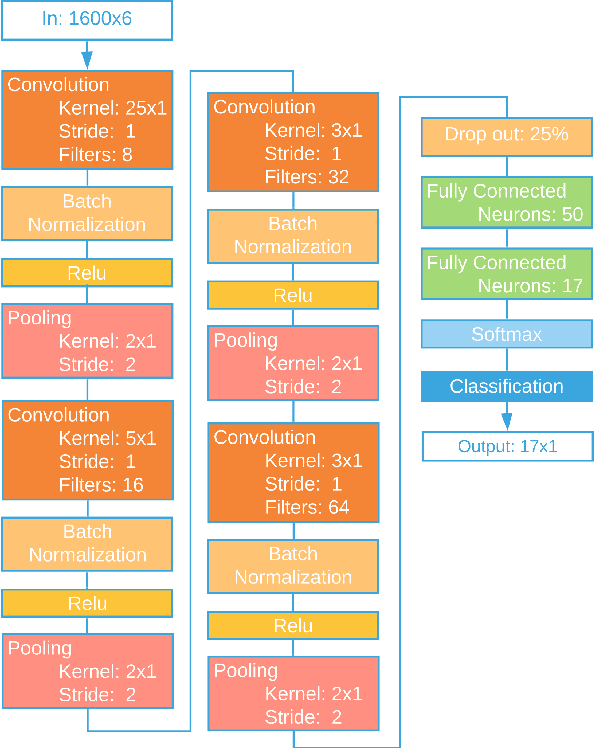
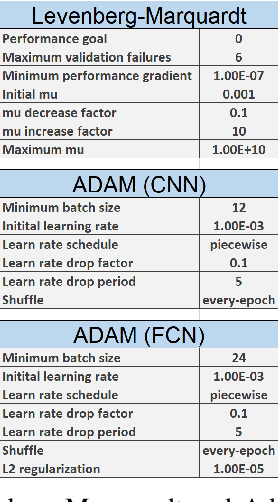
Unlike areas such as computer vision and speech recognition where convolutional and recurrent neural networks-based approaches have proven effective to the nature of the respective areas of application, deep learning (DL) still lacks a general approach suitable for the unique nature and challenges of RF systems such as radar, signals intelligence, electronic warfare, and communications. Existing approaches face problems in robustness, consistency, efficiency, repeatability and scalability. One of the main challenges in RF sensing such as radar target identification is the difficulty and cost of obtaining data. Hundreds to thousands of samples per class are typically used when training for classifying signals into 2 to 12 classes with reported accuracy ranging from 87% to 99%, where accuracy generally decreases with more classes added. In this paper, we present a new DL approach based on multistage training and demonstrate it on RF sensing signal classification. We consistently achieve over 99% accuracy for up to 17 diverse classes using only 11 samples per class for training, yielding up to 35% improvement in accuracy over standard DL approaches.