 Add to Chrome
 Add to Firefox
 Add to Edge
EEG2MOTION: Towards Open-Vocabulary Human Motion Synthesis from Non-invasive Brain Signals
Aug 14, 2026
Human motion is governed by a hierarchical motor system where the brain provides high-level intentions and lower-level structures coordinate detailed dynamics. Existing brain-computer interfaces (BCIs) typically oversimplify this into constrained classification or low-dimensional control, failing to capture the richness of natural movement. Bridging this gap to achieve open-vocabulary, full-body motion synthesis remains challenging due to the substantial cross-modal divergence between sparse neural signals and high-dimensional kinematics, as well as the lack of large-scale paired EEG-motion datasets. To address this, we introduce EEG2MOTION, the first EEG-motion-text dataset for human motion synthesis, comprising nearly 20,000 paired samples across thousands of motions. Using this dataset, we first demonstrate via multimodal contrastive learning that non-invasive EEG embeddings can be effectively aligned with text, video, and motion representations to decode high-level semantics. We then propose EEG-conditioned Masked Motion Model (EMMM), a generative framework that unites an EEG encoder with a motion decoder to synthesize continuous, full-body human motions directly from brain activity. Experimental results show that EMMM generates coherent and realistic motion sequences from non-invasive brain signals. To the best of our knowledge, this is the first work to generate diverse full-body human motions from non-invasive brain signals, opening a new direction toward generative and open-vocabulary motor BCIs. See our project page: https://yulom.github.io/EEG2MOTIONdemopage/.

Approximate FW Algorithm with a novel DMO method over Graph-structured Support Set
Nov 25, 2024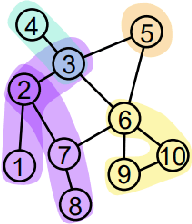
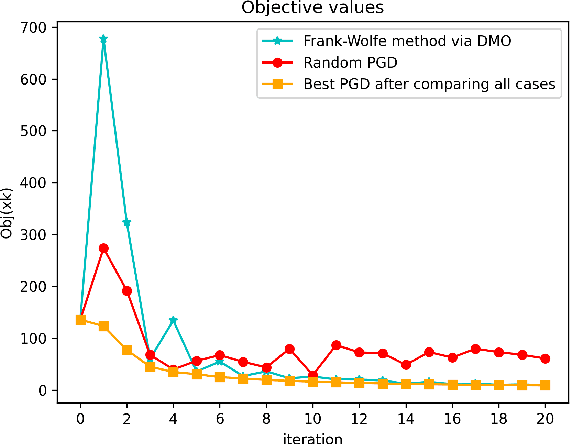
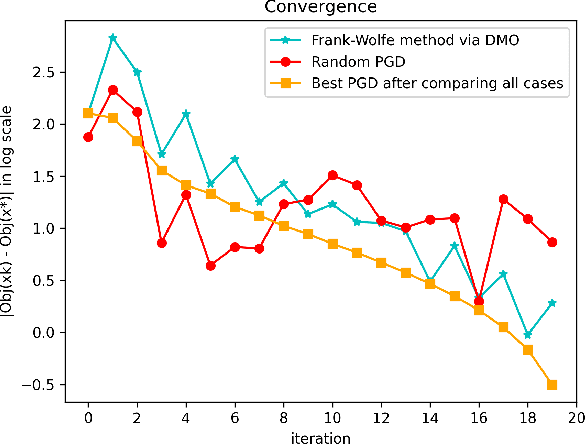
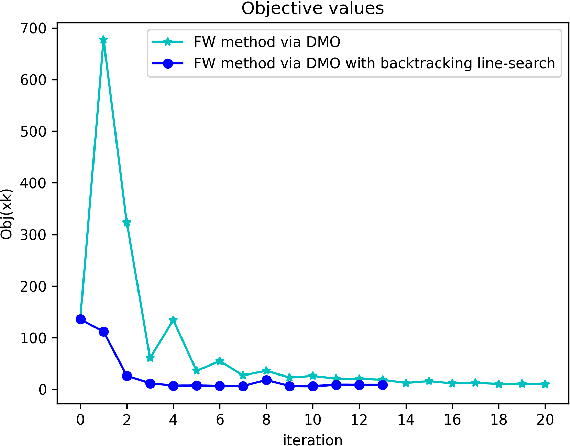
In this project, we reviewed a paper that deals graph-structured convex optimization (GSCO) problem with the approximate Frank-Wolfe (FW) algorithm. We analyzed and implemented the original algorithm and introduced some extensions based on that. Then we conducted experiments to compare the results and concluded that our backtracking line-search method effectively reduced the number of iterations, while our new DMO method (Top-g+ optimal visiting) did not make satisfying enough improvements.
Approximate Frank-Wolfe Algorithm over Graph-structured Support Set
Nov 07, 2024In this project, we reviewed a paper that deals graph-structured convex optimization (GSCO) problem with the approximate Frank-Wolfe (FW) algorithm. We analyzed and implemented the original algorithm and introduced some extensions based on that. Then we conducted experiments to compare the results and concluded that our backtracking line-search method effectively reduced the number of iterations, while our new DMO method (Top-g+ optimal visiting) did not make satisfying enough improvements.
Remote Sensing-Based Assessment of Economic Development
Nov 07, 2024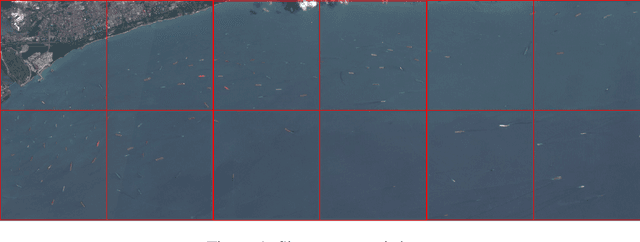
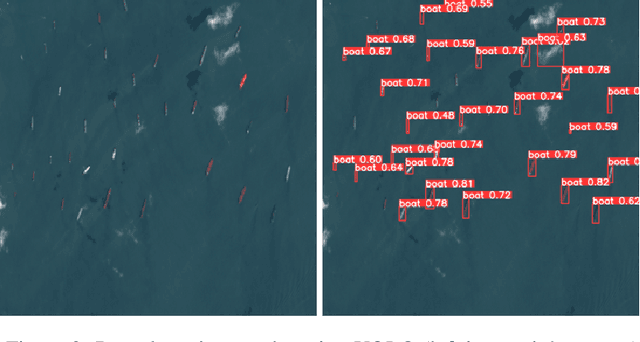
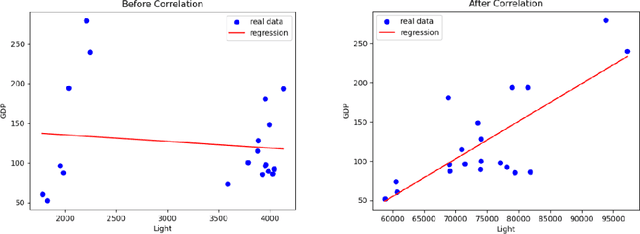
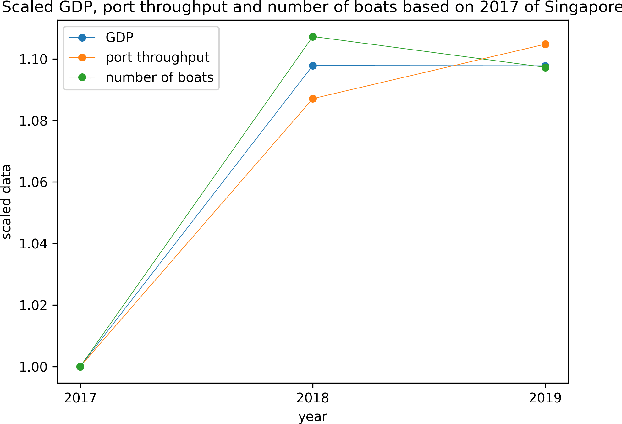
The goal of our project is to use satellite data (including nighttime light data and remote sensing images) to give us some statistical estimation of the economic development level of a selected area (Singapore). Findings from the project could inform policymakers about areas needing intervention or support for economic development initiatives. Insights gained might aid in targeted policy formulation for infrastructure, agriculture, urban planning, or resource management.